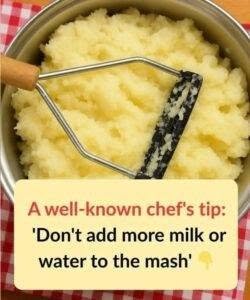
🥔 A Famous Chef’s Tip: Stop Adding Milk or Water to Mashed Potatoes—This Makes Them Creamier Than Restaurant Potatoes!
If your mashed potatoes always turn out a little watery, gluey, bland, or simply not as luxurious as the potatoes served at a good restaurant, the problem may not be the potatoes themselves.
It may be how you’re adding your fat and liquid—and when you’re adding it.
One of the most important tricks for exceptionally creamy mashed potatoes is to make butter the star, rather than thinning the potatoes with water. And if you want to add dairy, warm cream is generally a better choice than cold milk.
The result can be incredibly smooth, rich, and velvety without turning the potatoes into a watery purée.
🧈 The “Secret Ingredient” Is Often Butter
When restaurant mashed potatoes taste unusually rich and creamy, there is often considerably more butter involved than a home cook might expect.
Butter contributes both:
- Richness
- A silky mouthfeel
- Moisture
- Flavor
- A smoother texture
Instead of adding a lot of water or milk to loosen the potatoes, you can first incorporate plenty of butter into the hot potatoes.
The potatoes absorb the fat while they’re still warm, producing a much richer texture.
This doesn’t mean you have to use an enormous amount of butter. You can adjust the quantity to your preference.
🥔 Start With the Right Potatoes
The potato variety makes a huge difference.
Russet potatoes
Russets contain plenty of starch and can produce wonderfully fluffy mashed potatoes.
They’re particularly good if you want:
- Light mashed potatoes
- Fluffy texture
- A classic American-style mash
Yukon Gold potatoes
Yukon Golds naturally have a buttery flavor and creamy texture.
They’re excellent if you want:
- Dense but creamy potatoes
- Rich flavor
- A naturally golden color
A combination can be even better
Many cooks like combining a starchy potato such as Russet with a waxier, buttery potato such as Yukon Gold.
That gives you a balance between fluffiness and creaminess.
💧 Don’t Overcook or Under-Cook the Potatoes
Put the potatoes into a pot and cover them with cold water.
Salt the water generously.
Then bring the water to a gentle boil and cook until the potatoes are completely tender.
You should be able to slide a fork or knife easily through the center.
If the potatoes are still firm, they’ll produce lumpy mashed potatoes.
But there’s another problem: waterlogged potatoes.
If you boil them excessively or leave them sitting in water after they’re already cooked, they can absorb more water than necessary.
That can make your finished mashed potatoes loose and watery.
🔥 One Restaurant Trick: Let the Potatoes Steam-Dry
After draining the potatoes, don’t immediately dump in your dairy.
Let the drained potatoes sit in the warm pot for a minute or two over very low heat, stirring gently if necessary.
This allows excess surface moisture to evaporate.
You’re essentially concentrating the potato flavor before adding your butter.
Just be careful not to scorch them.
🧈 Add Butter Before Adding Liquid
This is one of the most useful techniques.
Instead of boiling potatoes, adding water or milk, and mixing everything together at once, try this order:
Hot potatoes → butter → warm cream if desired → seasoning
Adding butter while the potatoes are hot allows it to melt and distribute throughout the potatoes.
You can add it gradually and mix gently after each addition.
This produces a much richer texture than simply adding lots of liquid.
🥛 Do You Really Have to Avoid Milk?
Not necessarily.
The claim that milk should never be used is exaggerated.
Milk isn’t inherently bad for mashed potatoes.
The issue is that adding too much milk or water can make the potatoes thin and watery.
If you want a particularly rich result, you can use:
- Heavy cream
- Half-and-half
- Warm whole milk
- A combination of cream and milk
The important part is to warm the dairy first.
Cold liquid can cool the potatoes and make the mixture harder to incorporate smoothly.
Warm dairy blends much more naturally into hot potatoes.
🍶 Why Heavy Cream Can Taste More “Restaurant-Style”
Heavy cream contains substantially more fat than ordinary milk.
That additional fat creates a richer mouthfeel without requiring as much liquid.
For example, instead of adding a large amount of milk to loosen your potatoes, you can use a smaller amount of warm cream and let the butter provide much of the richness.
That’s one reason restaurant mashed potatoes can taste so luxurious.
🥔 The Biggest Mistake: Overmixing
This is arguably just as important as the butter.
Potatoes contain starch.
When you aggressively mash or process them, you can release too much starch.
That’s when potatoes can become:
- Gluey
- Stretchy
- Gummy
- Sticky
- Chewy
A food processor or blender is particularly likely to overwork potatoes.
For the best texture, use:
- A traditional potato masher for rustic potatoes
- A potato ricer for very smooth potatoes
- A food mill for an especially refined texture
If you’re aiming for silky restaurant-style mashed potatoes, a potato ricer is an excellent choice.
🥄 The Potato Ricer Trick
After cooking and draining the potatoes, pass them through a ricer while they’re still hot.
The ricer breaks the potato into tiny, fluffy pieces without aggressively crushing the cells.
Then gently fold in your melted or softened butter.
Finally, add enough warm cream to achieve the consistency you want.
This can produce exceptionally smooth mashed potatoes without the gummy texture that comes from overworking them.
🧂 Don’t Forget the Salt
A surprising number of disappointing mashed-potato recipes simply aren’t seasoned enough.
Potatoes need salt.
Season the cooking water, then taste the finished potatoes and adjust the seasoning.
You can also add:
- Black pepper
- White pepper
- Roasted garlic
- Chives
- Parsley
- Parmesan
- Roasted shallots
- A small amount of nutmeg
But don’t add so many flavors that you lose the taste of the potatoes and butter.
🧄 Want Garlic Mashed Potatoes?
Don’t simply throw raw garlic into the finished potatoes.
Raw garlic can have a harsh, sharp flavor.
Instead, try roasting the garlic.
Cut the top from a garlic bulb, drizzle with a little oil, wrap it, and roast until the cloves become soft and golden.
Squeeze the roasted garlic into the hot potatoes and mix gently.
You’ll get a much sweeter, deeper garlic flavor.
🧈 The Ultimate Creamy Mashed Potato Formula
For approximately 2 pounds (900 g) of potatoes, you can start with:
- 2 lb potatoes
- ½ cup (115 g) butter
- ½–¾ cup warm heavy cream or whole milk
- Salt to taste
- Black or white pepper to taste
You don’t have to use all the cream.
Add it gradually until you reach your preferred consistency.
If you want extremely rich mashed potatoes, increase the butter.
If you want lighter mashed potatoes, reduce the butter and use warm milk instead of heavy cream.
👨🍳 A Step-by-Step Restaurant-Style Method
Step 1: Peel and cut
Peel the potatoes and cut them into relatively uniform pieces.
Keeping the pieces similar in size helps them cook evenly.
Step 2: Start in cold salted water
Put the potatoes in a pot and cover with cold water.
Add salt.
Starting in cold water allows the center and exterior of the potatoes to cook more evenly.
Step 3: Cook until completely tender
Simmer until a fork passes easily through the potatoes.
Don’t rush this step.
Step 4: Drain extremely well
Drain the potatoes thoroughly.
Return them to the warm pot.
Step 5: Steam off excess moisture
Allow them to sit briefly over very low heat.
This helps remove excess water.
Step 6: Rice or mash
For ultra-smooth potatoes, pass them through a potato ricer.
For a more rustic texture, use a masher.
Step 7: Add butter
Add butter gradually while the potatoes are still hot.
Gently fold it in.
Step 8: Add warm dairy
Warm your cream or milk separately.
Add a little at a time until the potatoes reach the desired consistency.
Step 9: Season
Taste.
Add salt and pepper as needed.
Step 10: Serve immediately
Mashed potatoes are at their best when they’re freshly made and hot.
🚫 What NOT to Do
Avoid these common mistakes:
Don’t add lots of water.
Water can dilute the flavor and make potatoes loose.
Don’t pour in cold milk.
Warm dairy incorporates more easily.
Don’t use a blender.
It can make potatoes extremely gummy.
Don’t overmix.
Gentle folding is better.
Don’t leave cooked potatoes sitting in water.
They can become waterlogged.
Don’t forget salt.
Potatoes need adequate seasoning.
Don’t add all the cream at once.
Add it gradually so you can control the consistency.
🥔 And Here’s the Real “Secret”
There isn’t one magical ingredient that automatically makes mashed potatoes better than those served in a restaurant.
The real secret is a combination of technique and ingredients:
Use suitable potatoes → cook them properly → drain thoroughly → steam off excess moisture → rice or mash gently → add plenty of butter → use warm cream or milk only as needed → season properly.
That’s what gives you mashed potatoes that are rich, creamy, fluffy, and intensely flavorful rather than watery or gluey.
And if you’re trying to recreate that incredibly luxurious restaurant texture at home, the two upgrades I’d prioritize are a potato ricer and good-quality butter.