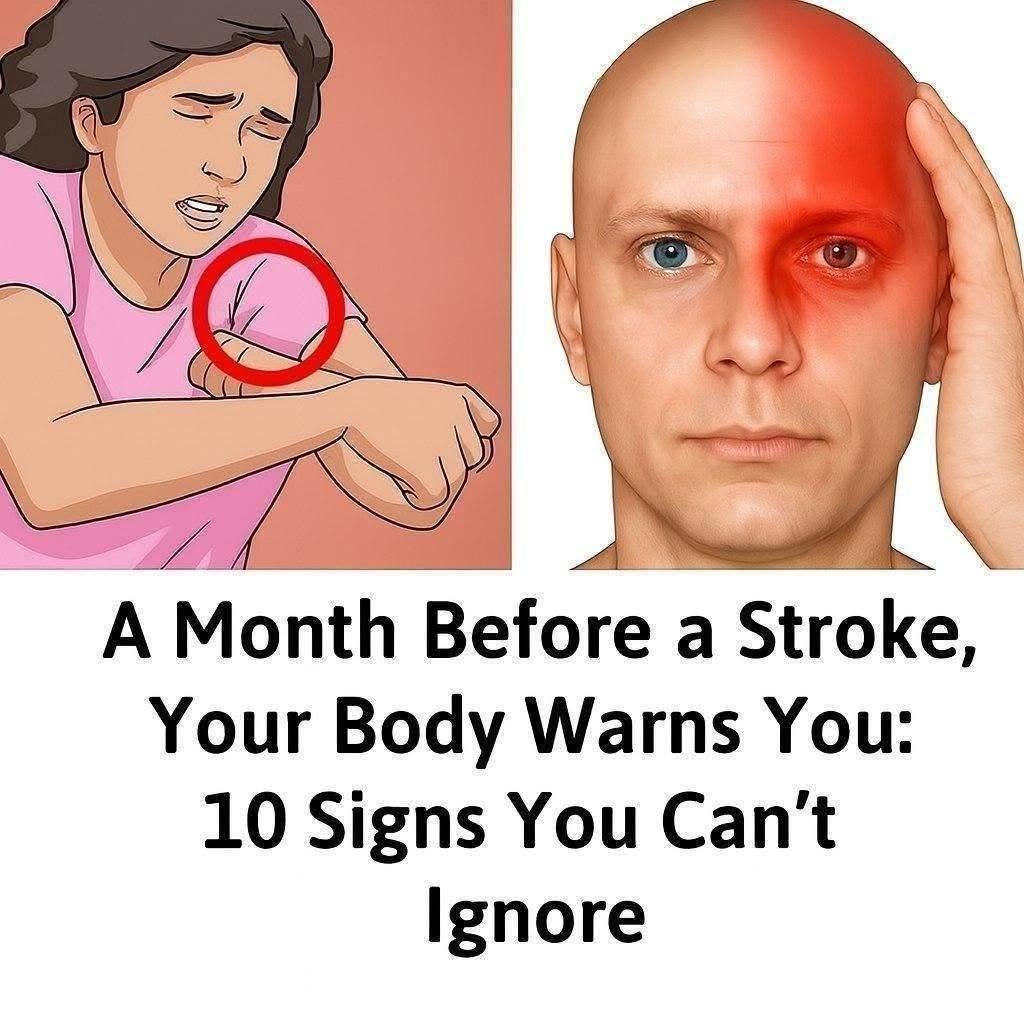
A Month Before a Stroke, Your Body May Warn You: 10 Signs You Should Never Ignore
A stroke can seem to happen without warning, but sometimes the body gives clues beforehand. The important thingsometimes called a “mini-stroke”—hours, days, or even longer before a major stroke. A TIA produces stroke-like symptoms that usually resolve, but it is still a medical emergency because it can be a warning that a stroke may to understand is that there is no reliable list of symptoms that predicts a stroke exactly one month in advance.
Some people experience a transient ischemic attack (TIA)—sometimes called a “mini-stroke”—hours, days, or even longer before a major stroke. A TIA produces stroke-like symptoms that usually resolve, but it is still a medical emergency because it can be a warning that a stroke may follow.
That’s why knowing the warning signs matters so much.
1. Sudden Weakness or Numbness on One Side
One of the most important warning signs is sudden weakness or numbness affecting the face, arm, or leg—particularly on one side of the body.
You might suddenly notice that one hand feels weak or that you can’t raise both arms equally.
Sometimes the symptom disappears after a few minutes.
Don’t assume that means everything is fine.
Temporary stroke-like symptoms can be a TIA and require urgent medical evaluation.
2. Sudden Trouble Speaking
A person may suddenly have difficulty finding words, speaking clearly, or understanding what someone else is saying.
You might notice that someone’s speech becomes slurred or that they are suddenly using strange or inappropriate words.
If this happens suddenly, don’t wait to see whether it improves.
A TIA can produce temporary speech problems, and early medical assessment can be critical.
3. Sudden Vision Problems
Stroke-related problems aren’t limited to movement and speech.
Sudden changes in vision can also occur.
You might experience:
- Sudden blurred vision
- Double vision
- Loss of vision in one eye
- Loss of part of your visual field
A sudden visual disturbance can have many causes, some of which are emergencies.
If it appears suddenly, seek urgent medical attention rather than assuming you simply need new glasses.
4. Sudden Difficulty Walking
A sudden change in balance or coordination can be another warning sign.
You may suddenly feel as though you’re stumbling, veering to one side, or unable to walk normally.
Some people describe sudden dizziness or a sensation that the room is spinning.
Again, the key word is sudden.
A new, unexplained neurological problem shouldn’t be ignored simply because it improves after a few minutes.
5. Sudden Severe Headache
A sudden, extremely severe headache—particularly one that feels dramatically different from headaches you’ve experienced before—requires urgent medical attention.
A severe headache can have many causes, and not every severe headache is a stroke.
But certain types of stroke, particularly bleeding in or around the brain, can present with sudden severe headache.
Don’t attempt to diagnose the cause yourself.
6. Sudden Confusion
Another possible warning sign is an abrupt change in thinking.
Someone may suddenly become confused, have difficulty understanding simple instructions, or seem strangely disoriented.
If the change is sudden, it should be taken seriously.
There are many possible causes of acute confusion, including infections, metabolic problems, medications, and neurological emergencies.
Stroke is one of the possibilities that needs to be considered.
7. Sudden Facial Drooping
Ask the person to smile.
Does one side of the face appear to droop?
Does the smile suddenly look uneven?
Facial weakness can be an important sign of stroke.
It may occur together with arm weakness or speech problems, but it doesn’t have to.
If facial drooping appears suddenly, treat it as an emergency.
8. Sudden Loss of Coordination
A person may suddenly have trouble performing movements they normally manage easily.
They might struggle to use one hand, become unusually clumsy, or have difficulty coordinating their movements.
Sudden loss of coordination can occur with several neurological conditions, including stroke.
Don’t dismiss a dramatic new change as simply “getting older.”
9. Repeated Short Episodes of Stroke-Like Symptoms
This is particularly important.
Suppose someone experiences an episode where one arm suddenly becomes weak, their speech becomes strange, or they temporarily lose vision—and then everything returns to normal.
They may think:
“It went away, so I’m okay.”
That’s exactly when medical attention may be most important.
A TIA is temporary, but it can signal an increased risk of a future stroke.
There is no safe way to determine at home whether a temporary neurological episode was a TIA.
10. Sudden Neurological Changes Should Never Be Delayed
The biggest warning sign isn’t necessarily something that happened weeks ago.
It’s a sudden change in neurological function.
Stroke treatment is highly time-dependent. Some treatments work best when given as quickly as possible after symptoms begin.
That’s why waiting for symptoms to disappear can be dangerous.
Remember FAST
One of the easiest ways to recognize common stroke symptoms is FAST:
F — Face: Does one side of the face droop?
A — Arms: Is one arm weak or numb? Can both arms be raised normally?
S — Speech: Is speech suddenly slurred, strange, or difficult to understand?
T — Time: If any of these symptoms occur suddenly, seek emergency medical help immediately.
Some stroke organizations also emphasize additional symptoms such as sudden vision problems, severe headache, dizziness, or loss of balance.
Don’t Wait for Tomorrow
If someone suddenly develops a possible stroke symptom, don’t drive them yourself if emergency medical services are available.
Call your local emergency medical service and explain that you suspect a stroke.
Note the time the person was last known to be normal. This information can be extremely important to medical professionals when deciding which treatments may be appropriate.
Even if symptoms disappear before help arrives, tell the medical team exactly what happened.
What About Symptoms That Develop Gradually Over a Month?
This is where online headlines can become misleading.
There isn’t a medically established rule saying that ten specific symptoms appear exactly 30 days before every stroke.
A person can have a stroke without experiencing any noticeable warning beforehand.
And many symptoms commonly attributed to an upcoming stroke—such as fatigue, occasional headaches, or general dizziness—can have dozens of other causes.
The warning signs that deserve the most urgent attention are sudden neurological changes, especially those involving speech, facial movement, strength, vision, coordination, or consciousness.
The Bottom Line
A stroke doesn’t always provide a convenient month-long warning.
But your body can sometimes produce warning signs, particularly through a TIA or other sudden neurological episode.
Don’t ignore sudden:
- Facial drooping
- Arm or leg weakness
- Numbness
- Speech difficulty
- Confusion
- Vision loss
- Severe unusual headache
- Loss of balance
- Difficulty walking
- Coordination problems
Most importantly, don’t wait for a symptom to become severe or permanent.
If these symptoms appear suddenly—even if they disappear after a few minutes—seek emergency medical attention.
A temporary warning can be the opportunity to prevent a devastating event.
When it comes to stroke, every minute matters.