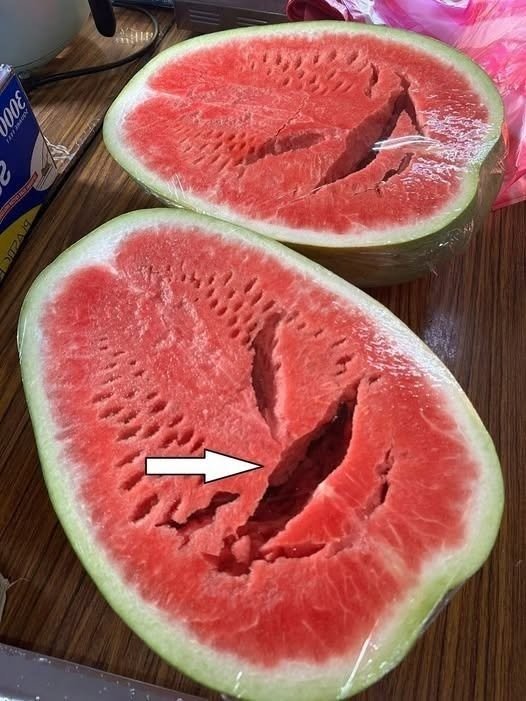
You Cut Open a Watermelon and Saw Cracks? Stop Eating It Immediately? Here’s What It Really Means
Seeing cracks inside a watermelon does not automatically mean that the fruit is poisonous or unsafe to eat. Internal cracks can occur for several different reasons, and the appearance of the flesh, smell, texture, and overall condition of the watermelon are much more useful for deciding whether it should be eaten.
Some online posts claim that cracks mean a watermelon contains dangerous chemicals or has been “injected” with something harmful. That is not a reliable rule. Internal cracking is a known quality problem in watermelons and can happen naturally as the fruit grows.
However, if the cracks are accompanied by fermentation, an unpleasant odor, slimy flesh, mold, or other signs of spoilage, you should throw the watermelon away.
1. What Are the Cracks Inside a Watermelon?
Internal cracks are separations or cavities that appear inside the flesh. They may run through the center or occur around the seed area.
Watermelon flesh normally contains a large amount of water, and the fruit continues to develop rapidly while it is growing. Under certain growing conditions, the internal tissues may not develop uniformly.
This can result in what is sometimes called hollow heart or internal cracking.
The important point is that an internal crack is not automatically evidence of contamination.
2. Why Do Watermelons Develop Internal Cracks?
Several factors can contribute.
Rapid growth
If a watermelon grows very quickly, the internal flesh may not develop at exactly the same rate throughout the fruit.
The outer portion can develop differently from the internal tissues, producing gaps or cracks.
Irregular water availability
Watermelon plants need adequate and relatively consistent water during development. Significant fluctuations in water availability can affect fruit development.
For example, a period of relatively dry conditions followed by abundant water can contribute to rapid changes in fruit growth.
Environmental conditions
Temperature and other growing conditions can influence the development and quality of watermelon flesh.
This means that two watermelons from the same general area can sometimes look quite different inside.
3. Does a Cracked Watermelon Mean It Has Chemicals?
No.
An internal crack does not prove that a watermelon has been injected with chemicals, hormones, or other dangerous substances.
Some viral claims suggest that unusual cracks, unusually red flesh, or large fruit automatically indicate chemical treatment. These claims are generally misleading.
Farmers may use approved agricultural products to protect crops or manage pests and diseases, but an internal crack by itself cannot tell you what agricultural practices were used.
If food-safety concerns exist, the appropriate response is to rely on reputable food-safety authorities and proper food-handling practices rather than judging safety from one visual characteristic.
4. When Should You Actually Throw It Away?
The more important question is whether the watermelon shows signs of spoilage.
Discard it if you notice:
- A strong sour, alcoholic, or rotten smell
- Slimy or unusually mushy flesh
- Visible mold
- Significant discoloration that looks abnormal
- Bubbling or fermentation-like activity
- Liquid leaking from damaged areas
- A strongly unpleasant taste
If the watermelon looks and smells normal but has a few internal cracks, the cracks alone do not necessarily make it unsafe.
When in doubt about a food’s safety, however, throwing it away is the safest option, especially if it has been stored improperly.
5. What Does Spoiled Watermelon Look Like?
Fresh watermelon usually has firm, juicy flesh with a fresh, mildly sweet smell.
Spoilage can cause the flesh to become soft, slimy, watery, or discolored. The smell may change from fresh and sweet to sour, fermented, or unpleasant.
The rind can also provide clues. A severely damaged, leaking, moldy, or unusually soft watermelon deserves caution.
Remember that harmful microorganisms cannot always be detected by smell or appearance, so proper storage and handling are also important.
6. What If the Watermelon Tastes Fermented?
If your not continue eating it simply because only one section tastes unusual. When significant spoilage is suspected, throwing away the entire watermelon tastes fizzy, alcoholic, sour, or fermented, stop eating it and discard it.
This can occur when microorganisms break down sugars in the fruit.
Do not continue eating it simply because only one section tastes unusual. When significant spoilage is suspected, throwing away the entire cut fruit is the safer approach.
7. What If There Are Cracks but Everything Else Looks Normal?
Suppose you cut open a watermelon and see a crack through the center, but:
- The flesh is firm.
- It smells fresh.
- There is no mold.
- There is no slime.
- The color appears normal.
- It has been stored appropriately.
In that situation, the internal crack itself is not a reason to assume the watermelon is dangerous.
The crack may be a quality defect rather than a food-safety problem.
Some watermelons with internal cracking can still be edible, although their texture may be less desirable.
8. Hollow Heart Is Different From Spoilage
A condition known as hollow heart can produce a cavity or separation inside the watermelon.
It is primarily a developmental or quality issue. The flesh around the cavity may still be perfectly normal.
You may notice that the watermelon has an unusually large internal gap, but this does not automatically mean that bacteria or chemicals are responsible.
The important distinction is between a structural defect and evidence of spoilage.
9. Don’t Rely Only on Appearance
One common food-safety mistake is assuming that food is safe because it looks normal.
Some harmful microorganisms can be present without producing an obvious smell, taste, or visible change.
That’s why food handling and storage matter.
Once you cut a watermelon, refrigerate it promptly and keep it properly covered. Cut fruit should not be left at room temperature for extended periods, particularly in hot weather.
Use clean utensils and a clean cutting surface when preparing the fruit.
10. Wash the Watermelon Before Cutting It
This is an easy step that many people overlook.
Even though you don’t eat the rind, microorganisms on the outside can potentially be transferred to the edible flesh when you cut through it.
Wash the whole watermelon under running water and scrub the surface as appropriate before cutting. Use a clean knife and clean cutting surface.
You don’t need soap or household disinfectants on the fruit.
11. Be Extra Careful in Hot Weather
Watermelon is especially popular during hot weather, but high temperatures can also accelerate food spoilage.
After cutting watermelon, refrigerate it rather than leaving it sitting out for long periods.
This is particularly important for large gatherings, picnics, outdoor meals, and situations where cut fruit may remain unrefrigerated.
If you are unsure how long cut watermelon has been sitting in unsafe temperatures, it’s better to discard it rather than take a chance.
12. What If You Already Ate Some?
If you ate watermelon that had internal cracks but looked and smelled normal, there is no reason to panic simply because you saw a crack.
If the fruit was spoiled, possible symptoms of foodborne illness can include:
- Nausea
- Vomiting
- Diarrhea
- Abdominal cramps
- Fever
Many mild cases resolve with rest and adequate fluid intake.
However, seek medical attention if you develop severe dehydration, persistent vomiting, bloody diarrhea, severe abdominal pain, high fever, confusion, or symptoms that are severe or worsening.
People who are pregnant, elderly, immunocompromised, or very young may need medical advice sooner if significant food-poisoning symptoms develop.
The Big Myth: “Cracks Mean the Watermelon Is Poisonous”
This is the part that deserves the most attention.
A cracked watermelon is not automatically poisonous.
Internal cracks can result from natural variations in fruit development and growing conditions. The presence of cracks alone cannot establish that a watermelon contains harmful chemicals, has been injected with substances, or is unsafe.
Instead of following a simple rule such as “cracks = danger,” evaluate the whole fruit and consider how it was handled and stored.
A Simple Watermelon Safety Checklist
Before eating a cut watermelon, ask:
- Does it smell fresh?
- Is the flesh firm rather than slimy?
- Is there any visible mold?
- Does it have an unusual sour or fermented smell?
- Does it taste normal?
- Was it refrigerated appropriately after cutting?
- Was it cut using clean utensils and a clean surface?
If the answers are reassuring and the only unusual feature is an internal crack, the crack itself is not a reliable reason to assume the fruit is dangerous.
If several spoilage signs are present, discard it.
Final Takeaway
Don’t panic if you cut open a watermelon and discover cracks inside. Internal cracking can be a natural developmental or quality problem and does not, by itself, mean the watermelon is poisonous or contaminated.
What should make you stop eating it is evidence of spoilage—such as mold, slime, a rotten or fermented smell, abnormal texture, or an unpleasant taste—along with improper storage or handling.
So the better rule is:
Cracks alone don’t mean “danger.” Cracks plus signs of spoilage mean “throw it away.”
And if you are ever genuinely uncertain about whether a food is safe, especially if it has been poorly stored or shows multiple abnormalities, when in doubt, throw it out.