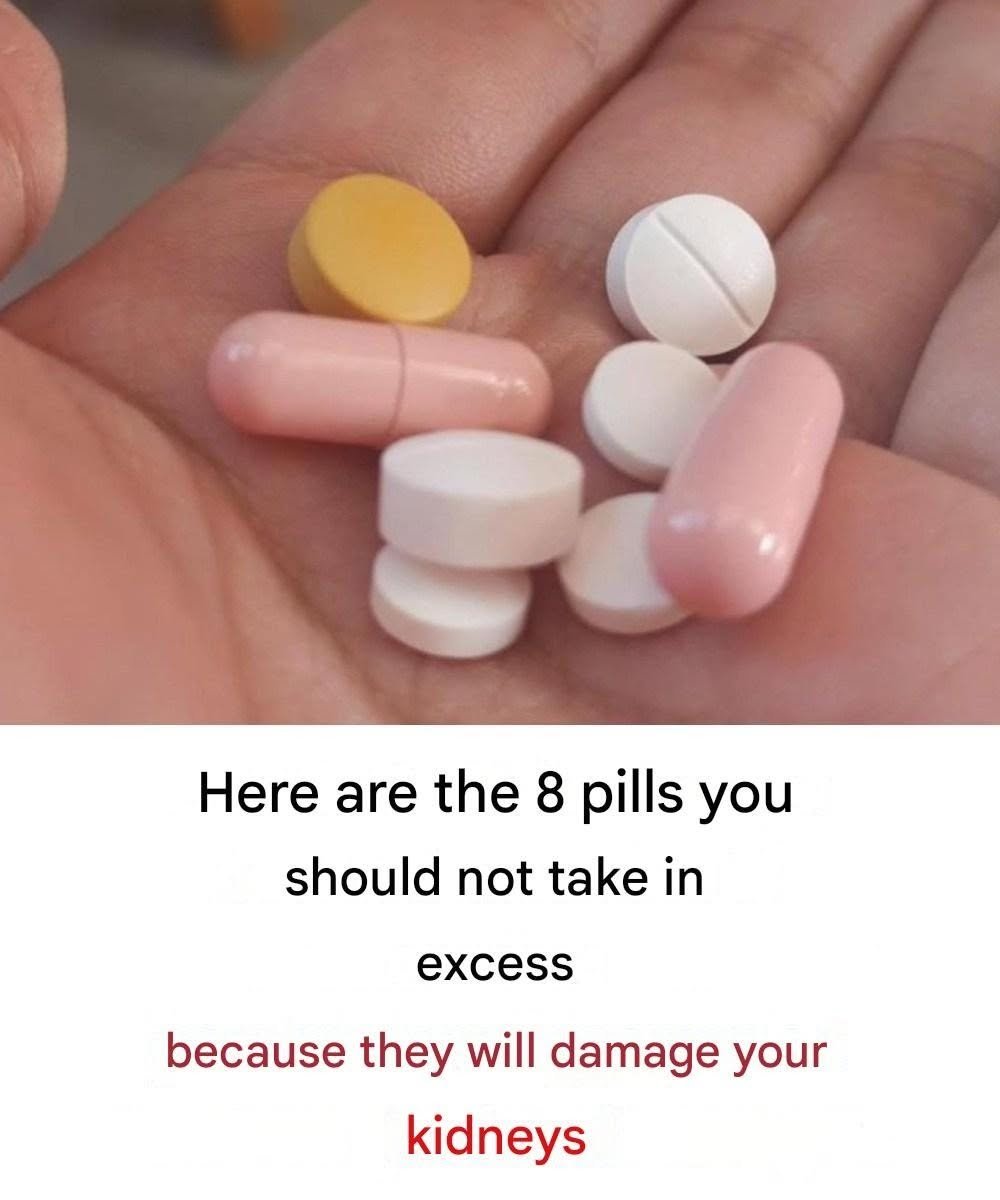
💊 8 Medicines That Can Harm the Kidneys — and What You Should Know
A common health headline says there are “eight pills you should never take because they damage your kidneys.” That’s too simplistic.
Many medications can affect kidney function in certain circumstances, but that doesn’t mean they’re unsafe for everyone. Some are essential treatments, and the risk depends on the dose, duration, hydration, age, existing kidney function, and other medicines being taken.
Here are eight important medication categories to know about.
1. NSAID Painkillers
Examples include:
- Ibuprofen
- Naproxen
- Diclofenac
- Indomethacin
These medicines can reduce blood flow to the kidneys and, particularly at high doses or with prolonged use, can cause acute kidney injury.
The risk is higher if you are:
- Older
- Dehydrated
- Living with kidney disease
- Taking certain blood-pressure medicines
- Taking diuretics (“water pills”)
- Experiencing vomiting or diarrhea
Important: Don’t automatically stop a prescribed NSAID. Ask your healthcare professional whether it is appropriate for you.
2. Some Antibiotics
Certain antibiotics can affect the kidneys, including aminoglycosides such as gentamicin and tobramycin.
Other antibiotics may also require dose adjustments when kidney function is reduced.
This doesn’t mean you should avoid antibiotics. When they’re medically necessary, the benefits can greatly outweigh the risks, and clinicians can choose an appropriate medication and dose.
3. Some Antiviral Medicines
Certain antiviral drugs can cause kidney problems or require careful dosing in people with reduced kidney function.
The specific risk depends heavily on the drug.
If you’re prescribed an antiviral, tell your clinician if you’ve ever had kidney disease or abnormal kidney tests.
4. Diuretics
Diuretics help the body remove excess salt and water.
They’re commonly used for conditions such as:
- High blood pressure
- Heart failure
- Fluid retention
They aren’t inherently “bad for the kidneys.”
However, excessive fluid loss can contribute to dehydration and kidney injury in susceptible people, particularly during severe vomiting, diarrhea, or inadequate fluid intake.
Never stop a prescribed diuretic on your own.
5. ACE Inhibitors and ARBs
Examples include:
- Lisinopril
- Enalapril
- Losartan
- Valsartan
This is an important one because online lists sometimes incorrectly describe these medicines as simply “kidney-damaging.”
They can cause a change in kidney function, particularly when treatment begins or during dehydration, but ACE inhibitors and ARBs can actually protect the kidneys in many people, especially those with certain forms of chronic kidney disease or diabetes.
Doctors commonly monitor kidney function and potassium after starting or adjusting these medicines.
6. Proton Pump Inhibitors
Examples include:
- Omeprazole
- Pantoprazole
- Esomeprazole
These medicines reduce stomach acid and are widely used for reflux and ulcers.
Rarely, they can cause acute interstitial nephritis, an inflammatory reaction affecting the kidneys.
Long-term PPI use has also been associated in observational research with certain kidney outcomes, although an association does not necessarily prove that the medication caused the condition.
Use them when medically appropriate and periodically discuss whether continued treatment is still necessary.
7. Certain Chemotherapy Medicines
Some chemotherapy drugs can be toxic to the kidneys.
One well-known example is cisplatin.
Cancer treatment teams know about these risks and may monitor kidney function, adjust doses, provide fluids, or select alternative treatments when appropriate.
This is absolutely not a reason for someone undergoing cancer treatment to stop medication independently.
8. Lithium
Lithium is an effective medication for certain mood disorders.
However, long-term use can affect kidney function in some people.
Patients taking lithium generally needKidney disease can develop without obvious symptoms, so blood and urine testing is often more useful regular monitoring of:
- Kidney function
- Lithium blood levels
- Thyroid function
- Other relevant laboratory values
Dehydration and interactions with other medications can increase lithium levels and potentially cause toxicity.
⚠️ The Biggest Mistake: Stopping Your Medicine Because of an Internet List
This is especially important.
Do not stop a prescription medication simply because you saw a headline saying it damages the kidneys.
Some medicines that can affect kidney function are also extremely important for preventing serious complications.
For example, blood-pressure medicines such as ACE inhibitors and ARBs can be kidney-protective in appropriate patients, despite the fact that they can sometimes cause an initial change in kidney blood tests.
The right question isn’t:
“Does this pill ever affect the kidneys?”
It’s:
“Is this medicine appropriate for me, at this dose, given my kidney function and other medications?”
🩺 Who Should Be Especially Careful?
People with increased risk of medication-related kidney problems include those with:
- Existing chronic kidney disease
- Older age
- Diabetes
- Heart failure
- High blood pressure
- Dehydration
- Recent vomiting or diarrhea
- Multiple medications
- A history of acute kidney injury
If you fall into one of these groups, tell your healthcare professional and pharmacist about every medication and supplement you’re taking, including over-the-counter painkillers.
🚨 Warning Signs of Possible Kidney Problems
Kidney disease can develop without obvious symptoms, so blood and urine testing is often more useful than waiting for symptoms.
However, seek medical attention for concerning symptoms such as:
- Significantly reduced urine output
- Blood in the urine
- New or worsening swelling
- Severe weakness
- Persistent nausea or vomiting
- Shortness of breath
- Confusion
- Severe flank or back pain, particularly with fever
A sudden change in urine output or significant swelling deserves prompt evaluation.
💧 Be Careful When You’re Sick
One of the times medication-related kidney injury becomes more likely is during significant dehydration.
For example, if you’re taking medications that affect blood pressure, fluid balance, or kidney blood flow and you develop severe vomiting or diarrhea, contact your healthcare professional for advice about your medicines.
Don’t create your own “sick-day” medication plan based on a social-media post; which medicines should temporarily be adjusted depends on your individual circumstances.
🧪 How Do Doctors Check Kidney Function?
Two commonly used measures are:
Creatinine/eGFR: A blood test helps estimate how well the kidneys are filtering.
Urine testing: Can detect albumin/protein and other abnormalities.
Your clinician may check these before starting certain medications and again after starting or changing them.
❤️ The Takeaway
There aren’t simply “eight pills everyone should never take.”
Instead, there are medications that can affect kidney function in particular people or circumstances. NSAIDs, certain antibiotics and antivirals, some chemotherapy drugs, lithium, and several other medication classes deserve appropriate monitoring.
The safest approach is to know your kidney function, avoid unnecessary over-the-counter painkillers, stay appropriately hydrated, and have your medications reviewed regularly.
And most importantly: never stop a prescribed medication abruptly because of a viral health claim. Ask your doctor or pharmacist whether the medication is safe for you and whether kidney-function monitoring is needed.