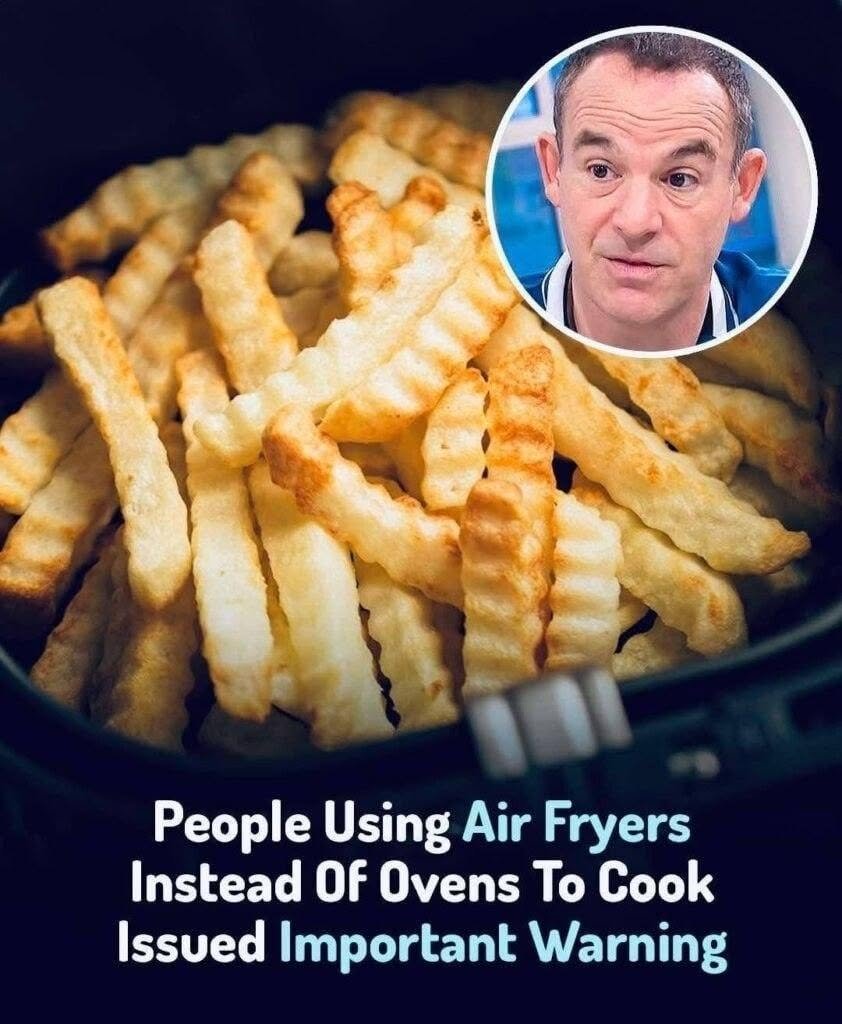
🍟 Experts Caution Against Using Air Fryers Instead of Ovens: 7 Tips You Should Know
Air fryers have become popular because they cook food quickly and can produce a crisp texture with relatively little added oil. But the idea that air fryers are inherently dangerous or should never replace an oven is misleading.
For most people, an air fryer can be a perfectly reasonable kitchen appliance when used correctly. The important issues are what you cook, how you cook it, how much you brown it, and how you maintain the appliance.
Here are seven practical tips worth knowing.
1. 🌡️ Don’t Automatically Cook Everything at the Highest Temperature
Air fryers circulate hot air around food, so they can cook and brown food quickly.
That means you don’t necessarily need the highest temperature setting.
For foods that brown quickly, consider using a moderate temperature and checking them earlier than you would in a conventional oven.
Overly aggressive cooking can result in burnt surfaces while the inside still needs additional cooking.
2. 🥔 Avoid Burning Starchy Foods
Potatoes, breaded foods, toast-like products, and other carbohydrate-rich foods can develop acrylamide when cooked at high temperatures, particularly when they become very dark or burnt.
This doesn’t mean you need to stop eating air-fried potatoes.
A sensible approach is to:
- Avoid deliberately burning food.
- Aim for golden rather than very dark brown surfaces.
- Follow appropriate cooking temperatures.
- Don’t repeatedly cook the same food until it becomes excessively browned.
The formation of acrylamide isn’t unique to air fryers; it can also occur during frying, roasting, baking, and other high-temperature cooking methods.
3. 🍗 Make Sure Meat and Poultry Reach a Safe Internal Temperature
An air fryer can brown chicken beautifully, but appearance isn’t a reliable indicator of food safety.
Use a food thermometer for meat and poultry.
For example, poultry should reach 165°F (74°C) internally.
Check the thickest portion without touching the thermometer to the basket or bone.
This is particularly important with:
- Chicken breasts
- Chicken thighs
- Wings
- Turkey
- Raw meat products
A beautifully browned exterior doesn’t guarantee that the center has been safely cooked.
4. 🧺 Don’t Overcrowd the Basket
Air fryers depend on hot air circulating around the food.
If you pack the basket too tightly, you can end up with:
- Uneven cooking
- Less crispiness
- Longer cooking times
- Parts of the food remaining undercooked
For best results, arrange food in a single layer when possible and cook in batches when necessary.
This is especially important for raw chicken and other foods where even cooking matters for safety.
5. 🧽 Keep the Appliance Clean
Grease and food particles can accumulate in the basket, tray, and heating area.
Regular cleaning helps prevent:
- Smoke
- Unpleasant odors
- Grease buildup
- Reduced cooking performance
- Potential fire hazards
Allow the appliance to cool before cleaning and follow the manufacturer’s cleaning instructions.
Don’t immerse electrical components in water unless the manufacturer specifically says that part is washable.
6. 🔥 Give the Air Fryer Enough Space
Don’t operate an air fryer directly against a wall, underneath objects that could be damaged by heat, or in an enclosed area without adequate ventilation.
The appliance releases hot air and heat during operation.
Keep flammable materials such as paper towels, curtains, and packaging away from the appliance.
And never leave an appliance with a known malfunction—such as damaged wiring or repeated electrical problems—in operation.
7. 🥦 Don’t Let Convenience Replace a Balanced Diet
This may be the biggest nutritional issue.
An air fryer can make foods such as vegetables, potatoes, fish, or chicken with less added oil than traditional deep frying.
But an air fryer doesn’t magically make processed foods healthy.
Air-fried:
- Processed chicken nuggets
- Sausages
- Bacon
- Frozen fries
- Highly salted snacks
can still be high in sodium, saturated fat, or calories.
Use the appliance as a cooking method rather than treating it as a health food.
🍳 Air Fryer vs. Oven: Which Is Better?
Neither appliance is automatically healthier in every situation.
An air fryer is essentially a small, powerful convection-style cooker. It can be particularly useful when you want:
- Faster cooking
- Crispy textures
- Smaller portions
- Less added oil
A conventional oven is often more convenient for:
- Large meals
- Multiple dishes
- Large baking trays
- Foods that need more space
The healthier choice depends largely on the food and preparation method, not simply the appliance.
⚠️ What About “Toxic Chemicals From Air Fryers”?
Online claims sometimes suggest that air fryers automatically release dangerous chemicals into food.
The reality is more complicated.
High-temperature cooking can produce compounds such as acrylamide in certain carbohydrate-rich foods, regardless of whether you’re using an air fryer, oven, or frying pan.
The sensible strategy is moderation and avoiding excessive browning or burning, rather than assuming the appliance itself is inherently toxic.
🌟 The Bottom Line
You don’t necessarily need to choose between an air fryer and an oven.
An air fryer can be a convenient cooking tool when you:
Cook at appropriate temperatures → avoid burning food → use a thermometer for meat → don’t overcrowd the basket → keep the appliance clean → maintain adequate ventilation → focus on nutritious foods.
The biggest mistake isn’t using an air fryer. It’s assuming that anything cooked in an air fryer is automatically healthy—or that every air-fried food is dangerous.
Used properly, an air fryer can be a useful part of a balanced kitchen.