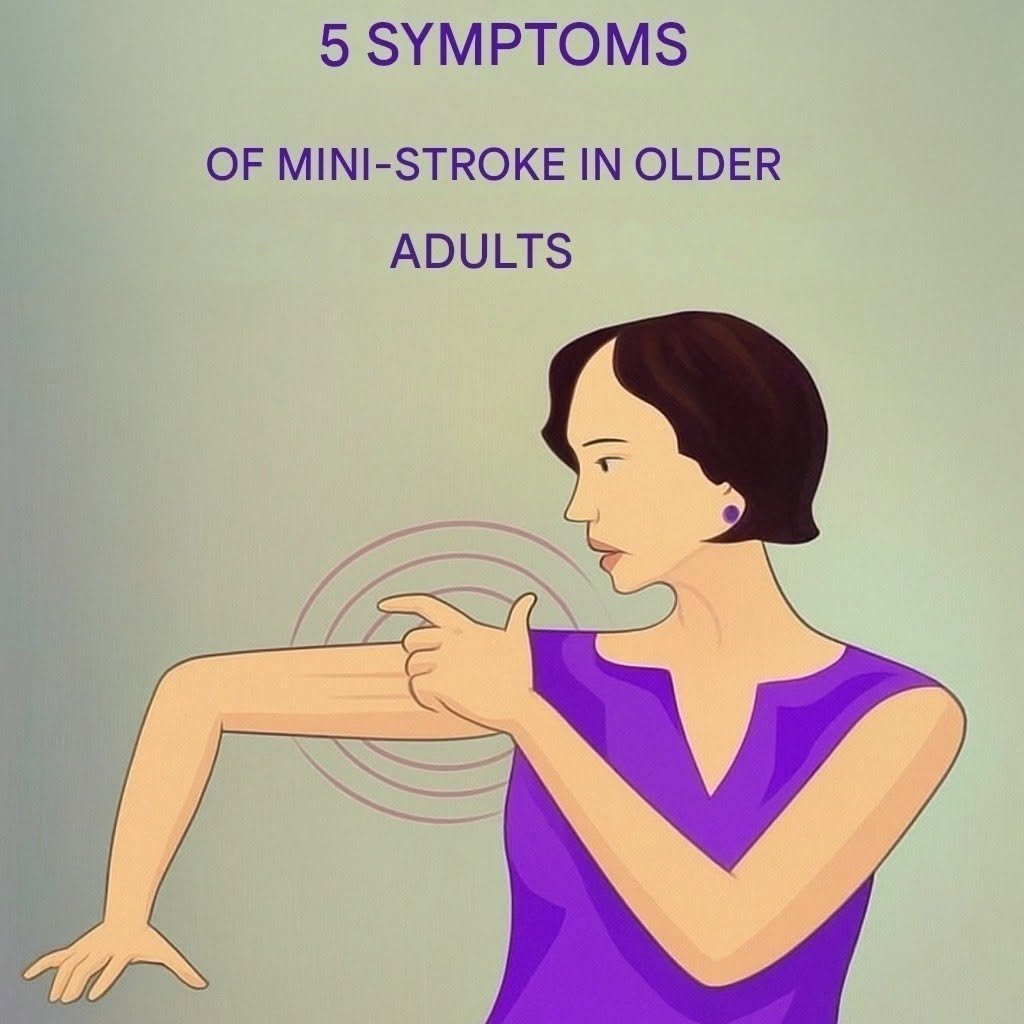
🧠 5 Symptoms of a Mini-Stroke in Seniors That Shouldn’t Be Ignored
A “mini-stroke” is commonly used to describe a transient ischemic attack (TIA). A TIA happens when blood flow to part of the brain is temporarily interrupted. The symptoms may disappear within minutes or hours, but that doesn’t mean the event is harmless.
A TIA can be a warning that a major stroke may follow. Because you cannot reliably tell a TIA from a stroke while symptoms are happening, sudden stroke-like symptoms should be treated as an emergency—even if they disappear.
1. 🙂 Sudden Facial Drooping
One side of the face may suddenly become weak or numb.
You might notice:
- One side of the mouth drooping
- An uneven smile
- Difficulty smiling normally
- Numbness on one side of the face
A quick way to check is to ask the person to smile and look for obvious asymmetry.
Don’t wait for the face to return to normal before seeking help.
2. 💪 Sudden Weakness or Numbness
A TIA can cause sudden weakness or numbness, particularly on one side of the body.
It may affect:
- The face
- Arm
- Leg
- Or several areas at once
Ask the person to raise both arms. If one arm suddenly drifts downward or they cannot lift it normally, this is a serious warning sign.
3. 🗣️ Sudden Trouble Speaking or Understanding
A person may suddenly:
- Slur their speech
- Have difficulty finding words
- Say things that don’t make sense
- Have trouble understanding what others are saying
- Suddenly become unable to communicate normally
Speech problems can be subtle, especially in someone who already has a communication difficulty.
A sudden change from their normal speech is important.
4. 👁️ Sudden Vision Changes
A TIA can temporarily affect vision.
Possible symptoms include:
- Sudden loss of vision in one eye
- Double vision
- Blurred vision
- Part of the visual field disappearing
- Sudden difficulty seeing
Sudden vision loss should never simply be attributed to aging or tired eyes.
5. 🚶 Sudden Trouble Walking, Balance Problems, or Severe Dizziness
A person may suddenly become:
- Unsteady
- Unable to walk normally
- Extremely dizzy
- Poorly coordinated
- Unable to maintain balance
These symptoms can have many causes, but sudden onset, particularly when accompanied by other neurological symptoms, requires urgent evaluation.
🚨 Remember FAST
A useful way to recognize common stroke symptoms is FAST:
F — Face: Is one side of the face drooping?
A — Arms: Is one arm weak or numb?
S — Speech: Is speech suddenly slurred or difficult?
T — Time: It’s time to call emergency medical services immediately.
Other stroke symptoms—including sudden vision problems, severe dizziness, loss of balance, or a sudden severe headache—also require emergency attention.
⏰ Don’t Wait Because the Symptoms Disappeared
This is perhaps the most important point.
If an older adult suddenly develops weakness, facial drooping, speech difficulty, vision loss, or another stroke-like symptom and then seems completely normal again, they may still have experienced a TIA.
Don’t simply let them sleep it off or wait for a routine doctor’s appointment.
A TIA requires urgent medical assessment because doctors need to determine what caused it and evaluate the person’s risk of a subsequent stroke.
🏥 What Should You Do?
If these symptoms are happening right now, call your local emergency medical service immediately.
If possible, note:
- The exact time the person was last known to be normal
- When the symptoms first appeared
- Which symptoms occurred
- Whether they improved or disappeared
- What medications the person takes
Don’t drive the person yourself if emergency medical services are available and can provide care during transport.
🚫 Don’t Give Food, Drink, or Medication Unless Instructed
Someone experiencing a stroke may have difficulty swallowing, creating a risk of choking.
Don’t give aspirin or other medication on your own simply because you suspect a stroke. Not all strokes are caused by a blood clot; some involve bleeding, and aspirin can be harmful in that situation.
Follow instructions from emergency medical professionals.
🩺 Why Seniors Should Take These Symptoms Seriously
The risk of stroke increases with age, particularly when someone has conditions such as:
- High blood pressure
- Diabetes
- High cholesterol
- Atrial fibrillation
- Smoking history
- Previous TIA or stroke
- Certain heart or blood-vessel conditions
Managing these risk factors can substantially reduce stroke risk.
🌟 The Bottom Line
The five symptoms to remember are:
- Sudden facial drooping
- Sudden weakness or numbness
- Sudden speech or comprehension problems
- Sudden vision changes
- Sudden dizziness, balance problems, or difficulty walking
A TIA can be brief, but it is not something to ignore. If these symptoms appear suddenly—even if they completely disappear—seek urgent medical evaluation.
When it comes to stroke symptoms, don’t wait for certainty. Treat sudden neurological changes as an emergency.