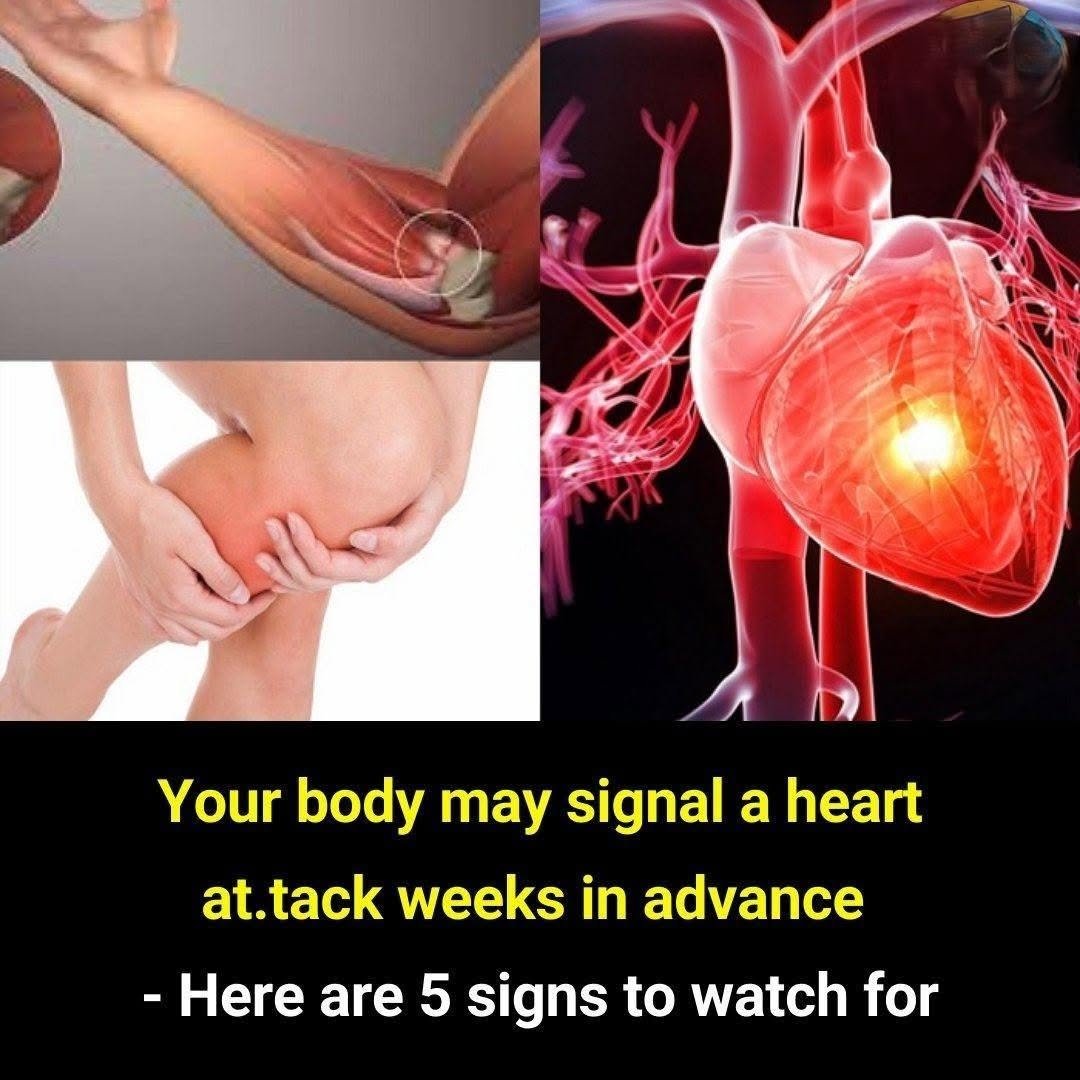
❤️ These 5 Symptoms May Be Early Clues of an Upcoming Heart Attack
A heart attack doesn’t always begin with dramatic, crushing chest pain. Some people experience subtle or unusual symptoms before or during a heart attack, and recognizing them can make a critical difference.
Importantly, these symptoms don’t necessarily mean a heart attack is about to happen. They can have many other causes. But when they are new, severe, unexplained, or occurring together, they should never be ignored.
1. 🫀 Chest Pressure, Tightness, or Discomfort
The classic warning sign is discomfort in the center or left side of the chest.
It may feel like:
- Pressure or squeezing
- Tightness
- Fullness
- Burning
- Heaviness
- An uncomfortable sensation rather than sharp pain
The discomfort may last several minutes, disappear, and return.
Some people describe it as feeling like something heavy is sitting on their chest.
2. 😮💨 Unexplained Shortness of Breath
Difficulty breathing can occur with or without chest discomfort.
You may notice that ordinary activities suddenly leave you unusually breathless, or you become short of breath while resting.
Shortness of breath can have many causes, including lung conditions, anemia, anxiety, and heart problems—but sudden or unexplained breathlessness deserves prompt attention.
3. 🥵 Sudden Cold Sweating
Breaking out in a cold sweat without an obvious reason, particularly alongside chest discomfort, nausea, weakness, or breathlessness, can be a warning sign of a heart problem.
This isn’t the same as simply sweating because you’ve been exercising or are in a hot environment.
Unexplained clammy skin combined with other concerning symptoms should be treated seriously.
4. 🤢 Nausea, Vomiting, or Indigestion-Like Discomfort
A heart attack can sometimes feel like a stomach problem.
You might experience:
- Nausea
- Vomiting
- Upper-abdominal discomfort
- Indigestion
- A feeling of fullness or pressure
These symptoms can be particularly easy to dismiss.
Women and older adults may be more likely to experience less typical heart-attack symptoms, although anyone can experience them.
5. 💪 Pain or Discomfort Outside the Chest
Heart-related discomfort can spread beyond the chest.
It may involve:
- One or both arms
- Shoulder
- Back
- Neck
- Jaw
- Upper abdomen
The discomfort doesn’t necessarily travel in a predictable pattern.
Unexplained pain or pressure in these areas—especially when accompanied by chest discomfort, sweating, nausea, or breathlessness—requires urgent attention.
⚠️ Don’t Wait for All 5 Symptoms
One of the most important things to understand is that you do not need to have all five symptoms.
A heart attack may cause only one or two symptoms, and some people—particularly women, older adults, and people with diabetes—may have relatively mild or unusual symptoms.
Likewise, symptoms can vary considerably from one person to another.
🚨 What To Do If You Suspect a Heart Attack
If you or someone else develops symptoms that could indicate a heart attack, seek emergency medical help immediately.
Don’t wait to see whether the symptoms disappear.
While waiting for emergency medical services:
- Stop physical activity and rest.
- Keep the person as calm and comfortable as possible.
- Don’t drive yourself to the hospital if emergency medical services are available.
- Follow the emergency dispatcher’s instructions.
- If the person becomes unresponsive and isn’t breathing normally, begin CPR and use an AED if one is available.
Do not delay emergency care to try a home remedy, drink, supplement, or painkiller.
🩺 Symptoms That Keep Coming Back Also Matter
Sometimes people experience warning symptoms during exertion that improve with rest.
For example, you might repeatedly notice chest pressure or unusual breathlessness while walking quickly or climbing stairs and feel better after stopping.
That pattern can be associated with angina, which may indicate reduced blood flow to the heart.
It should be medically evaluated rather than dismissed as simply “getting older.”
❤️ Protecting Your Heart Long-Term
You can’t prevent every heart attack, but you can reduce cardiovascular risk by managing important risk factors.
That includes:
- Controlling high blood pressure
- Managing cholesterol
- Keeping diabetes under control
- Avoiding tobacco
- Exercising regularly
- Eating a balanced diet
- Maintaining a healthy weight
- Getting adequate sleep
- Taking prescribed medications as directed
Regular medical checkups can help identify problems before they become emergencies.
🌟 The Bottom Line
The five warning symptoms to remember are:
Chest pressure → unexplained breathlessness → cold sweating → nausea/indigestion → discomfort spreading to the arm, back, neck, jaw, or shoulder.
But don’t wait for the complete list. New or unexplained chest discomfort, severe breathlessness, fainting, or symptoms suggestive of a heart attack warrant immediate emergency evaluation.
When it comes to a possible heart attack, it’s much safer to get checked and discover it wasn’t a heart attack than to wait and lose valuable treatment time.