New Method: Could Colonoscopy Become Less Invasive?
There are real advances that could reduce the need for conventional colonoscopy, but the headline “colonoscopy will no longer be an invasive examination” is misleading. The newer methods are alternatives to colonoscopy—not a replacement for colonoscopy in every situation.
One of the most promising approaches is colon capsule endoscopy, in which a person swallows a small capsule containing cameras. The capsule travels naturally through the digestive tract and captures images of the colon without a conventional flexible scope being inserted through the rectum. Cancer.gov+1
1. The “Camera Pill”
Colon capsule endoscopy is essentially a swallowable camera.
After swallowing the capsule, tiny cameras take images as it moves through the gastrointestinal tract. The images are transmitted to a recorder worn by the patient and later reviewed by medical professionals. The capsule eventually leaves the body naturally. Cancer.gov
This means there is no traditional colonoscope passing through the colon, and sedation is generally not required.
2. A 2026 Study Shows Promising Progress
A prospective multicenter study published online in July 2026 evaluated a newer CC100 colon capsule system in 136 participants.
The capsule provided complete visualization of the colon in 124 of 136 people (91.18%), compared with 100% completion with conventional colonoscopy. For clinically relevant polyps measuring at least 6 mm, the capsule had a reported sensitivity of 86.67% and specificity of 98.63%. No capsule retention or procedure-related adverse events occurred in that study. PubMed+1
Those results are encouraging, but they also show why it is too early to say that traditional colonoscopy has become obsolete.
3. The Biggest Advantage: No Conventional Scope
The major attraction is obvious.
Instead of having a flexible tube inserted through the rectum, the patient swallows a capsule.
For people who are anxious about conventional colonoscopy, unable to tolerate the procedure, or have previously had an incomplete colonoscopy, this could provide an appealing alternative in appropriate circumstances.
4. But You Still Need Bowel Preparation
There’s an important catch.
A capsule examination isn’t simply “swallow a pill and you’re done.”
The colon generally still needs to be thoroughly cleaned so that the cameras can see the intestinal lining. The NCI notes that bowel cleansing remains necessary for capsule colonoscopy. Cancer.gov
So although the examination itself is less invasive, the preparation can still be inconvenient.
5. The Capsule Can’t Remove a Polyp
This is perhaps the most important difference.
During conventional colonoscopy, a doctor can see a suspicious lesion, remove many polyps, and take a biopsy during the same procedure. PubMed
A diagnostic capsule can identify something suspicious, but it generally can’t reach out and remove the polyp.
If a significant polyp or suspicious lesion is discovered, the patient may still need a conventional colonoscopy afterward.
6. Artificial Intelligence Could Make Capsule Testing Better
Researchers are also investigating AI-assisted capsule endoscopy.
A 2026 systematic review and meta-analysis presented at the ASCO Annual Meeting reported pooled sensitivity of about 93.4% and specificity of about 94.6% for AI-assisted colon capsule detection of colorectal polyps. However, the studies showed substantial variability, so these results should be considered promising rather than proof that AI capsule screening has replaced conventional colonoscopy. ASCO Publications
7. There Are Other Non-Invasive Options Too
Capsule endoscopy isn’t the only alternative being studied or used.
Other approaches include:
- FIT stool testing, which looks for hidden blood.
- Stool DNA testing, which looks for molecular signs associated with colorectal cancer.
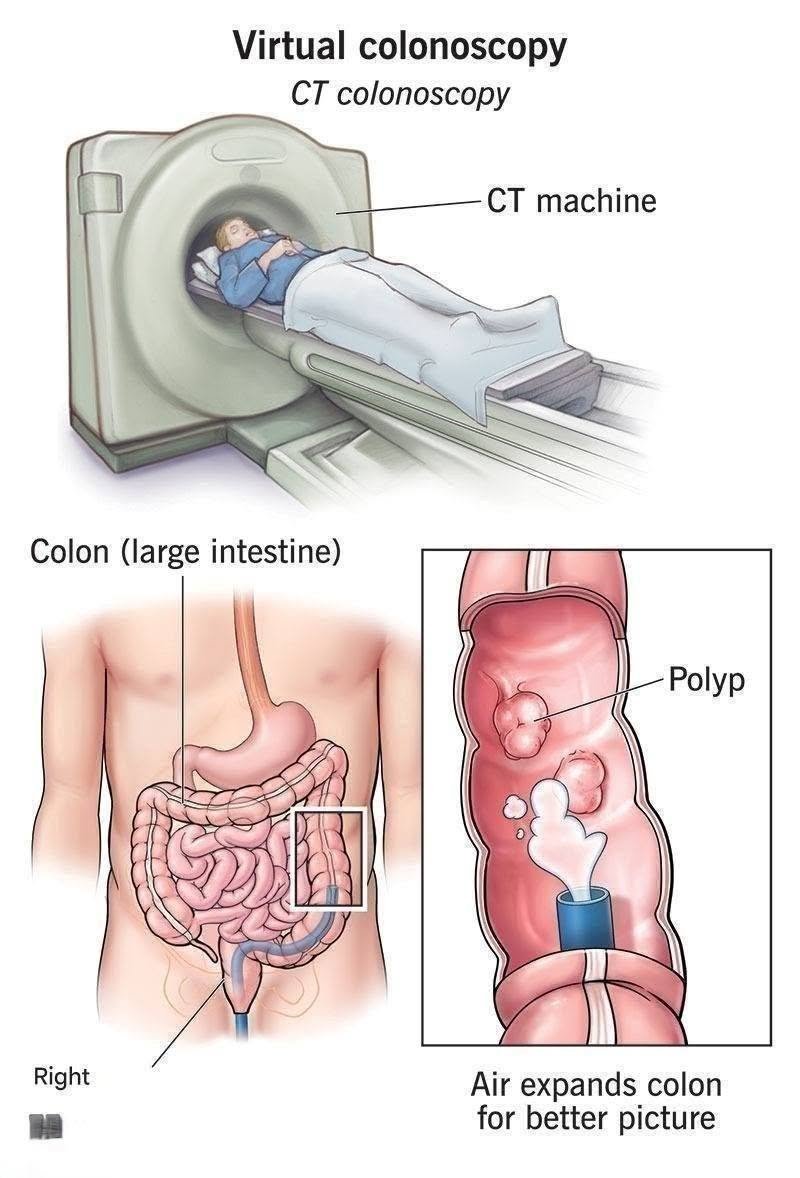
- CT colonography, sometimes called virtual colonoscopy.
- Blood-based colorectal cancer tests.
- Emerging AI-assisted imaging technologies.
Some of these are already available in certain healthcare systems, while others remain under investigation or have important limitations. ScienceDirect+1
8. A Positive Alternative Test Can Still Lead to Colonoscopy
This is critical.
A stool test, blood test, CT colonography, or capsule examination may reduce the number of people who need conventional colonoscopy—but an abnormal result can still require a colonoscopy for confirmation, biopsy, or removal of a lesion.
For example, current colorectal screening guidance recognizes non-colonoscopy options, but positive screening tests generally require follow-up colonoscopy. Reuters
9. Conventional Colonoscopy Still Has a Major Advantage
Colonoscopy remains extremely valuable because it combines detection and treatment.
During one procedure, a gastroenterologist can examine the colon, identify suspicious tissue, remove many polyps, and obtain tissue for pathological examination.
That’s something a purely diagnostic camera capsule generally cannot do.
10. The Future May Be “Less Invasive,” Not “No Colonoscopy”
The most accurate way to describe what’s happening is that colorectal screening is becoming more diverse and potentially less invasive.
A person may eventually have several ways to be screened, with the appropriate choice depending on their age, symptoms, risk factors, previous test results, and medical history.
Recent research supports this direction. A 2026 international consensus statement specifically addresses the use of colon capsule endoscopy and how colorectal cancer outcomes after capsule testing should be measured. Springer Link+1
What This Means for Patients
If you are worried about having a colonoscopy, don’t simply skip colorectal cancer screening.
Ask your healthcare professional whether an alternative such as FIT, stool DNA testing, CT colonography, or colon capsule endoscopy is appropriate for your particular situation.
The best screening method is the one that is appropriate for your risk level and that you will actually complete.
Final Takeaway
The idea behind the headline is real, but the wording is exaggerated.
Colon capsule endoscopy is making examination of the colon less invasive, and newer 2026 research shows encouraging improvements in its ability to visualize the colon and detect polyps. PubMed
However, conventional colonoscopy has not disappeared. It remains especially important because doctors can remove polyps and take biopsies immediately.
So the future isn’t necessarily “no more colonoscopies.” It’s more likely to be more screening choices, better capsule technology, improved AI detection, and fewer people needing an invasive procedure when an alternative is appropriate.
