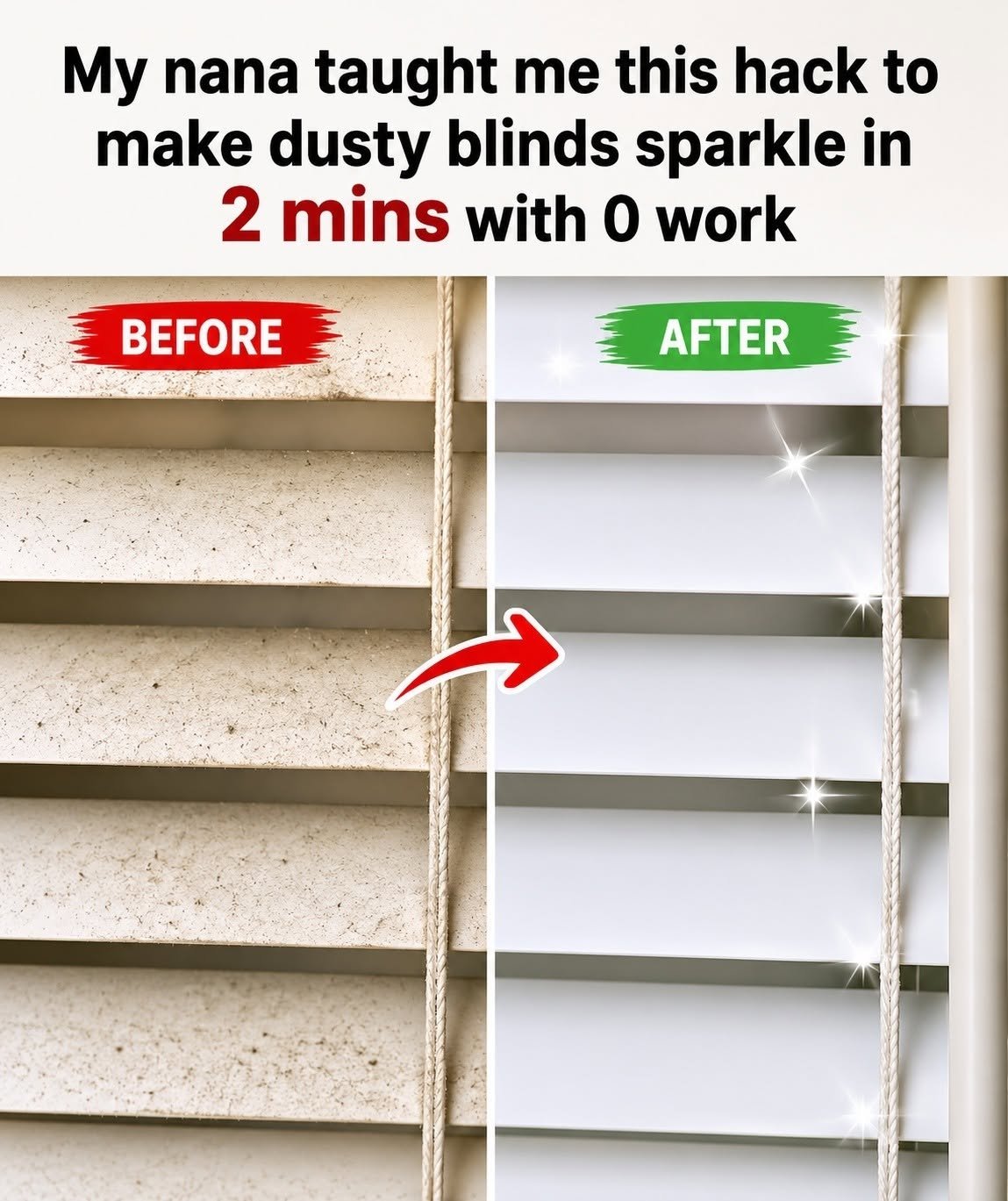
My Nana Taught Me This Hack to Make Dusty Blinds Sparkle in 2 Minutes With Almost No Effort
Dusty blinds can make an otherwise clean room look neglected. The good news is that you don’t need to take every blind apart, spray a mountain of cleaner, or spend an hour wiping individual slats.
One of the easiest methods uses something you probably already have: a clean microfiber cloth and a pair of kitchen tongs.
The 2-Minute Blind-Cleaning Hack
What you’ll need
- 1 pair of clean kitchen tongs
- 1 microfiber cloth
- 2 rubber bands or hair ties
- A small amount of water
- Optional: a tiny amount of mild dish soap for greasy blinds
Step 1: Make your “blind duster”
Wrap one microfiber cloth around each side of the kitchen tongs.
Secure the cloth with rubber bands so that the tong surfaces are completely covered.
You now have a simple two-sided blind-cleaning tool.
Step 2: Lightly dampen the cloth
Don’t soak it.
A slightly damp microfiber cloth is usually enough to capture ordinary household dust.
If your blinds are greasy, add a tiny amount of mild dish soap to the water.
Avoid saturating wooden blinds, because excessive moisture can damage some finishes or cause warping.
Step 3: Close the blinds
For horizontal blinds, adjust the slats so they are relatively flat and easy to access.
Don’t force them if the mechanism is stiff.
Step 4: Grab one slat at a time
Place the cloth-covered tongs around a blind slat and gently slide from one end toward the other.
Because the cloth contacts both the upper and lower surfaces simultaneously, you’re cleaning two sides at once.
That’s the trick.
Instead of wiping each side separately, the microfiber catches dust from both surfaces as you move along.
Step 5: Work your way down
Repeat across the remaining slats.
For lightly dusty blinds, you may only need a quick pass.
If the cloth becomes visibly dirty, shake it out outdoors or switch to a clean section.
Why This Works
Microfiber is effective at picking up ordinary household dust because its tiny fibers create a large surface area for trapping particles.
The tong method simply makes the process faster.
Instead of:
wipe → reposition → wipe → reposition
you’re doing:
grab → slide → release.
It’s especially convenient for horizontal Venetian-style blinds.
What If Your Blinds Are Very Dirty?
Dust is one thing.
Grease, cooking residue, nicotine residue, and accumulated grime are another.
For heavily soiled blinds, dry dusting first is often helpful.
Then use a slightly damp cloth with a small amount of appropriate cleaner.
Don’t aggressively scrub painted or delicate surfaces, because you can remove the finish.
For Kitchen Blinds
Kitchen blinds often accumulate a mixture of dust and grease.
Use warm water with a small amount of mild dish soap.
Wring the cloth thoroughly before cleaning.
Afterward, wipe away any remaining soap with a clean damp cloth and dry the slats.
For Wooden Blinds
Be more cautious.
Wood can be damaged by excessive moisture.
Use a dry microfiber cloth for routine dusting, or a barely damp cloth when necessary, depending on the manufacturer’s care instructions.
Don’t leave water sitting on the wood.
For Fabric Blinds
Don’t use the tong trick aggressively on fabric.
Depending on the material, vacuuming with a suitable brush attachment may be safer.
Always check the manufacturer’s cleaning instructions first.
An Even Easier Version
If you don’t have kitchen tongs, there’s another simple approach.
Put a clean microfiber cloth over your hand and run your fingers between the slats.
It’s slower, but you have much more control over delicate blinds.
You can also use a dedicated blind-cleaning duster with multiple fingers designed to clean several surfaces simultaneously.
One Important Mistake to Avoid
Don’t spray cleaner directly onto your blinds.
Spraying directly can cause liquid to run into:
- Window frames
- Cords
- Mechanisms
- Electrical components near motorized blinds
Instead, apply a small amount of cleaner to the cloth when appropriate.
How Often Should You Clean Blinds?
You don’t necessarily need a deep clean every week.
For ordinary household blinds:
- Light dusting: every 1–2 weeks
- More thorough cleaning: every few months or as needed
- Kitchen blinds: potentially more frequently
Homes with pets, smokers, construction dust, or significant indoor dust may require more frequent cleaning.
Don’t Forget the Window Area
Once the blinds are clean, wipe the windowsill and nearby frame.
Otherwise, dust can quickly migrate back onto your freshly cleaned blinds.
A quick vacuum around the sill can also help.
The Bottom Line
The “two-minute” trick isn’t really magic—it’s about cleaning both sides of a blind slat at the same time.
Wrap microfiber cloths around a pair of kitchen tongs, secure them with rubber bands, lightly dampen the cloth, and gently slide the covered tongs along each slat.
For ordinary dust, it’s a fast and inexpensive shortcut.
Just remember:
Use minimal moisture, avoid harsh chemicals, and check the manufacturer’s instructions for wood, fabric, or specialty blinds.
And while the hack can make dusty blinds look dramatically better in a few minutes, extremely dirty blinds may still require a proper deep cleaning.