Hidden Car Features That Almost No One Knows About
Modern cars are packed with small features designed to make driving safer, easier, and more convenient. The problem is that many of these features aren’t obvious. Some are buried in menus, some are hidden in plain sight, and others are only mentioned briefly in the owner’s manual.
The exact features vary by make, model, trim level, and model year, so not every feature below will be available in every vehicle.
1. The Fuel-Pump Arrow Tells You Which Side the Fuel Door Is On
Look at the fuel gauge on your dashboard.
Many vehicles have a small triangle or arrow beside the fuel-pump symbol. It points toward the side of the vehicle where the fuel filler door is located.
This is incredibly useful when you’re driving an unfamiliar car, using a rental vehicle, or borrowing someone else’s car.
Instead of pulling up to the fuel station and realizing you’re on the wrong side, simply check the arrow.
Why is this useful?
Fuel-door placement isn’t standardized. Some cars have the filler on the driver’s side, while others have it on the passenger side.
The little arrow eliminates the guesswork.
2. Your Headrest Can Sometimes Help Break a Window
Many removable headrests have strong metal posts.
In an emergency where a vehicle is trapped and you need to escape through a side window, people sometimes suggest removing the headrest and using the metal posts to break the glass.
However, this isn’t a universal or guaranteed method. Modern vehicle glass varies considerably, and laminated side windows may not break in the same way as tempered glass.
A purpose-designed emergency escape tool is generally more reliable.
Also remember that the windshield is usually laminated and is not designed to shatter like tempered side glass.
3. Your Key Fob May Have a Hidden Mechanical Key
If your car has keyless entry, look closely at the key fob.
Many fobs contain a small physical key hidden inside.
It can be useful if:
- The key-fob battery dies
- The vehicle’s electronic locking system doesn’t respond
- You need to unlock the driver’s door manually
The exact release mechanism varies by manufacturer.
Check the owner’s manual before you need it.
There’s another hidden feature
Some vehicles also have a concealed mechanical keyhole underneath a small cover on the exterior door handle.
So even if you don’t see a traditional keyhole, it may still be there.
4. Your Key Fob May Have a Secret Window Function
Depending on the vehicle, pressing and holding certain key-fob buttons can operate the windows.
For example, some vehicles allow you to:
- Open the windows remotely
- Close the windows remotely
- Open the sunroof
- Unlock specific doors
But this feature is highly model-dependent.
Some manufacturers disable it entirely for safety or market-specific reasons.
If you’re curious, check your owner’s manual rather than repeatedly experimenting with button combinations.
5. Some Cars Can Remember Your Seat Position
If your vehicle has memory seats, you may be able to store multiple driver positions.
This can include settings for:
- Driver’s seat
- Steering column
- Side mirrors
- Sometimes other vehicle preferences
This is particularly useful when multiple people regularly drive the same vehicle.
Instead of readjusting everything every time, select your stored profile.
6. Your Rearview Mirror May Have an Automatic Dimming Function
If your rearview mirror becomes darker when a vehicle behind you shines bright headlights at night, your car may have an automatic-dimming mirror.
These mirrors use sensors to detect bright light from behind and automatically reduce reflected glare.
Some vehicles also have automatically dimming side mirrors.
If your mirror has a small sensor or electronic-looking section, there’s a good chance it has additional functionality.
7. The Little Lights in Your Door May Do More Than You Think
Some higher-end vehicles have small lights around the doors, dashboard, handles, or footwells.
These aren’t necessarily just decorative.
Depending on the vehicle, ambient lighting can:
- Help you locate controls at night
- Illuminate the entry area
- Change color based on drive mode
- Provide warnings
- Improve visibility when entering or leaving the car
Some vehicles allow you to customize the color and brightness through the infotainment system.
8. Your Car May Have a Hidden Tire-Pressure Display
Some vehicles don’t just give you a warning when a tire is underinflated.
The infotainment system or instrument cluster may display the pressure of individual tires.
Look under menus such as:
Vehicle → Information → Tire Pressure
The exact menu differs by manufacturer.
Remember that tire-pressure monitoring systems don’t eliminate the need to physically check tire pressures periodically.
9. The Trunk May Have an Emergency Release
Many vehicles have a glow-in-the-dark emergency trunk release inside the luggage compartment.
It’s designed primarily to allow someone accidentally trapped inside the trunk to escape.
The mechanism is commonly marked with a small emergency-release symbol.
If you own a vehicle with a trunk, it’s worth knowing where this release is located.
10. Your Car May Have a Secret Cargo-Compartment Storage Area
Lift the floor of your trunk.
You may find more than just the spare tire.
Depending on the vehicle, there may be compartments for:
- Tools
- Tire-repair equipment
- Charging cables
- Emergency equipment
- Small personal items
- Warning triangles
Some vehicles have surprisingly large hidden storage spaces underneath the cargo floor.
11. The Back Seat May Have a Secret Locking Feature
Many cars have child safety locks on the rear doors.
When activated, they prevent children in the rear seats from opening the doors from inside.
Some vehicles have a mechanical switch, while others use electronic controls.
This feature is particularly important if young children regularly ride in the vehicle.
Don’t confuse child safety locks with the central locking system: the from the side rather than directly two functions are different.
12. Your Sun Visor Can Often Slide Sideways
Most people pull the sun visor down.
But many visors can also slide along their mounting rod after being swung toward the side window.
This lets you block sunlight coming from the side rather than directly ahead.
It’s a tiny feature, but extremely useful during sunrise and sunset.
Some vehicles also have an extension section built into the visor.
13. Your Glovebox May Be More Than a Glovebox
Depending on the vehicle, the glove compartment may contain:
- A cooling function
- USB or power connections
- Document storage
- An auxiliary outlet
- A small compartment
- A lock
Some vehicles allow the glovebox to be cooled by the vehicle’s air-conditioning system, making it useful for temporarily keeping certain items cool.
Don’t assume every glovebox has this function, though.
14. The Center Console May Hide a USB or Power Port
Modern vehicles sometimes place charging ports in locations people don’t immediately notice.
Check:
- Inside the center console
- Under the armrest
- Inside the glovebox
- Beneath a sliding cover
- In the rear-seat console
- Inside the cargo area
A vehicle that appears to have only one charging port may actually have several.
15. Your Steering Wheel May Have a “Shortcut” Button
Many steering wheels contain buttons that do much more than adjust volume.
Depending on the vehicle, buttons may control:
- Voice commands
- Driver-information displays
- Phone calls
- Cruise control
- Adaptive cruise control
- Lane-assistance settings
- Audio sources
Learning these controls can reduce the need to take your hands away from the steering wheel.
16. Your Turn Signal May Have a Lane-Change Tap Function
On many modern vehicles, lightly tapping the turn-signal lever activates the indicator for a short sequence of flashes without requiring you to lock the lever into position.
It’s useful when changing lanes.
The number of flashes varies by manufacturer and vehicle settings.
17. Some Cars Automatically Hold the Brakes for You
Vehicles equipped with Auto Hold can maintain brake pressure after you’ve stopped.
This can be particularly convenient in:
- Heavy traffic
- Stop-and-go driving
- At traffic lights
- On inclines
You can take your foot off the brake while the system holds the vehicle stationary.
The system doesn’t replace careful driving, and its operation varies by vehicle.
18. Your Car May Have a Hidden Speed-Limit Display
Some vehicles use cameras or navigation data to recognize speed-limit signs.
The detected limit may appear on the instrument cluster or head-up display.
Some systems can also warn you when you’re exceeding the detected limit.
This feature is especially useful when driving in unfamiliar areas.
However, camera-based systems aren’t perfect. Always pay attention to actual road signs.
19. Some Cars Can Show What’s Behind You When Reversing
The reversing camera is more than a basic backup tool on some vehicles.
Advanced systems can provide:
- Dynamic parking guidelines
- 360-degree views
- Cross-traffic warnings
- Multiple camera angles
- Trailer views
Some vehicles even allow the driver to change the camera perspective.
20. Your Car May Have a Hidden “Valet” or Restricted Mode
Some modern vehicles offer valet or restricted modes that limit access to certain functions.
Depending on the vehicle, this may restrict:
- Glovebox access
- Trunk access
- Performance settings
- Personal information
- Certain infotainment features
It’s useful when handing the vehicle to someone else.
21. The Fuel Door May Unlock Automatically
Many drivers instinctively look for a fuel-door release button.
But some vehicles don’t have one.
Instead, the fuel flap unlocks automatically when the vehicle is unlocked.
If you’re at a fuel station wondering why you can’t find a release lever, try unlocking the car and pressing the fuel door according to the manufacturer’s design.
22. Some Cars Have a Hidden “Service” or Maintenance Menu
Modern vehicles store a surprising amount of information electronically.
Depending on the model, the dashboard may provide information about:
- Oil life
- Service intervals
- Tire pressure
- Battery status
- Warning messages
- Vehicle settings
Some manufacturers also provide diagnostic information through specific menu sequences.
However, don’t change advanced settings unless you know exactly what they do.
23. You May Be Able to Adjust the Automatic Headlights
Many cars have automatic headlights that turn on based on ambient light.
Some systems also allow you to adjust:
- Automatic-light sensitivity
- Follow-me-home lighting duration
- Welcome lighting
- Headlight delay
These options may be buried in the vehicle settings.
24. Your Car May Have “Follow-Me-Home” Lighting
This feature keeps the headlights or exterior lights illuminated for a short period after you leave the vehicle.
It can help illuminate your path from the car to your house or another destination at night.
Depending on the vehicle, it may activate automatically or require a specific use of the headlight or remote controls.
25. Your Rear Seats May Fold in More Than One Way
Don’t assume the rear seats simply fold forward.
Some vehicles have:
- 60/40 split folding
- Reclining rear seats
- Fold-down center sections
- Folding seatbacks
- Adjustable headrests
- Cargo-pass-through openings
A center pass-through can be particularly useful for transporting long objects without folding the entire rear seat.
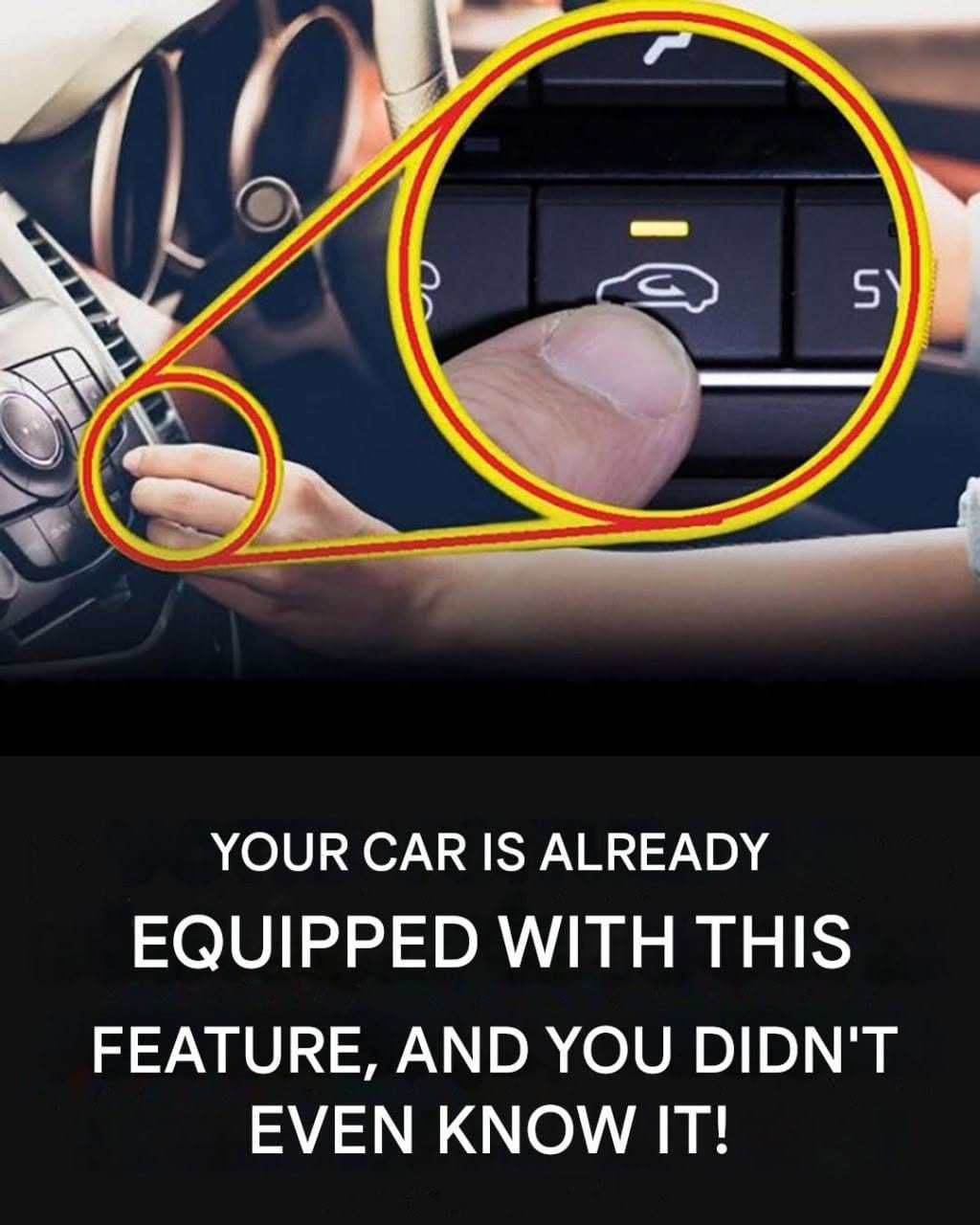
26. Your Car May Have a Hidden Air Recirculation Shortcut
The air-conditioning system may include an automatic recirculation function.
Recirculating cabin air can be useful when:
- You’re stuck behind a smoky vehicle
- Driving through a dusty area
- Trying to cool the cabin quickly
However, prolonged recirculation can increase humidity and reduce fresh-air exchange.
Some vehicles automatically switch between outside air and recirculation depending on conditions.
27. Some Cars Can Remember Mirror Positions
On vehicles with memory functions, the side mirrors may be linked to different driver profiles.
Some vehicles also automatically tilt a mirror downward when reversing, helping the driver see the curb.
This feature isn’t universal, but it’s worth checking your vehicle settings if your car has electrically adjustable mirrors.
28. Your Car May Have a Hidden Emergency Call System
Many newer vehicles have built-in emergency or roadside-assistance systems.
Depending on the market and vehicle, pressing a dedicated button—or automatic activation after a serious collision—may connect occupants with emergency services or assistance.
Availability depends heavily on the manufacturer, model, country, cellular coverage, and whether the connected service is still supported.
29. The Owner’s Manual May Be Hidden in the Infotainment System
If you’ve lost the physical owner’s manual, don’t immediately assume it’s gone forever.
Many modern vehicles include a digital owner’s manual accessible through the infotainment system.
This can be particularly useful because you can search for terms such as:
- “Key fob”
- “Fuel door”
- “Child lock”
- “Tire pressure”
- “Emergency”
- “Auto Hold”
- “Seat memory”
That’s often the fastest way to discover features specific to your exact vehicle.
30. Your Car’s VIN Can Reveal Important Information
The Vehicle Identification Number (VIN) is a unique identifier for the vehicle.
It can be useful when:
- Ordering replacement parts
- Checking recalls
- Confirming vehicle specifications
- Speaking with a dealer
- Looking up manufacturer information
It’s usually located on the dashboard near the windshield or on the vehicle documentation.
Avoid publicly posting your complete VIN unnecessarily.
The Most Important Hidden Feature: Read Your Owner’s Manual
The biggest “secret” is actually the one most drivers overlook.
Your owner’s manual contains information specific to your exact vehicle, including features that may not exist on another model from the same manufacturer.
If you want to discover what your car can really do, look through sections covering:
- Keys and remote controls
- Driver-assistance systems
- Vehicle settings
- Climate controls
- Seats and mirrors
- Lighting
- Infotainment
- Emergency equipment
- Storage compartments
- Maintenance
You may discover features you’ve been driving past—or working around—for years.
Final Takeaway
Cars have become increasingly sophisticated, and many useful functions are hidden behind small buttons, menus, sensors, or clever pieces of design.
The fuel-door arrow, hidden mechanical key, automatic-dimming mirror, emergency trunk release, sliding sun visor, tire-pressure display, memory seats, Auto Hold, and digital owner’s manual are just a few examples.
But remember: never assume a feature exists or operate an unfamiliar control based solely on a viral “car hack.” Features vary by vehicle, and some internet tricks can be unsafe.
The best source for your particular car is the owner’s manual and the manufacturer’s official documentation.