Which Banana Is Actually the Healthiest?
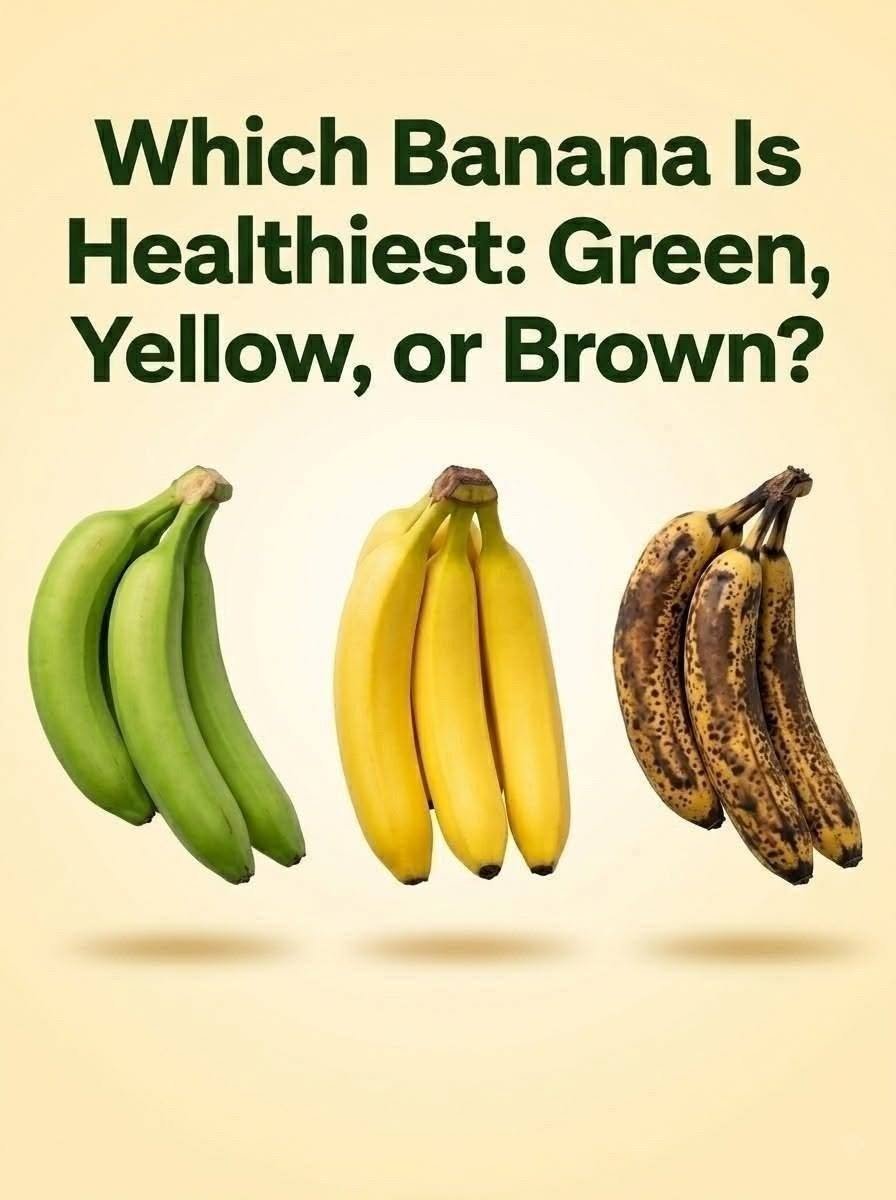
Not all bananas are nutritionally identical. The biggest difference comes from ripeness. As a banana ripens, its starch gradually breaks down into simpler sugars, changing its texture, sweetness, and effect on blood sugar.
So, which banana is healthiest? It depends on what you’re looking for.
🍌 1. Slightly Green Banana — Best for Resistant Starch
If your priority is gut health and slower digestion, a slightly green or just-turning-yellow banana may have an advantage.
Less-ripe bananas contain more resistant starch, a type of carbohydrate that isn’t fully digested in the small intestine. Some resistant starch reaches the large intestine, where gut bacteria can ferment it.
As the banana ripens, much of this resistant starch is converted into simpler sugars.
A slightly green banana is therefore generally less sweet and more starchy than a fully ripe one.
🍌 2. Yellow Banana — Best All-Around Choice
For most people, a yellow banana without extensive brown spotting is an excellent everyday choice.
It’s naturally sweet, provides carbohydrates for energy, and contains useful amounts of potassium, vitamin B6, and fiber.
It’s also convenient, inexpensive, and easy to include in meals and snacks.
If you don’t have a specific nutritional goal, there’s little reason to obsess over choosing one particular stage of ripeness.
🍌 3. Very Ripe Banana — Sweeter and Easier to Digest
As bananas develop brown spots, their starch continues converting into sugars.
This makes them softer and sweeter.
Very ripe bananas can be particularly useful for cooking because their natural sweetness allows you to reduce added sugar in foods such as smoothies, oatmeal, and baked goods.
However, someone who is specifically trying to keep meals less sweet or reduce rapid carbohydrate absorption may prefer a less-ripe banana.
🍌 What About the Tiny “Baby” Bananas?
Small banana varieties aren’t automatically healthier simply because they’re smaller.
Their nutritional composition is broadly similar to other bananas, although the exact amounts of calories, carbohydrates, and micronutrients vary according to variety and serving size.
The biggest practical difference is portion size.
A smaller banana can make it easier to control the amount you eat if you’re monitoring total calorie or carbohydrate intake.
🍌 What About Red Bananas?
Red bananas can be a nutritious choice too.
They provide carbohydrates, fiber, potassium, and other nutrients found in bananas generally. Their reddish-purple skin comes from plant pigments that differ from those in conventional yellow bananas.
There isn’t strong evidence that red bananas are universally “healthier” than yellow bananas, though. Both can fit comfortably into a nutritious diet.
🏆 So Which One Wins?
If we had to choose based on different goals:
- Gut health: Slightly green banana
- Everyday nutrition: Yellow banana
- Cooking and natural sweetness: Very ripe banana
- Smaller portion: Baby/small banana
- Variety and plant compounds: Red banana
But the differences shouldn’t be exaggerated.
A banana doesn’t suddenly become unhealthy because it has brown spots, and a green banana isn’t a miracle food.
One Important Point About Blood Sugar
Ripeness can influence how quickly the carbohydrates in a banana are digested, but the effect depends on the entire meal, portion size, individual metabolism, and other factors.
If you have diabetes or are monitoring blood glucose, you don’t necessarily need to avoid ripe bananas. Portion size and the overall meal pattern matter.
Combining fruit with protein, healthy fats, or other high-fiber foods can also change the overall response to a meal.
The want more resistant starch, choose one that’s slightly green. If you want maximum sweetness for cooking, a ripe Bottom Line
There is no single “healthiest” banana for everyone.
For most people, a normal yellow banana is an excellent choice. If you want more resistant starch, choose one that’s slightly green. If you want maximum sweetness for cooking, a ripe banana with brown spots works beautifully.
Rather than worrying about finding the perfect banana, focus on eating a variety of fruits, vegetables, whole grains, protein sources, and healthy fats.
And yes—those brown spots don’t mean your banana has suddenly become bad for you. 🍌