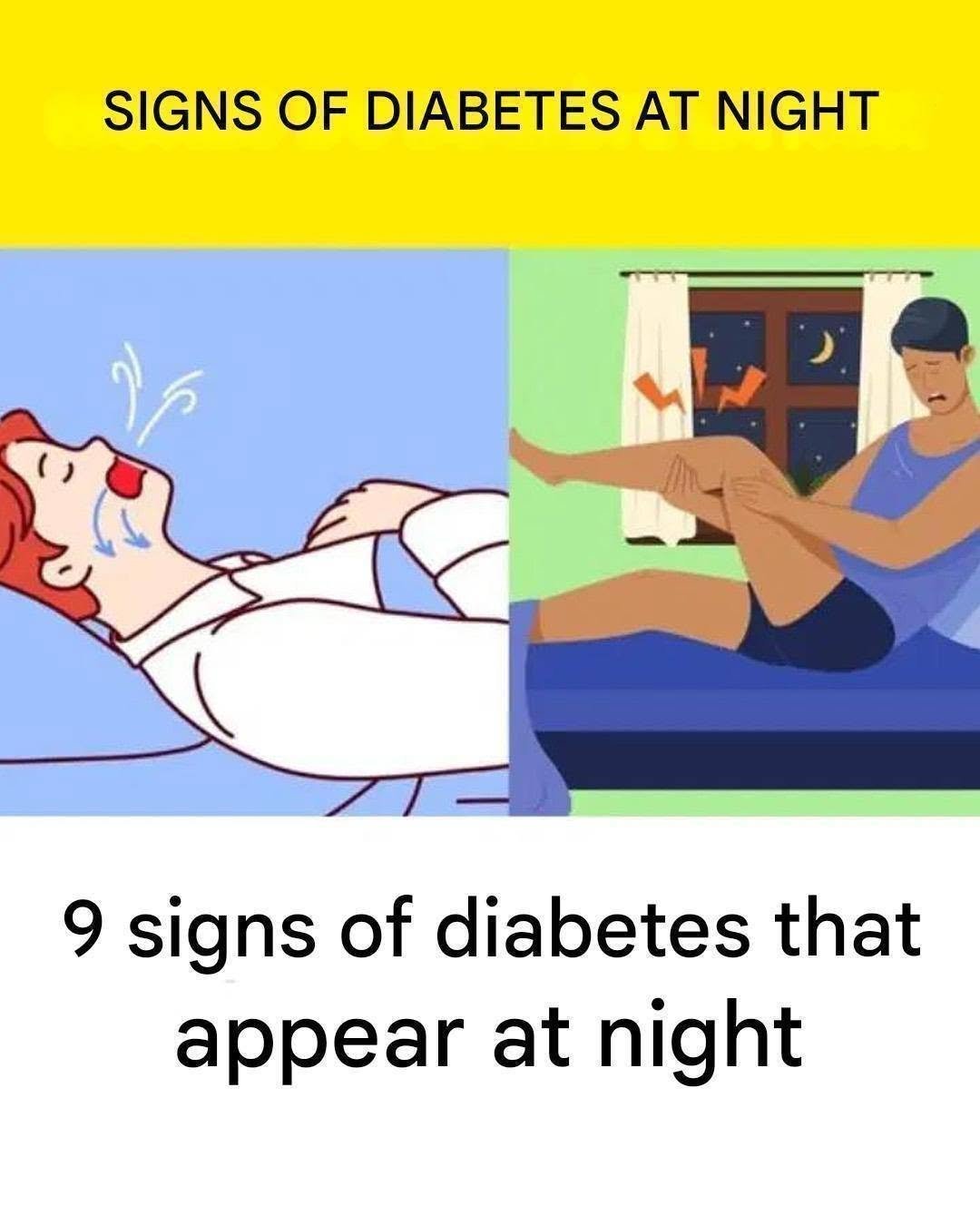
9 Signs of Diabetes That May Appear at Night
Diabetes can cause symptoms at any time of day, but some may become particularly noticeable during the night. This can happen because high or low blood glucose levels affect thirst, urination, sleep, nerves, and fluid balance.
1. Frequent Urination at Night
One of the common signs associated with high blood sugar is frequent urination, including waking up several times during the night.
When blood glucose becomes too high, the kidneys try to remove the excess glucose through urine. This can increase urine production and cause repeated nighttime trips to the bathroom.
You may notice:
-
Waking up multiple times to urinate
-
Producing unusually large amounts of urine
-
Feeling thirsty after urinating
Occasional nighttime urination is normal, but persistent or newly increased urination may warrant a medical evaluation.
2. Excessive Thirst and Dry Mouth
High blood glucose can cause the body to lose more fluid through urine. As a result, you may become very thirsty, including during the night.
You might:
-
Wake up needing water
-
Have a very dry mouth
-
Keep water beside your bed
-
Feel thirsty even after drinking
Persistent excessive thirst together with frequent urination is particularly worth discussing with a healthcare professional.
3. Night Sweats
Night sweating can sometimes be associated with low blood sugar (hypoglycemia). This is especially relevant for people with diabetes who use insulin or certain glucose-lowering medicines.
Low blood sugar during sleep may cause:
-
Sweating
-
Shaking
-
A rapid heartbeat
-
Hunger
-
Restlessness
-
Headache or confusion after waking
However, night sweats have many possible causes, so they don’t necessarily indicate diabetes.
4. Tingling, Burning, or Numb Feet
Diabetes that remains poorly controlled over time can damage nerves, a condition called diabetic peripheral neuropathy.
Symptoms may become more noticeable when you’re lying quietly in bed.
You may experience:
-
Pins and needles
-
Burning sensations
-
Numbness
-
Sharp or shooting pain
-
Increased sensitivity to touch
These symptoms commonly affect the feet and lower legs.
5. Leg Cramps or Unusual Leg Discomfort
Some people with diabetes experience leg discomfort or muscle cramps, which can interfere with sleep.
Possible contributing factors include nerve problems, circulation issues, dehydration, or electrolyte disturbances. However, nighttime leg cramps are common and aren’t specific to diabetes.
If cramps are persistent, severe, or accompanied by numbness or weakness, medical evaluation is appropriate.
6. Itchy or Very Dry Skin
High blood sugar can contribute to dehydration, which may leave the skin dry and itchy. Some people notice itching more when they are trying to sleep.
You may notice:
-
Dry, flaky skin
-
Persistent itching
-
Increased thirst alongside dry skin
-
Cracked skin, particularly on the feet
Diabetes can also increase the risk of certain skin infections, which may cause additional itching or irritation.
7. Blurred Vision
Changes in blood glucose can temporarily affect the shape and focusing ability of the lens inside the eye, causing blurred vision.
You may notice that your vision:
-
Becomes blurry at certain times
-
Changes from day to day
-
Makes reading or looking at your phone difficult
Persistent or sudden vision changes should be evaluated by a healthcare professional because eye problems can have causes other than diabetes.
8. Restless or Interrupted Sleep
Diabetes itself doesn’t necessarily cause insomnia, but symptoms associated with abnormal blood glucose can interrupt sleep.
For example, you may repeatedly wake because of:
-
Urination
-
Thirst
-
Sweating
-
Leg discomfort
-
Nerve pain
-
Low blood sugar
Poor sleep can then contribute to daytime tiredness and difficulty concentrating.
9. Morning Headache and Unusual Tiredness
If your sleep is repeatedly interrupted by thirst, urination, sweating, or abnormal blood glucose, you may wake up feeling tired or with a headache.
You might notice:
-
Feeling exhausted despite spending enough time in bed
-
Difficulty concentrating
-
Headache shortly after waking
-
Feeling unusually weak during the morning
Morning fatigue has many possible causes, including insufficient sleep and sleep apnea, so it isn’t by itself a reliable sign of diabetes.
When Should You Get Tested for Diabetes?
If you regularly experience excessive thirst, frequent urination, unexplained weight loss, unusual fatigue, blurred vision, or recurrent infections, consider speaking with a healthcare professional about testing.
Common tests include:
-
Fasting blood glucose
-
HbA1c (A1C) — reflects average blood glucose over roughly the previous 2–3 months
-
Oral glucose tolerance test, when appropriate
These symptoms don’t prove that you have diabetes, but persistent or multiple symptoms are a good reason to get checked.
Seek urgent medical attention if you develop severe vomiting, difficulty breathing, confusion, extreme weakness, or loss of consciousness, particularly if diabetes is known or suspected.
