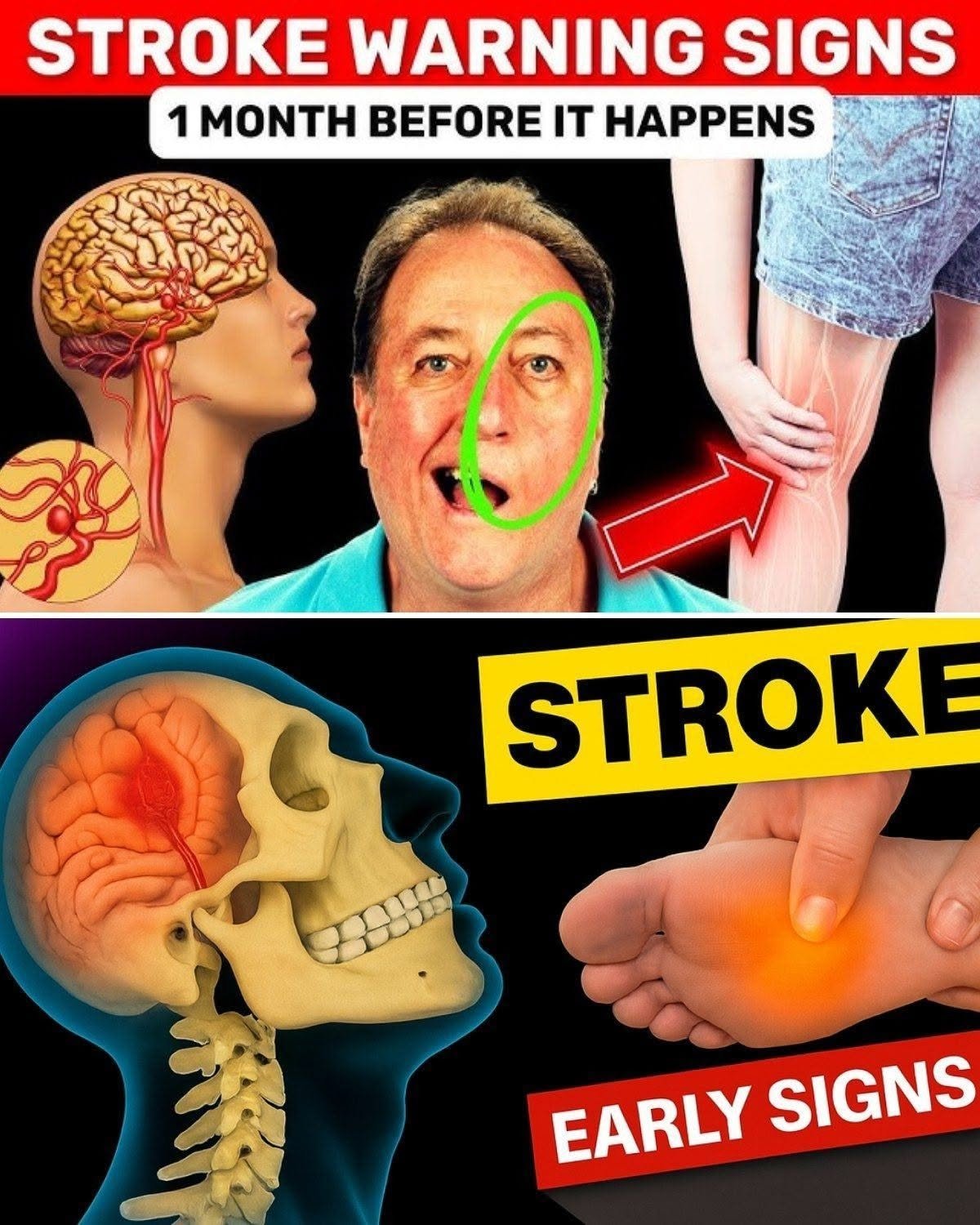
8 Warning Signs of Stroke One Month Before + 9 Powerful Tips to Prevent It
A stroke usually happens suddenly, and there is no reliable set of symptoms that can predict a stroke exactly one month in advance. However, some people experience transient ischemic attacks (TIAs) or other warning symptoms before a major stroke. A TIA is a temporary interruption of blood flow to the brain and should be treated as a medical emergency because it can precede a stroke.
8 Warning Signs That Should Never Be Ignored
1. Sudden Weakness or Numbness
Unexpected weakness or numbness—especially on one side of the face, arm, or leg—can be a warning sign of reduced blood flow to the brain.
2. Sudden Trouble Speaking
Slurred speech, difficulty finding words, or trouble understanding what other people are saying can occur during a TIA or stroke.
3. Sudden Vision Problems
Temporary or sudden loss of vision, double vision, or blurred vision in one or both eyes can be associated with a TIA or stroke.
4. Sudden Dizziness or Loss of Balance
Unexplained dizziness, difficulty walking, loss of coordination, or severe imbalance can sometimes occur with a stroke, particularly when the brain’s balance-related areas are affected.
5. Sudden Severe Headache
A sudden, unusually severe headache—especially when accompanied by vomiting, confusion, weakness, or loss of consciousness—requires urgent medical attention.
6. Brief Episodes of Stroke-Like Symptoms
Symptoms that disappear after a few minutes or hours should not be dismissed. A TIA can cause temporary stroke-like symptoms even though they resolve.
7. Sudden Confusion
Unexpected confusion, difficulty concentrating, or trouble understanding simple information may indicate a neurological problem.
8. Sudden Difficulty Swallowing
New difficulty swallowing, particularly when it occurs together with speech problems, facial weakness, or dizziness, can be a neurological warning sign.
Important: These symptoms don’t necessarily mean a stroke will happen within a month. But sudden stroke-like symptoms require urgent medical evaluation—even if they completely disappear.
9 Powerful Ways to Help Prevent Stroke
1. Control Your Blood Pressure
High blood pressure is one of the most important modifiable stroke risk factors. Have your blood pressure checked regularly and follow your healthcare professional’s treatment plan if it is elevated.
2. Don’t Smoke
Smoking damages blood vessels and increases stroke risk. Quitting can substantially reduce cardiovascular risk over time.
3. Manage Diabetes
High blood glucose can damage blood vessels. If you have diabetes, regular monitoring, medication when prescribed, physical activity, and an appropriate eating plan can help reduce complications.
4. Keep Cholesterol Under Control
High levels of LDL cholesterol can contribute to plaque buildup in arteries. Ask your healthcare professional whether you need cholesterol testing or treatment.
5. Eat a Heart-Healthy Diet
Emphasize vegetables, fruits, whole grains, beans, nuts, fish, and other nutrient-dense foods. Limit excessive salt, processed foods, added sugars, and foods high in saturated and trans fats.
6. Exercise Regularly
Regular physical activity can help improve blood pressure, cholesterol, blood sugar, and weight. For many adults, a useful target is at least 150 minutes of moderate-intensity activity per week, provided it is medically appropriate.
7. Maintain a Healthy Weight
Excess weight can increase the likelihood of hypertension, diabetes, and other conditions that raise stroke risk. Even modest improvements in weight and physical activity can benefit cardiovascular health.
8. Take Prescribed Medicines Correctly
If you have high blood pressure, diabetes, atrial fibrillation, high cholesterol, or another stroke-risk condition, take medications exactly as prescribed. Don’t start or stop aspirin or blood thinners on your own.
9. Don’t Ignore a TIA or Irregular Heartbeat
Atrial fibrillation (AFib), an irregular heart rhythm, can allow blood clots to form and travel to the brain. A TIA also requires prompt evaluation because it can signal significant stroke risk.
Remember FAST
When stroke symptoms appear, remember:
-
F — Face: Is one side of the face drooping?
-
A — Arms: Is one arm weak or numb?
-
S — Speech: Is speech slurred or difficult to understand?
-
T — Time: Call emergency medical services immediately.
Don’t wait for symptoms to disappear and don’t drive yourself if emergency medical services are available. Every minute matters.
