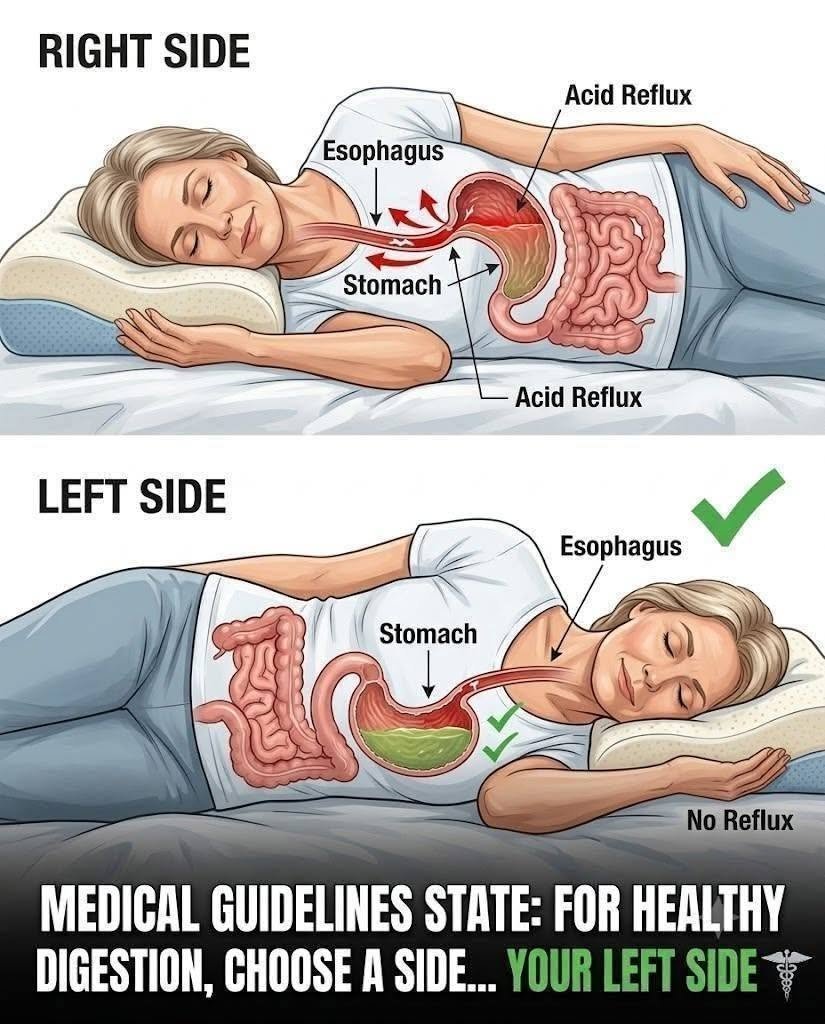
Note: If You Always Sleep on Your Right Side, You Should Know These 8 Things 😴
Sleeping on your right side is not inherently unhealthy. For many people, side sleeping is comfortable and can be a perfectly good sleep position. However, staying in exactly the same position every night can sometimes contribute to pressure, stiffness, or discomfort.
1. 🫁 Your Breathing May Be Affected by Your Sleep Position
Side sleeping can be helpful for some people with snoring or obstructive sleep apnea compared with sleeping flat on the back.
However, changing sides isn’t a substitute for evaluation if you regularly snore loudly, gasp during sleep, or feel excessively sleepy during the day.
2. ❤️ Don’t Assume You Must Sleep on Your Left Side
You may have heard that everyone should sleep on the left because of the heart.
For most healthy adults, there isn’t a universal requirement to sleep on the left. Comfort and individual medical circumstances matter.
3. 🔥 Right-Side Sleeping May Worsen Reflux for Some People
This is one area where side choice can matter. Research has found that left-side sleeping tends to reduce nighttime acid exposure compared with right-side sleeping in people with gastroesophageal reflux disease (GERD).
If you regularly experience nighttime heartburn, switching to your left side may be worth trying.
4. 🦴 Your Shoulder Can Take Pressure
If you always sleep on the same side, your shoulder and upper arm remain under pressure for hours.
You may wake with:
-
Shoulder soreness
-
Arm discomfort
-
Neck stiffness
-
Numbness or tingling
A supportive mattress and pillow can reduce pressure.
5. 🛏️ Your Pillow Matters
Your pillow should keep your head and neck roughly aligned with your spine.
If it’s too low, your neck may bend downward. If it’s too high, your neck can bend upward.
A pillow designed for side sleeping may provide better support.
6. 🦵 Put a Pillow Between Your Knees
A pillow between the knees can help keep your hips and pelvis aligned.
This may be particularly useful if you wake up with lower-back, hip, or knee discomfort.
7. 🔄 You Don’t Have to Stay on One Side All Night
Most people naturally change positions during sleep.
There’s no need to force yourself to remain on your left or right side throughout the entire night. If your body naturally changes position and you’re comfortable, that’s generally fine.
8. 👶 Pregnancy Is Different
During pregnancy, sleep-position recommendations can change as pregnancy progresses. People who are pregnant should follow advice from their obstetric or maternity-care professional, particularly later in pregnancy.
🚨 When Your Sleep Position May Be Telling You Something
Talk with a healthcare professional if you regularly wake with:
-
Severe or persistent pain
-
Numbness or weakness
-
Difficulty breathing
-
Loud snoring or gasping
-
Frequent nighttime heartburn
-
Persistent daytime sleepiness
The Bottom Line
Sleeping on your right side isn’t automatically dangerous. If you’re comfortable, breathing normally, and waking refreshed, there’s usually no reason to worry simply because you prefer that side.
If you have nighttime reflux, however, trying your left side may reduce symptoms. And if one-sided sleeping causes shoulder, hip, neck, or back discomfort, improving your pillow and mattress support—or occasionally changing sides—may help.
