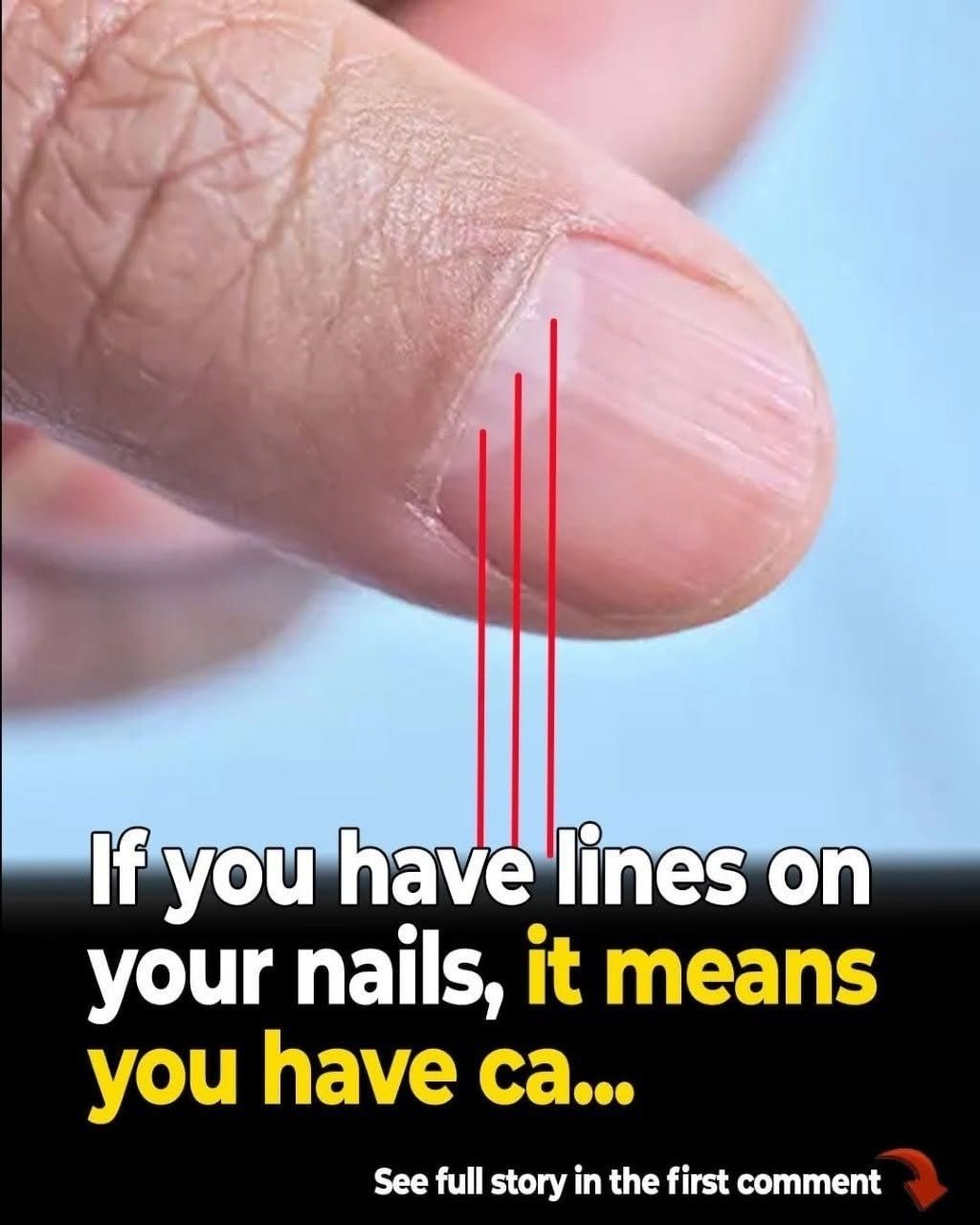
Doctor Uncovers a Telltale Sign in Your Fingernails That May Signal a Health Problem
Your fingernails can sometimes provide clues about your health, but there is no single nail sign that can accurately predict how long you will live. Changes in nail color, shape, or texture can occasionally be associated with underlying medical conditions and are worth discussing with a healthcare professional if they persist.
1. Clubbing
Clubbing causes the fingertips to become enlarged and the nails to curve more noticeably around the fingertips.
It can sometimes be associated with conditions affecting the lungs, heart, digestive system, or liver. New clubbing should be medically evaluated.
2. Pale or White Nails
Nails that become unusually pale can sometimes occur with anemia or other medical conditions, although nail color varies naturally between individuals.
3. Yellow Nails
Yellowing can result from nail fungus, smoking, nail products, or certain medical conditions. If the nail becomes thick, crumbly, or separated from the nail bed, fungal infection is one possibility.
4. Dark Lines Under a Nail
A new dark vertical streak under one nail should not automatically be dismissed as harmless pigmentation. In some cases, a dark streak can be a sign of subungual melanoma, a rare form of skin cancer.
A dermatologist should assess a new or changing dark streak, especially if the pigment spreads onto the surrounding skin.
5. Spoon-Shaped Nails
Nails that become unusually thin and curve upward at the edges are called koilonychia or “spoon nails.” They can sometimes be associated with iron deficiency.
6. Brittle or Splitting Nails
Brittle nails are common and may result from repeated exposure to water, detergents, nail products, or aging. Persistent changes can occasionally be associated with nutritional or medical problems.
7. Horizontal Grooves
Deep horizontal lines across several nails, called Beau’s lines, can appear when nail growth is temporarily interrupted by significant illness, stress on the body, or certain treatments.
What About Life Expectancy?
Nail appearance alone cannot reliably predict an individual’s life expectancy. Some internet claims connect particular nail features with mortality, but a nail change should be interpreted as a possible health clue—not a prediction of how long someone will live.
When to Get Your Nails Checked
See a healthcare professional if you notice:
-
A new or changing dark streak
-
New clubbing
-
Persistent unexplained changes in nail color
-
Nails separating from the nail bed
-
Significant changes affecting several nails
-
Nail changes accompanied by unexplained weight loss, breathing problems, weakness, or other concerning symptoms persistent or unusual nail change is best evaluated in the context of your symptoms, medical history, and—when
Bottom Line
Your nails can occasionally provide useful clues about your health, but they are not a crystal ball for life expectancy. A persistent or unusual nail change is best evaluated in the context of your symptoms, medical history, and—when necessary—appropriate testing.