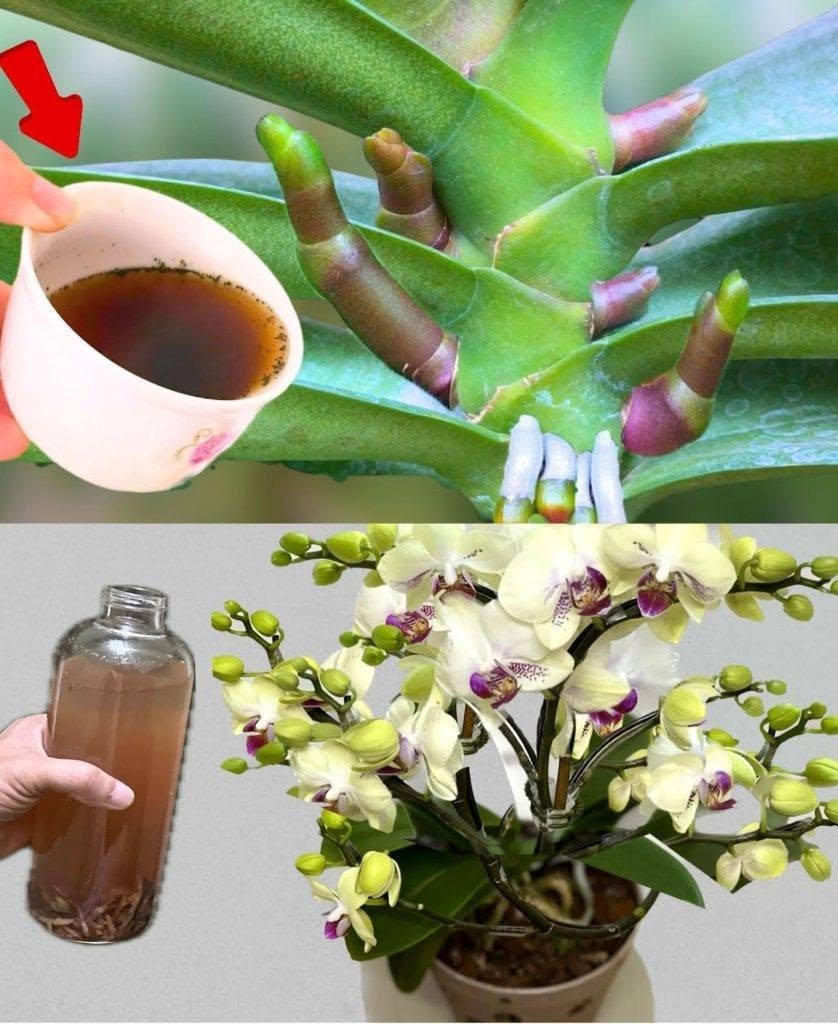
Very Leafy Orchid? Water It With This for Healthier, More Beautiful Growth 🌿🌸
If your orchid has lots of leaves but isn’t looking its best, plain water and proper care are usually more important than homemade fertilizers. There is no liquid that can reliably make an orchid “10 times more beautiful,” but the right watering routine can make a noticeable difference.
1. Rainwater or Filtered Water
Orchids can do well with rainwater or low-mineral filtered water, particularly where tap water contains a lot of minerals. Make sure the water is clean and suitable for plants.
2. Water Only When Needed
Don’t water an orchid simply because it’s been a certain number of days. Check the growing medium first.
If the roots and potting medium are still damp, wait. When the medium is becoming dry and the roots look lighter in color, it’s generally time to water.
3. Water Thoroughly
When watering, soak the potting medium thoroughly and allow excess water to drain completely.
Never leave the orchid sitting in a container of stagnant water, because constantly wet roots can encourage root rot.
4. Don’t Pour Water Into the Crown
Try to keep water from collecting in the center where the leaves meet. If water does collect there, gently blot it away with a clean tissue.
5. Give It Bright, Indirect Light
Healthy leaves and flowering depend heavily on adequate light. Place the orchid somewhere with bright, indirect light, avoiding intense midday sunlight that can scorch the leaves.
6. Feed It Properly
During active growth, use a balanced orchid fertilizer diluted according to the product directions rather than relying on kitchen ingredients such as rice water, milk, or sugar water.
Too much fertilizer can damage the roots.
7. Give the Roots Good Airflow
Orchids generally need a well-draining, airy growing medium. A suitable orchid bark mix and a pot with drainage holes can help prevent waterlogged roots.
8. Watch the Leaves
Healthy orchid leaves are generally firm and reasonably glossy. Yellowing, mushy, blackened, or rapidly dropping leaves can indicate watering, light, root, pest, or disease problems.
A Simple Orchid Routine
Bright indirect light + thorough but appropriately timed watering + good drainage + suitable fertilizer + adequate airflow will do much more for an orchid than a secret homemade “miracle” liquid.
Bottom Line
If someone claims that one homemade liquid will make an orchid 10 times more beautiful, be cautious. Orchids respond best to consistent care, and overwatering or strong homemade mixtures can actually damage the plant.