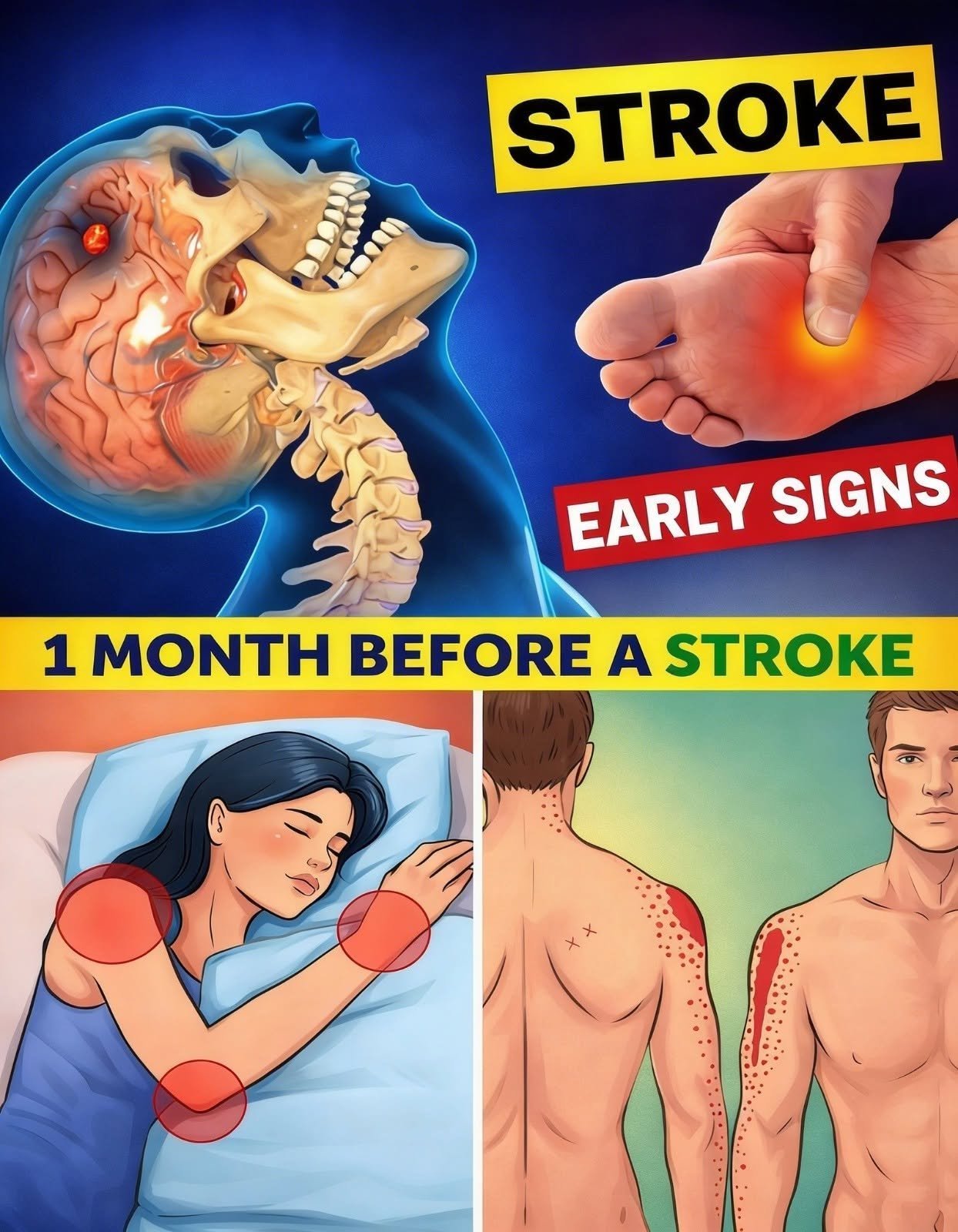
8 Warning Signs of Stroke You Should Never Ignore — and 9 Ways to Lower Your Risk
A stroke can happen suddenly, but some people experience a transient ischemic attack (TIA) beforehand. A TIA produces stroke-like symptoms that may disappear quickly, but it is still a medical emergency and can signal a higher risk of a future stroke. CDC+1
8 Warning Signs
1. Sudden Facial Drooping
One side of the face may suddenly feel numb or droop, especially when smiling.
2. Sudden Arm or Leg Weakness
Weakness or numbness, particularly on one side of the body, is a classic warning sign.
3. Sudden Trouble Speaking
Speech may become slurred, confused, or difficult to understand. A person may also have trouble understanding what others are saying.
4. Sudden Vision Changes
Blurred, double, or lost vision in one or both eyes can occur suddenly.
5. Sudden Loss of Balance
Unexpected dizziness, difficulty walking, or loss of coordination can be a stroke symptom.
6. Sudden Severe Headache
A sudden, severe headache with no obvious cause can be a warning sign, particularly when it occurs with other neurological symptoms.
7. Sudden Confusion
A person may suddenly become confused, disoriented, or unable to communicate normally.
8. Symptoms That Disappear
Don’t assume you’re safe because symptoms disappear after a few minutes. This may be a TIA, sometimes called a warning stroke, and it requires urgent medical assessment. CDC+1
Remember B.E. F.A.S.T.
B — Balance: Sudden loss of balance
E — Eyes: Sudden vision changes
F — Face: Facial drooping
A — Arms: Arm weakness
S — Speech: Speech difficulty
T — Time: Call emergency services immediately
If these symptoms appear, note when they started and seek emergency medical help immediately—even if they go away. www.stroke.org+1
9 Ways to Lower Your Stroke Risk
1. Control Blood Pressure
High blood pressure is one of the most important controllable stroke risk factors. Have your blood pressure checked regularly and follow prescribed treatment. www.stroke.org+1
2. Don’t Smoke
Smoking damages blood vessels and increases stroke risk. Quitting can reduce that risk. CDC+1
3. Stay Physically Active
Regular activity can help control blood pressure, cholesterol, blood sugar, and weight. CDC
4. Eat a Heart-Healthy Diet
Emphasize vegetables, fruits, whole grains, beans, and other nutrient-rich foods. Limit excessive salt, saturated fat, and trans fat. CDC
5. Manage Cholesterol
High cholesterol can contribute to plaque buildup in arteries. Regular testing and treatment when recommended can reduce cardiovascular risk. www.stroke.org+1
6. Manage Diabetes
Keeping blood glucose under control can help protect blood vessels and reduce stroke risk. www.stroke.org
7. Maintain a Healthy Weight
If you’re overweight, gradual, sustainable weight management can improve several stroke risk factors. CDC
8. Address Heart Conditions
Conditions such as atrial fibrillation (AFib) can increase stroke risk. Appropriate medical evaluation and treatment are important. www.stroke.org
9. Limit Alcohol
Excessive alcohol consumption can raise blood pressure and stroke risk. If you drink, staying within recommended limits is important. CDC+1
Bottom Line
Stroke prevention is largely about controlling the risk factors you can change—especially blood pressure, smoking, physical inactivity, diabetes, cholesterol, and diet. And if sudden stroke symptoms occur, don’t wait to see whether they improve: seek emergency help immediately. www.stroke.org+1
