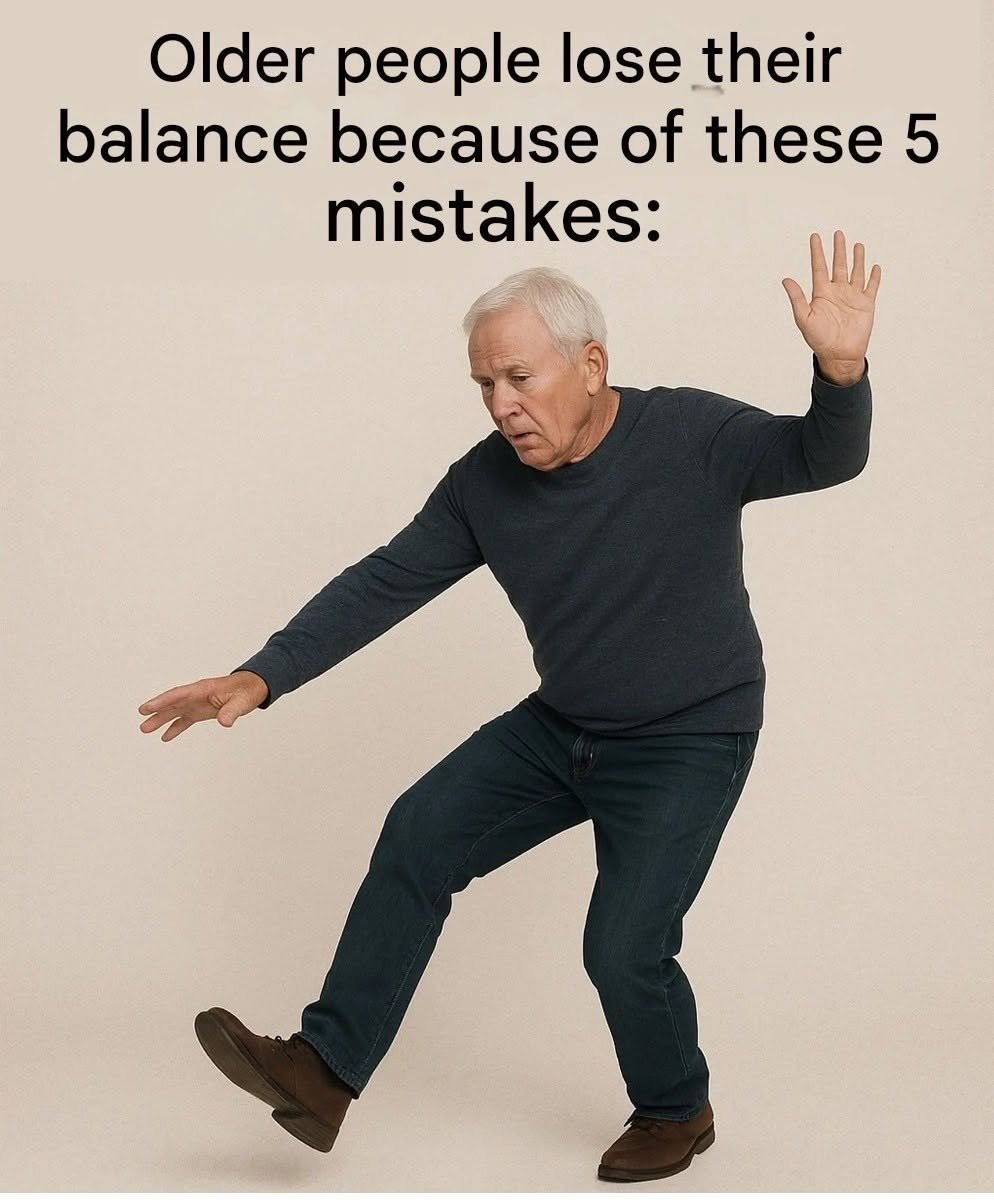
5 Common Mistakes That Can Cause Older People to Lose Their Balance
Balance can become more difficult with age, but falls are not an inevitable part of getting older. Certain everyday habits can increase the risk of losing balance.
1. Staying Inactive
Spending too much time sitting can weaken the legs and core muscles. Regular walking and appropriate strength and balance exercises can help maintain stability.
2. Wearing Unsafe Footwear
Loose slippers, worn-out soles, high heels, or shoes with poor grip can make slipping or stumbling more likely. Choose comfortable, well-fitting shoes with good traction.
3. Ignoring Vision Changes
Poor vision can make it harder to notice steps, obstacles, or uneven surfaces. Regular eye examinations can help identify problems that affect safe movement.
4. Getting Up Too Quickly
Standing suddenly from a chair or bed can sometimes cause a temporary drop in blood pressure, resulting in dizziness or unsteadiness. Sit at the edge of the bed for a moment and stand up slowly.
5. Leaving Home Hazards Unfixed
Loose rugs, clutter, poor lighting, electrical cords, and missing handrails can increase fall risk. Keep walking paths clear and make sure stairs and bathrooms are well lit and have appropriate support.
Extra Tip: Review Your Medicines
Some medications can cause dizziness, drowsiness, or low blood pressure. If balance problems began after starting or changing a medication, talk with your doctor or pharmacist rather than stopping it yourself.
When to Seek Medical Advice
New or worsening balance problems, repeated falls, fainting, severe dizziness, weakness, numbness, or difficulty speaking should be medically assessed. Sudden loss of balance accompanied by facial drooping, arm weakness, or speech difficulty can be a sign of stroke and requires emergency care.