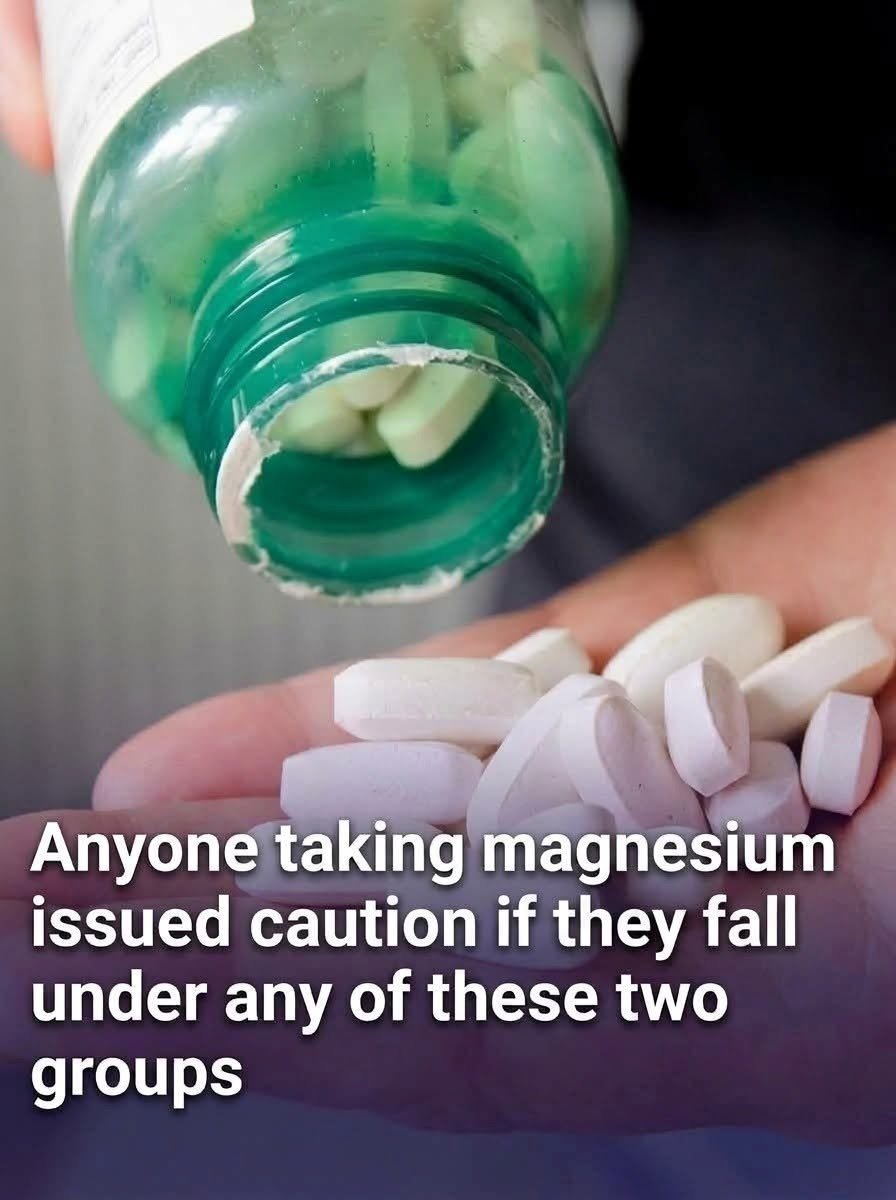
Magnesium Supplements: Important Safety Alert for Two High-Risk Groups
Magnesium is an essential mineral involved in muscle and nerve function, blood pressure regulation, and normal heart rhythm. Although many people can safely get magnesium from food, supplements are not appropriate for everyone.
1. People With Kidney Problems
People with reduced kidney function may be unable to remove excess magnesium effectively. Taking large amounts of supplemental magnesium can therefore cause dangerously high magnesium levels.
Possible symptoms include:
-
Nausea or vomiting
-
Weakness
-
Low blood pressure
-
Confusion
-
Slow or irregular heartbeat
-
Breathing problems in severe cases
Anyone with kidney disease should ask a healthcare professional before taking magnesium supplements.
2. People Taking Certain Medications
Magnesium can interfere with the absorption or effects of some medicines. Examples include certain antibiotics, osteoporosis medicines (bisphosphonates), and other medications.
A pharmacist or doctor can advise on whether magnesium should be separated from a particular medicine by several hours.
How Much Magnesium Is Safe?
For adults, the recommended dietary allowance from all sources is generally around 310–420 mg per day, depending on age and sex. The U.S. National Institutes of Health sets an upper limit of 350 mg per day specifically for magnesium from supplements and medications in healthy adults; magnesium naturally present in food does not count toward this supplement limit.
Food Is Often the Best Source
Good sources include:
-
Nuts and seeds
-
Beans and lentils
-
Whole grains
-
Spinach and other leafy greens
-
Some fortified foods
Don’t Take Magnesium Just Because You Have Cramps
Nighttime muscle cramps do not automatically mean you are magnesium deficient. Magnesium supplements may not relieve ordinary nighttime leg cramps in many people, and the cause of frequent cramps should be evaluated.
When to Get Medical Advice
Before starting a magnesium supplement, speak with a healthcare professional if you have kidney disease, heart problems, take multiple medications, or are considering a high-dose product.
Bottom line: Magnesium is important for health, but “more” isn’t necessarily better. For people with kidney impairment or those taking interacting medicines, supplementation can carry meaningful risks.