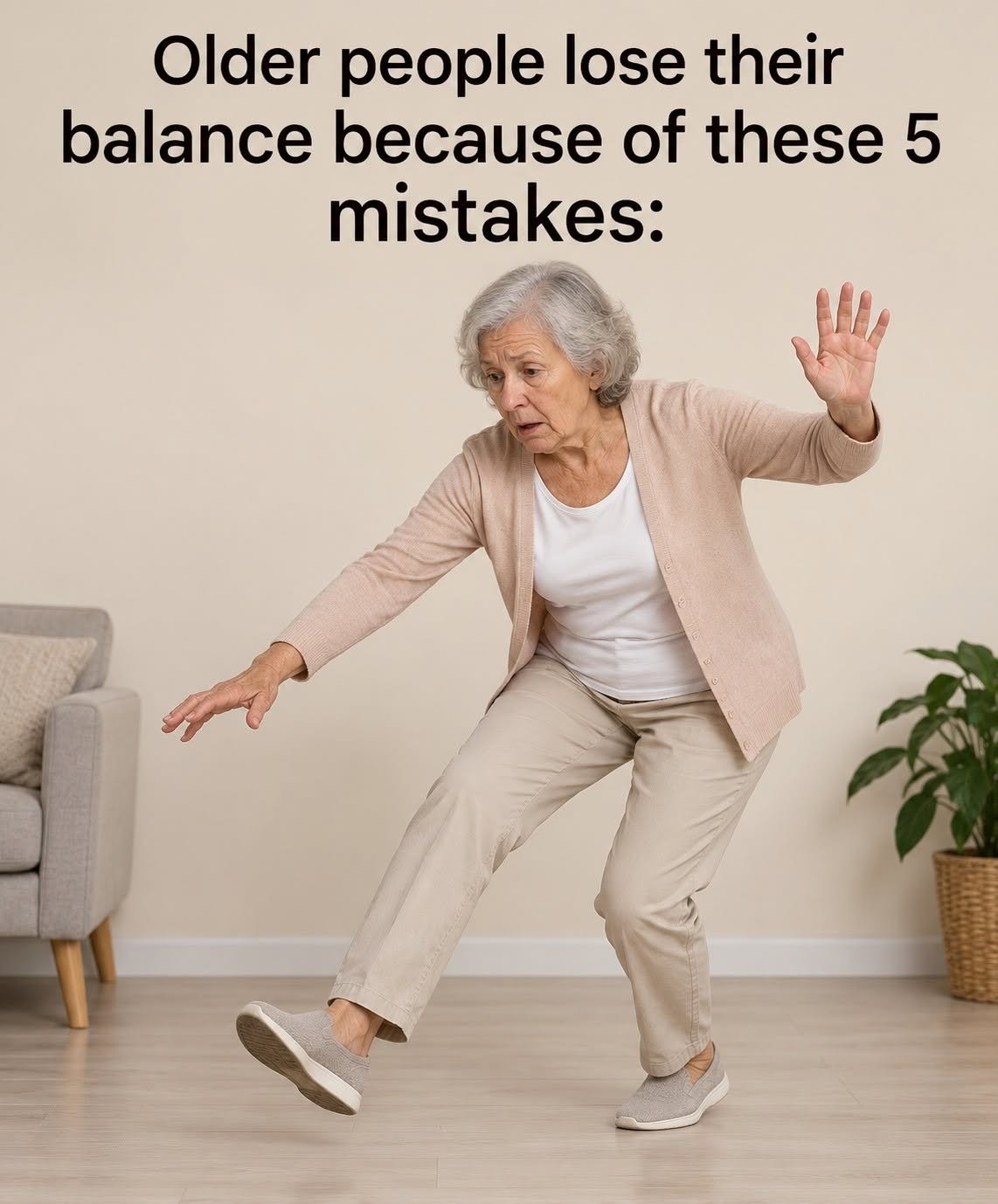
5 Common Mist balance is essential for staying independent as we age. Unfortunately, some everyday lead to weaker leg and core muscles. Over time, this can make standing, turningakes That Can Affect Balance in Older Adults
Good balance is essential for staying independent as we age. Unfortunately, some everyday habits can gradually weaken balance, increase unsteadiness, and raise the risk of falls.
The good news is that many of these problems can be addressed with simple changes.
1. Sitting Too Much
Spending most of the day sitting can lead to weaker leg and core muscles. Over time, this can make standing, turning, and walking more difficult.
What to do: Break up long periods of sitting with short walks and gentle movement. Regular strength exercises can also help maintain leg power.
2. Avoiding Balance Exercises
Balance is a skill that benefits from practice. If you never challenge it, you may gradually become less confident and stable.
Try: Supported heel-to-toe standing, controlled side steps, or standing on one leg while holding a sturdy counter for support.
Never practice difficult balance exercises near stairs or other hazards.
3. Wearing Unsafe Footwear
Loose slippers, smooth soles, high heels, or poorly fitting shoes can make walking less stable.
What to do: Choose comfortable, well-fitting shoes with good grip and adequate support.
4. Ignoring Vision Problems
Poor vision can make it harder to detect obstacles, judge distances, and navigate uneven surfaces.
What to do: Have your vision checked regularly and keep glasses prescriptions up to date.
5. Taking Medications Without Reviewing Their Effects
Some medications can cause dizziness, drowsiness, low blood pressure, or changes in alertness, all of which can increase fall risk.
What to do: Ask your doctor or pharmacist to periodically review your medications, particularly if you’ve recently experienced dizziness or falls. Don’t stop prescribed medication without professional advice.
Other Factors Matter Too
Balance can also be affected by muscle weakness, inner-ear disorders, neurological conditions, joint problems, low blood pressure, and other health issues.
If you suddenly develop severe dizziness, difficulty walking, weakness, numbness, vision changes, or trouble speaking, seek emergency medical attention.
Bottom Line
Maintaining balance isn’t about avoiding movement—it’s about moving safely and regularly.
A combination of strength training, balance exercises, walking, good footwear, adequate lighting, and regular vision and medication reviews can help older adults stay steadier and reduce their risk of falls.