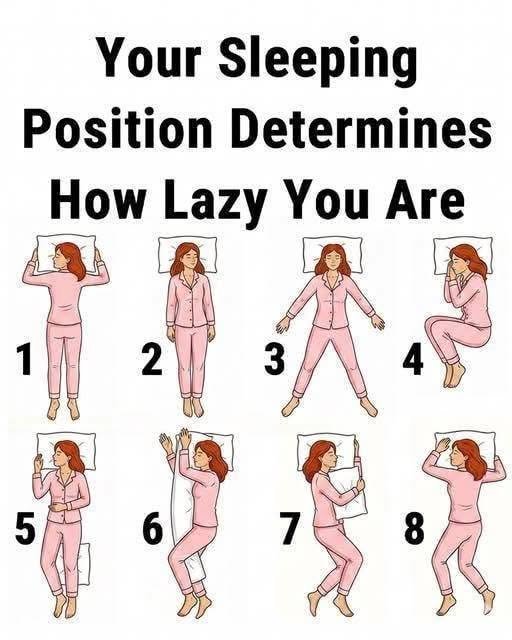
Discover What Your Sleep Position Reveals About Your True Personality
The way you sleep may seem like a completely unconscious habit, but many people are fascinated by what their favorite sleeping position might say about them.
Do you curl up on your side, stretch out on your back, or sleep face-down? Popular sleep-personality theories associate different positions with different personality traits. However, these associations are not scientifically established ways to determine someone’s personality. Sleep position can be influenced by comfort, habit, body shape, pain, temperature, breathing, and mattress preferences.
Still, it can be fun to see which description sounds most like you.
1. The Fetal Position
You sleep curled on your side with your knees drawn toward your chest.
Popular personality interpretation: People who prefer this position are sometimes described as cautious, sensitive, and emotionally protective. They may appear reserved when meeting someone new but become warm and comfortable once trust develops.
This is one of the most common sleeping positions, so the position itself doesn’t provide a reliable personality diagnosis.
2. The Log Position
You sleep on your side with your arms and legs relatively straight.
Popular interpretation: This position is often associated with people who are relaxed, sociable, and easygoing.
If you’re a “log” sleeper, you may enjoy being around other people and tend to approach life in a straightforward way.
3. The Yearner Position
You sleep on your side with your arms stretched out in front of you.
Popular interpretation: Yearner sleepers are sometimes portrayed as open-minded but thoughtful people who take their time before making important decisions.
They may be friendly and receptive while still carefully considering whom they trust.
4. The Soldier Position
You sleep on your back with your arms resting alongside your body.
Popular interpretation: This position is often linked in popular sleep literature with people who are quiet, organized, and self-disciplined.
They may prefer structure and have relatively straightforward expectations of themselves and others.
5. The Starfish Position
You sleep on your back with your arms spread around the pillow or above your head.
Popular interpretation: Starfish sleepers are sometimes described as generous, friendly, and comfortable listening to other people.
They may enjoy social interaction without necessarily needing to be the center of attention.
6. The Stomach Sleeper
You sleep primarily on your stomach, sometimes with your head turned to one side.
Popular interpretation: Popular personality descriptions sometimes associate stomach sleeping with outgoing, confident, or independent personalities.
But from a health perspective, stomach sleeping can sometimes place extra strain on the neck because your head has to remain turned to the side.
7. The Freefall Position
This is a variation of stomach sleeping in which your arms are positioned around or underneath the pillow.
Popular interpretation: Freefall sleepers are sometimes characterized as adventurous, energetic, or independent, while also being more sensitive than they initially appear.
Again, this is a fun personality theory—not a scientifically validated personality test.
What Your Sleeping Position Really Can Tell You
While your sleeping position can’t reliably reveal your “true personality,” it can provide clues about your physical comfort and sleep habits.
For example, people may change positions because of:
-
Back or neck discomfort
-
Pregnancy
-
Snoring
-
Sleep apnea
-
Acid reflux
-
Joint pain
-
Temperature
-
Mattress or pillow support
-
Habit
And most people don’t remain in exactly one position throughout the night. You may fall asleep in one position and wake up in another.
Don’t Force Yourself Into a Differentore loudly, wake up choking or gasping, or someone notices that you stop breathing during sleep, talk with a healthcare professional about Position
If you sleep comfortably and wake up feeling rested, there’s usually no need to change your position simply because of a personality description you read online.
However, if you regularly wake with neck or back pain, numbness, headaches, or significant daytime sleepiness, your sleeping position may be worth discussing with a healthcare professional.
If you snore loudly, wake up choking or gasping, or someone notices that you stop breathing during sleep, talk with a healthcare professional about possible sleep apnea.
The Bottom Line
Your favorite sleeping position can be an entertaining way to think a spread-out starfish, or someone who spends the night on your stomach, take these about your habits, but it cannot reveal your personality with certainty.
So whether you’re a curled-up fetal sleeper, a spread-out starfish, or someone who spends the night on your stomach, take these personality descriptions as entertainment—not as a psychological diagnosis.
Your sleeping position may say something about how you get comfortable at night. It doesn’t define who you are.