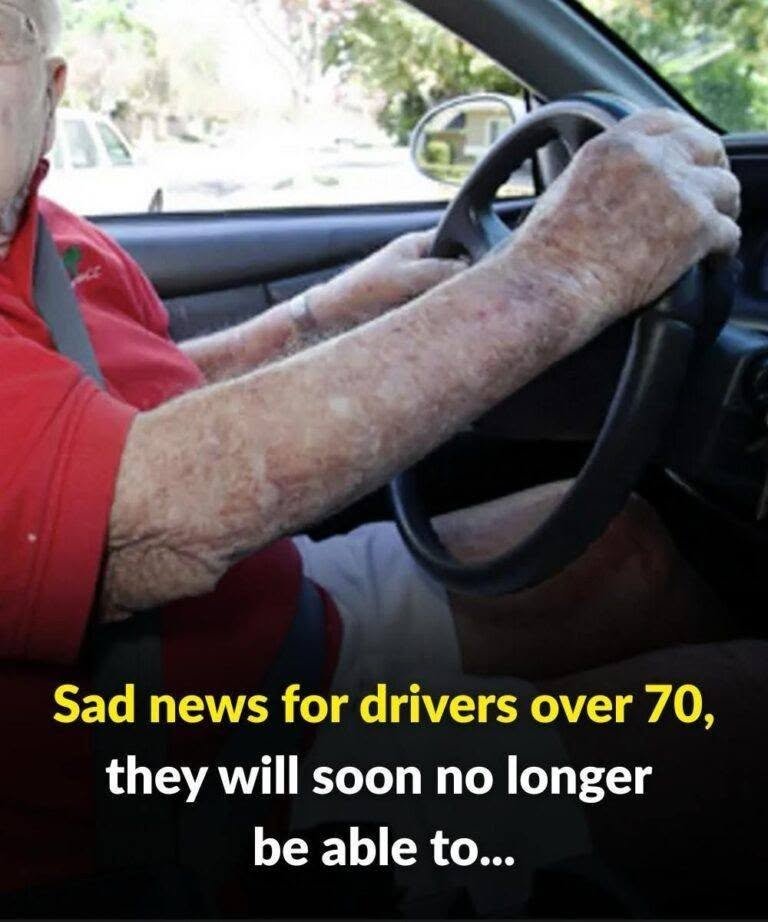
Sad News for Drivers Over 70: What Older Motorists Should Know About Future Driving Rules
For many people, reaching 70 doesn’t mean they’re ready to give up driving.
A car can represent independence, convenience, and freedom. It makes it easier to visit family, attend appointments, go shopping, and remain connected to the community.
That’s why headlines suggesting that drivers over 70 will “soon no longer be able to drive” can be alarming.
But there’s an important point that often gets lost in attention-grabbing headlines:
Being over 70 does not automatically mean that a person is no longer fit to drive.
Driving rules for older motorists vary considerably depending on the country or jurisdiction. Some places require additional licence-renewal steps, medical declarations, eyesight checks, or more frequent renewals as drivers get older. Other places use individual fitness-to-drive assessments rather than imposing an automatic age-based ban.
So before believing a dramatic headline, it’s important to find out exactly what rule is being proposed or introduced—and where it applies.
Why Are Older Drivers Being Discussed?
As populations age, governments and road-safety organizations naturally pay more attention to older motorists.
Age itself isn’t necessarily the problem.
Instead, certain abilities that are important for driving can change over time.
These may include:
- Vision
- Hearing
- Reaction time
- Strength and mobility
- Attention
- Ability to divide attention between multiple tasks
- Ability to make rapid decisions
- Recovery from illness or injury
These changes don’t happen at the same age or at the same rate for everyone.
One 75-year-old may be a highly confident and capable driver, while another person of the same age may have significant difficulties behind the wheel.
That’s why individual assessment can be more meaningful than age alone.
The Real Issue Is Fitness to Drive
Safe driving requires more than knowing the traffic rules.
Drivers need to see road signs, judge distances, react to unexpected situations, control the vehicle, and remain attentive for the entire journey.
Certain medical conditions can interfere with these abilities.
Medications can also cause side effects such as drowsiness, dizziness, blurred vision, or slower reactions.
For an older driver, regularly reviewing overall health can therefore be just as important as renewing a licence.
Will Everyone Over 70 Lose Their Licence?
Not necessarily.
This is where sensational headlines can be misleading.
A proposed rule might involve additional testing rather than an outright ban.
Another change might affect how frequently licences must be renewed.
Some regulations may require a medical declaration or eyesight check.
Others may introduce practical driving assessments for certain motorists.
And rules can differ between countries, states, provinces, and even licensing authorities.
So if you see a headline claiming that “drivers over 70 will no longer be allowed to drive,” check the details before assuming it applies to everyone.
Look for the following information:
- Which country or jurisdiction is involved?
- Is the rule already in force or only being proposed?
- Does it apply to every driver over 70?
- Is there an additional test or medical assessment?
- When would the change take effect?
- Are existing licence holders treated differently?
Those details can completely change the meaning of the headline.
Why Age Alone Isn’t a Perfect Measure
People age differently.
Some older adults remain physically active and mentally sharp well into their 70s, 80s, and beyond.
Others experience health changes much earlier.
This variation is one reason why an age-only approach can be controversial.
A driver shouldn’t necessarily be considered unsafe simply because they’ve reached a particular birthday.
At the same time, someone shouldn’t continue driving solely because they’ve always driven.
The most important consideration is whether the person can operate a vehicle safely.
Warning Signs That Driving May Be Becoming Difficult
Regardless of your age, certain changes deserve attention.
You might notice that driving at night has become uncomfortable.
Perhaps bright headlights from oncoming traffic are harder to tolerate.
You may find yourself getting confused at unfamiliar intersections or missing road signs.
Other warning signs can include:
- Frequent near-misses
- New difficulty changing lanes
- Trouble judging distances
- Becoming unusually nervous in traffic
- Confusing the accelerator and brake
- Getting lost on familiar routes
- Scratches or unexplained damage on the vehicle
- Other people expressing concerns about your driving
- Difficulty seeing clearly while driving
- Feeling unusually tired or distracted behind the wheel
One isolated incident doesn’t automatically mean someone should stop driving.
But repeated problems shouldn’t be ignored.
What Can Older Drivers Do to Stay Safe?
There are several practical steps that can help.
Keep Your Eyes Checked
Good vision is essential for safe driving.
Regular eye examinations can identify changes that might otherwise go unnoticed.
If you wear glasses or contact lenses for driving, make sure your prescription is appropriate.
Review Your Medications
Some medications can affect alertness, coordination, vision, or reaction time.
If you’ve started a new medication and notice unusual drowsiness or dizziness, speak with your doctor or pharmacist.
Never stop a prescribed medication without professional advice.
Keep Your Skills Current
Traffic conditions change.
Modern vehicles may have different controls and technology than cars driven decades ago.
Refreshing your knowledge of traffic rules and practicing unfamiliar situations can help maintain confidence.
Choose Safer Driving Conditions
If nighttime driving has become difficult, consider driving primarily during daylight.
If heavy traffic causes stress, choose quieter routes or travel outside peak hours.
Bad weather can also create additional challenges.
Adjusting when and where you drive isn’t necessarily a loss of independence—it can be a smart safety strategy.
Modern Cars Can Help
Today’s vehicles often include safety features that weren’t available when many older drivers first learned to drive.
Depending on the vehicle, these can include:
- Automatic emergency braking
- Blind-spot monitoring
- Rear cross-traffic alerts
- Lane-departure warnings
- Parking cameras
- Adaptive cruise control
- Parking assistance
These technologies can provide useful additional information.
However, they shouldn’t be treated as a substitute for attentive driving.
Drivers remain responsible for understanding their vehicle’s systems and staying focused on the road.
Families Have an Important Role
Talking to an older family member about driving can be difficult.
Driving is often closely connected with independence, so suggesting that someone change their habits may feel like a personal criticism.
Instead of saying, “You’re too old to drive,” focus on specific concerns.
For example:
“I’ve noticed that nighttime driving seems more difficult for you lately. Would you be comfortable talking to your doctor about your eyesight?”
A respectful conversation is much more likely to be productive than an argument about age.
Giving Up Driving Doesn’t Have to Mean Giving Up Independence
If someone eventually needs to reduce or stop driving, the transition can be difficult.
But planning ahead can make it considerably easier.
Possible alternatives include:
- Family and friends
- Public transportation
- Community transportation services
- Taxis
- Ride-hailing services
- Local senior transportation programs
- Grocery and medication delivery
- Walking for nearby errands when appropriate
The goal isn’t simply to take away someone’s car.
It’s to maintain their ability to participate in everyday life as safely as possible.
Don’t Panic Over Viral Headlines
The next time you see a headline saying that drivers over 70 will “soon no longer be able to drive,” don’t immediately assume that millions of older motorists are about to lose their licences.
Age-related driving regulations are highly dependent on location and the specific legislation involved.
A requirement for a medical declaration is very different from an automatic driving ban.
A more frequent licence renewal is very different from losing the right to drive.
And a proposed law is very different from a law that has actually taken effect.
The details matter.
Final Thoughts
For drivers over 70, the important conversation shouldn’t simply be about age.
It should be about fitness, health, confidence, and safety.
Growing older doesn’t automatically make someone an unsafe driver, just as being younger doesn’t automatically make someone a safe one.
Regular vision checks, medication reviews, honest self-assessment, sensible driving habits, and appropriate vehicle technology can all help older motorists remain safe on the road.
If driving becomes noticeably more difficult, don’t wait for a frightening headline to make the decision for you.
Talk with a healthcare professional, check the rules in your local jurisdiction, and consider a professional driving assessment if appropriate.
The goal isn’t to keep older drivers off the road.
The goal is to help people remain mobile and independent for as long as it is safe for them to drive.