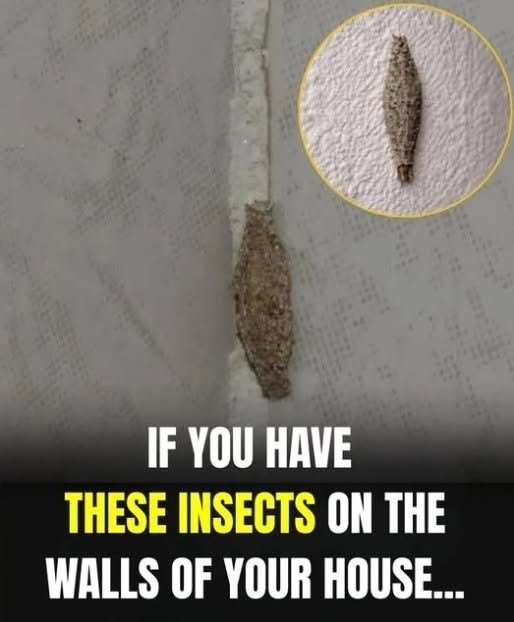
🐛 If You Have These Insects on Your House Walls: What Are Bagworms?
If you notice small, hanging, cocoon-like cases moving slowly on walls, ceilings, windows, or other surfaces, they may be bagworms or another type of case-bearing moth larva.
They can look alarming, but finding a few indoors usually isn’t a sign that your house is infested with dangerous insects. Most bagworms are harmless to people and don’t bite or sting.
🔎 What Do Bagworms Look Like?
Bagworm larvae build a small protective case around themselves using materials such as:
- Plant fragments
- Leaves
- Twigs
- Bark
- Dust and other debris
The case can look like a tiny brown, gray, or straw-colored hanging pouch.
The insect may carry the case with it as it moves.
🏠 Why Are They Inside the House?
Bagworms generally live outdoors on plants and trees. However, case-bearing moth larvae can occasionally be found indoors, especially around:
- Windows
- Walls
- Ceilings
- Closets
- Bathrooms
- Dark, undisturbed areas
Some insects that people call “bagworms” indoors may actually be household casebearers, which are related moth larvae and make small portable cases.
So identification from appearance alone can be difficult.
⚠️ Are They Dangerous?
Usually, no.
They generally aren’t a threat to people, pets, furniture, or the structure of the house.
The bigger concern is simply that their presence can indicate:
- Dust and accumulated debris
- Spider webs
- Moisture
- An accessible food source
- Outdoor vegetation close to the building
🧹 How to Get Rid of Them
1. Remove Them Manually
For a small number, simply pick them up with tissue or use a vacuum cleaner.
Dispose of the insects and empty the vacuum afterward if you have a significant infestation.
2. Clean the Area
Vacuum:
- Corners
- Ceiling edges
- Window frames
- Behind furniture
- Baseboards
- Clos or webbing, but they are more concerning around natural fabrics such as woolets
Then wipe surfaces as appropriate.
Removing dust, cobwebs, and accumulated organic material can make the environment less attractive to these larvae.
3. Check Nearby Plants
If you repeatedly find them near windows or doors, inspect vegetation around the outside of the house.
Look for unusual cases attached to:
- Trees
- Shrubs
- Walls
- Fences
- Outdoor furniture
Removing outdoor sources can reduce the number entering the house.
4. Control Moisture
If you find these insects repeatedly in bathrooms, basements, or other damp areas, check for:
- Leaking pipes
- Condensation
- Poor ventilation
- Damp walls
Improving ventilation and reducing unnecessary moisture can help with many household pests.
🚫 Don’t Immediately Spray Everything With Insecticide
If you’re seeing only a few harmless case-bearing larvae indoors, heavy pesticide use usually isn’t the first solution.
Start with removal, cleaning, and identifying where they’re coming from.
If there is a large or persistent infestation, a pest-control professional can identify the species and determine whether treatment is necessary.
🐛 Bagworms vs. Clothes Moths
This distinction matters.
Bagworms/case-bearing larvae generally carry a visible case made from debris.
Clothes moth larvae can also produce cases or webbing, but they are more concerning around natural fabrics such as wool, fur, feathers, and other animal-based materials.
If you see damage to clothing or stored textiles, inspect closets and storage areas carefully.
🚨 When Should You Be Concerned?
Consider professional pest identification if:
- You are finding large numbers every day.
- They are appearing throughout multiple rooms.
- Clothing or fabrics are being damaged.
- You see larvae, eggs, or cases repeatedly despite thorough cleaning.
- You’re unsure whether the insects are actually bagworms.
🌿 Bottom Line
Seeing a few small case-carrying insects on your walls is usually not an emergency and doesn’t mean your home is dangerous. Remove them, vacuum the area thoroughly, check nearby plants and moisture sources, and monitor whether they return.
Most importantly, don’t panic based on a viral headline. The exact insect matters because several harmless household moth larvae can look very similar to what people call “bagworms.”