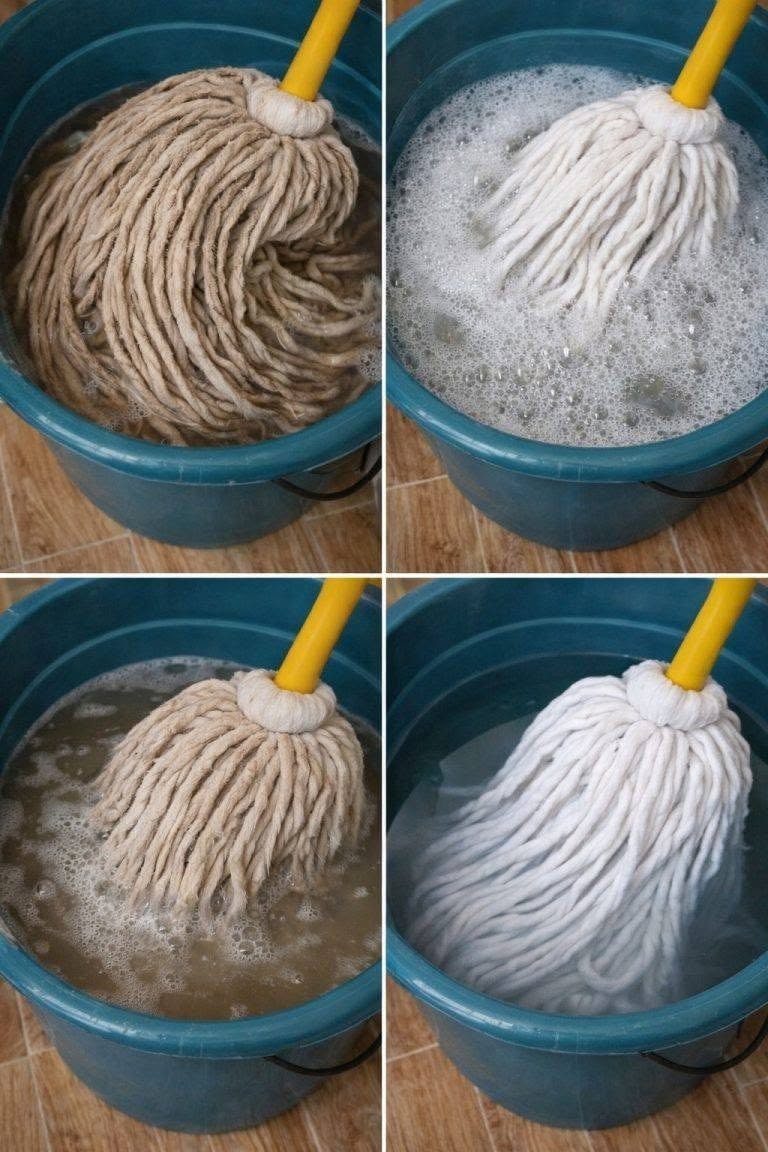
🧹 Very Dirty Mop? Don’t Throw It Away — Try This Simple Cleaning Method
A mop can become gray, smelly, and greasy after repeated use because it collects dirt, oils, bacteria, and cleaning-product residue. You don’t necessarily need to replace it. A thorough wash and disinfection can often make it much cleaner.
🧼 What You Can Use
For an ordinary washable mop head, try:
- Warm water
- Dishwashing liquid or laundry detergent
- White vinegar — optional for mineral or soap residue
You don’t need a mysterious “one-drop” ingredient to restore a mop.
1. Remove Loose Dirt First
Rinse the mop thoroughly under running water to remove as much dirt and debris as possible.
If the mop is extremely dirty, don’t immediately put it into a washing machine—you don’t want to transfer all that grime to the machine.
2. Soak It in Warm Soapy Water
Fill a bucket with warm water and add a small amount of detergent.
Place the mop head in the solution and allow it to soak for 15–30 minutes.
Then squeeze or agitate the mop several times to loosen embedded dirt.
3. Rinse Thoroughly
Rinse under clean running water until the water coming from the mop is relatively clear.
Leaving detergent trapped in the fibers can make the mop sticky and cause it to collect dirt more quickly.
4. For Mineral or Hard-Water Buildup
If the mop feels stiff because of mineral areas contaminated with bodily fluids, raw meat juices, pet waste, or similar material, ordinary or detergent residue, a diluted white-vinegar solution can help.
Afterward, rinse it thoroughly with clean water.
Never mix vinegar with bleach or chlorine-containing cleaners. That combination can produce dangerous chlorine gas.
5. Disinfect When Appropriate
If the mop has been used to clean areas contaminated with bodily fluids, raw meat juices, pet waste, or similar material, ordinary washing may not be enough.
Use an appropriate disinfectant according to its label, and never mix disinfectants or other cleaning chemicals.
6. Dry It Completely
This step is often overlooked.
After washing, wring out as much water as possible and allow the mop head to air-dry completely, preferably in a well-ventilated or sunny area when the material permits.
A damp mop left in a bucket can quickly develop a musty smell and microbial growth.
🚫 Don’t Use a “Magic” Ingredient
Be cautious with viral cleaning hacks that recommend putting concentrated chemicals, bleach, or other household products directly onto a mop.
More chemical doesn’t mean cleaner.
Some mixtures can damage mop fibers, irritate your skin or lungs, or create toxic fumes.
⭐ The Best Way to stained, smells bad even after washing, or has damaged fibers that no longer clean effectively, replacing the washable head may be more hygien Keep a Mop Clean
After every use:
- Rinse it thoroughly.
- Wash it with detergent when necessary.
- Squeeze out excess water.
- Hang it up to dry completely.
- Don’t leave it soaking in dirty water.
Bottom Line
A dirty mop usually needs washing, thorough rinsing, and complete drying, not a single miracle ingredient. If the mop head remains stained, smells bad even after washing, or has damaged fibers that no longer clean effectively, replacing the washable head may be more hygienic and practical.