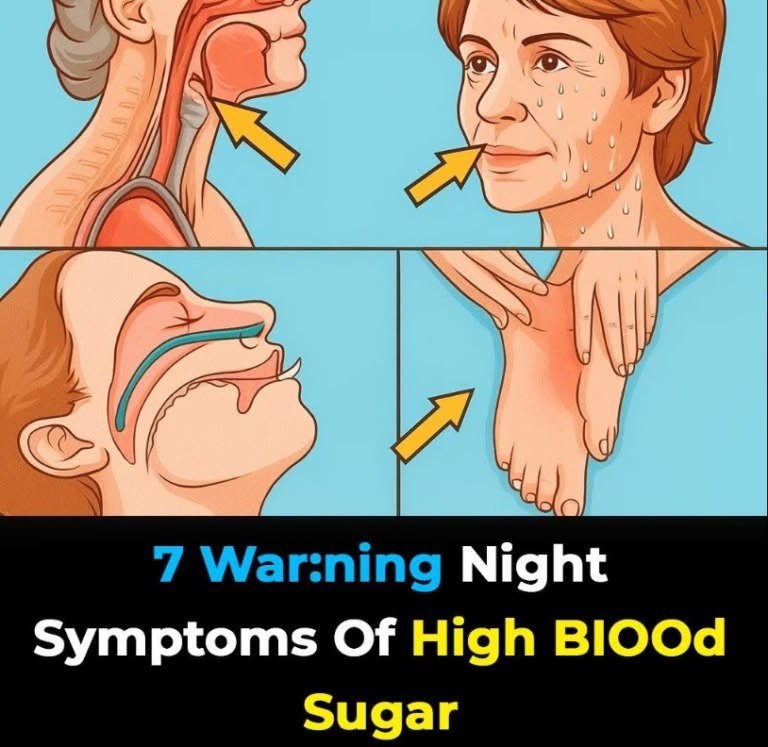
7 Warning Night Symptoms of High Blood Sugar
High blood sugar (hyperglycemia) can sometimes become noticeable at night. These symptoms can be easy to dismiss, especially when they develop gradually.
However, having one of these symptoms does not prove that your blood sugar is high. Many have other possible causes.
1. 🚽 Waking Up Frequently to Urinate
One of the classic symptoms of high blood sugar is frequent urination.
When glucose levels become very high, the kidneys try to remove excess glucose through urine. This pulls additional water into the urine, which can make you urinate more often—including during the night.
Repeatedly waking several times to urinate deserves attention, particularly if this is a new change.
2. 💧 Excessive Thirst at Night
Frequent urination can lead to fluid loss, which may make you unusually thirsty.
You might notice that you repeatedly wake up needing water or have a persistently dry mouth.
Constant thirst and frequent urination occurring together are especially worth discussing with a healthcare professional.
3. 😴 Restless or Poor-Quality Sleep
High glucose levels can contribute indirectly to disrupted sleep.
You may wake repeatedly because of thirst, urination, discomfort, or other symptomsained night sweats, particularly if you have diabetes and take glucose-lowering medication, checking your blood glucose when symptoms occur and associated with poorly controlled diabetes.
But insomnia itself doesn’t mean you have high blood sugar. Stress, caffeine, medications, menopause, sleep apnea, and many other conditions can disrupt sleep.
4. 🥵 Night Sweats
Sweating at night is sometimes associated with low blood sugar (hypoglycemia) in people taking insulin or certain diabetes medications—not necessarily high blood sugar.
That’s an important distinction.
If you’re experiencing unexplained night sweats, particularly if you have diabetes and take glucose-lowering medication, checking your blood glucose when symptoms occur and discussing the pattern with your healthcare professional can be useful.
5. 🦶 Burning or Tingling Feet
Persistent burning, tingling, pins-and-needles, or numbness in the feet can occur with diabetic peripheral neuropathy, particularly after diabetes has been present for some time.
These sensations may become more noticeable at night.
They aren’t specific to diabetes, though. Vitamin deficiencies, nerve compression, alcohol, medications, and other conditions can cause similar symptoms.
6. 👁️ Blurred Vision
High blood glucose can temporarily affect the fluid balance and focusing ability of the eye, producing blurred vision.
If your vision repeatedly becomes blurry or changes noticeably, don’t assume it’s simply from tiredness.
Sudden vision loss or a major change in vision requires urgent medical evaluation.
7. 😩 Unusual Fatigue
People with poorly controlled diabetes may feel unusually tired because glucose isn’t being used effectively by the body’s cells.
You may wake feeling exhausted despite getting what seems like enough sleep.
Fatigue is extremely nonspecific, however, and can also result from anemia, thyroid disorders, sleep apnea, infections, medications, depression, and many other conditions.
What Should You Do?
If several of these symptoms are occurring together—especially excessive thirst + frequent urination + fatigue or unexplained weight loss—it’s worth having your blood glucose checked.
Common tests include:
- Fasting blood glucose
- HbA1c (A1C), which reflects average blood glucose over roughly the previous 2–3 months
- Other tests when clinically appropriate
🚨 Emergency Warning Signs
Very high blood sugar can sometimes progress to a medical emergency.
Seek urgent medical attention for symptoms such as vomiting, severe abdominal pain, deep or rapid breathing, confusion, extreme drowsiness, dehydration, or a fruity-smelling breath, particularly in someone with diabetes.
Bottom Line
Nighttime thirst, frequent urination, fatigue, blurred vision, and burning or tingling feet can be associated with diabetes or high blood sugar, but they aren’t enough to diagnose it.
The most reliable way to know is to measure your blood glucose and, when appropriate, have an HbA1c test rather than relying on symptoms alone.