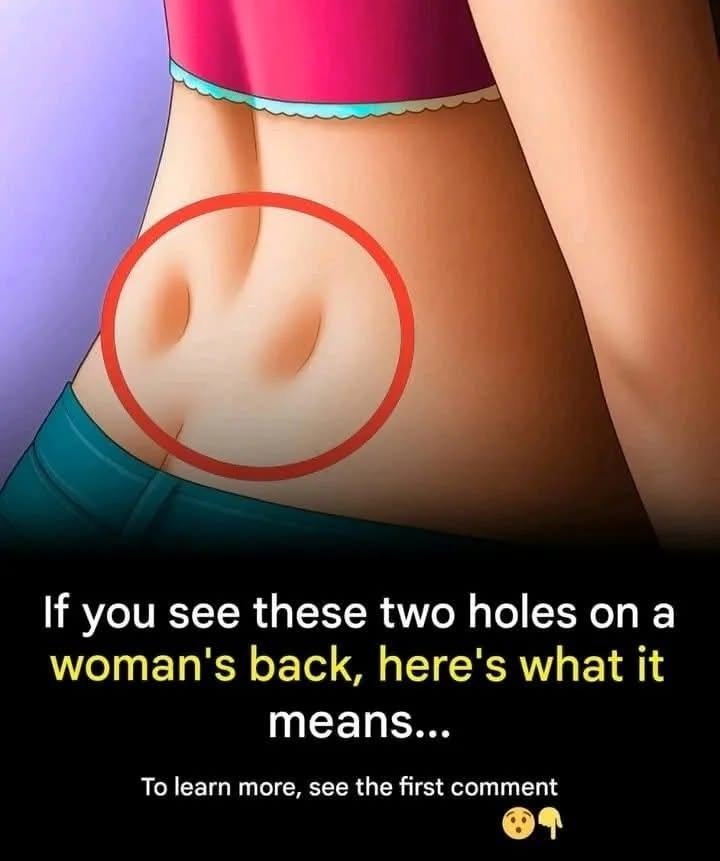
The Meaning of the Two Dimples in the Lower Back
Those two small dimples above the buttocks are commonly called “Venus dimples” in women and “Apollo dimples” in men. Despite the romantic names, they don’t have a hidden medical or personality meaning.
They are usually simply a normal anatomical feature caused by the way the skin attaches to the underlying tissues near the back of the pelvis.
Why Do Some People Have Them?
The dimples are located near the posterior superior iliac spines, which are points on the pelvic bones close to the lower back.
They can be more noticeable because of:
- Genetics
- Bone structure
- Skin and connective-tissue attachments
- Body composition
- Low levels of fat in the area
Some people have very prominent dimples, while others have barely visible ones or don’t have them at all.
Do They Mean You’re Especially Healthy or Fit?
Not necessarily.
You may see these dimples frequently in people with lower body fat or certain athletic builds, but having them isn’t a reliable indicator of fitness, health, attractiveness, or physical strength.
Likewise, not having them doesn’t mean anything is wrong.
Do They Have a Special Meaning in Relationships or Sexuality?
There are many claims online suggesting that lower-back dimples indicate things about someone’s personality, fertility, sexual behavior, or attractiveness.
These claims are not scientifically established.
Their appearance is primarily determined by anatomy and you can’t reliably create Venus dimples simply by doing a particular exercise. The underlying pelvic anatomy and connective-tissue structure of indentation near the tailbone—particularly one associated with hair, drainage, tenderness, or repeated swelling— genetics.
Can Exercise Create Them?
Exercise can make existing dimples more visible by changing muscle development and body composition.
However, you can’t reliably create Venus dimples simply by doing a particular exercise. The underlying pelvic anatomy and connective-tissue structure play a major role.
When Should You Be Concerned?
Normal symmetrical dimples that you’ve had for years generally aren’t concerning.
However, if you notice a new indentation, swelling, redness, pain, drainage, or a skin opening in the lower-back or tailbone area, it’s worth having it checked.
A different type of indentation near the tailbone—particularly one associated with hair, drainage, tenderness, or repeated swelling—can sometimes be related to conditions such as a pilonidal cyst or sinus, which is different from ordinary Venus dimples.
The Bottom Line
The two dimples in the lower back are usually a normal feature of human anatomy.
They don’t reveal someone’s personality, fertility, or sexual characteristics. Their shape and visibility mainly come down to genetics, pelvic structure, and the way skin and connective tissue attach around the pelvis.
So if you have them, there’s usually nothing you need to treat or worry about.