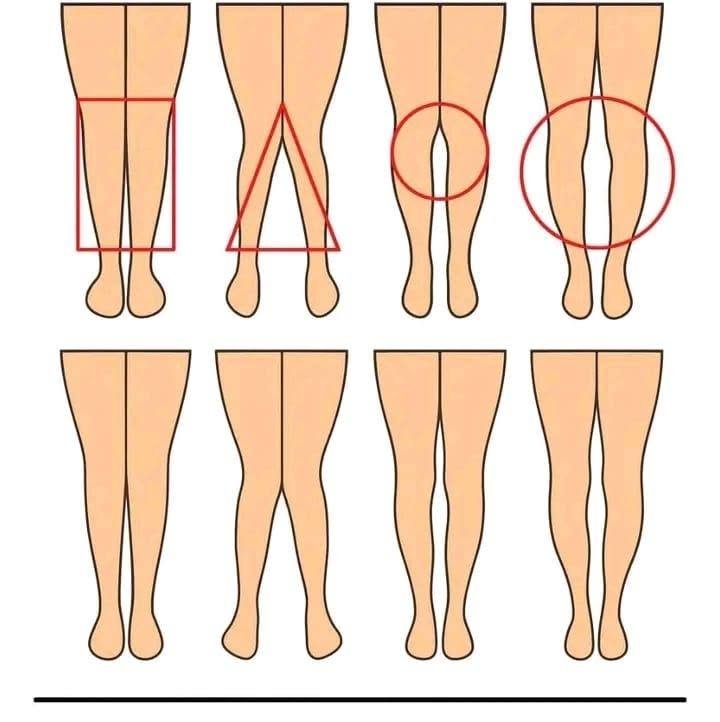
A Woman’s Legs Can Tell You More About Her Health Than You Might Think
The appearance of a woman’s legs can sometimes provide useful clues about her circulation, muscles, skin, veins, and overall health. But viral claims often go too far, suggesting that the shape or appearance of a woman’s legs can reveal her personality, fertility, sexual history, or age.
Those claims aren’t medically reliable.
What your legs can sometimes reveal are physical changes worth paying attention to.
1. Swollen Legs Can Have Many Causes
Leg swelling, particularly around the ankles, can happen after standing or sitting for a long time.
It can also be associated with:
- Venous insufficiency
- Certain medications
- Heart problems
- Kidney problems
- Liver disease
- Pregnancy
- Inflammation
- Injury
Mild swelling after a long day isn’t necessarily dangerous.
But new, persistent, or worsening swelling deserves attention, particularly when there’s no obvious explanation.
2. One Swollen Leg Is Different
If one leg suddenly becomes swollen, painful, warm, or red, don’t assume it’s simply because you walked too much.
A blood clot in a deep vein can cause these symptoms.
A suspected deep-vein thrombosis (DVT) requires prompt medical evaluation.
If leg swelling or pain is accompanied by sudden shortness of breath, chest pain, coughing blood, or fainting, seek emergency medical care immediately.
3. Visible Veins Aren’t Automatically a Problem
Some women naturally have prominent veins, particularly if they have low body fat, fair skin, or a family tendency toward visible veins.
Exercise can also temporarily make veins more noticeable.
However, enlarged, twisted, bulging veins may be varicose veins.
They can cause aching, heaviness, itching, or swelling, although some people have no symptoms.
4. Skin Color Can Provide Clues
Changes in leg or foot color can sometimes indicate circulation problems.
Very pale, bluish, or unusually dark skin—especially when accompanied by pain, coldness, numbness, or wounds that don’t heal—shouldn’t be ignored.
People with diabetes should pay particular attention to changes in their feet and lower legs because diabetes can affect both nerves and circulation.
5. Strong Legs Reflect Muscle Health
Leg strength is much more meaningful than leg shape.
Strong lower-body muscles help with walking, balance, climbing stairs, and maintaining independence as we age.
Regular activities such as walking, resistance training, and appropriately challenging strength exercises can help preserve muscle.
For older adults, maintaining leg strength can be especially valuable for reducing the consequences of weakness and supporting mobility.
6. Sudden Muscle Loss Deserves Attention
If one leg becomes noticeably thinner or weaker than the other without an obvious reason, don’t simply assume it’s part of normal aging.
Muscle loss can occur with inactivity, injury, nerve problems, nutritional problems, or other medical conditions.
Unexplained changes should be discussed with a healthcare professional.
7. Leg Hair Isn’t a Reliable Health Test
Some internet posts claim that losing leg hair proves you have poor circulation.
That’s not necessarily true.
Hair growth can change because of genetics, age, hormones, skin conditions, shaving habits, and numerous other factors.
However, if hair loss occurs together with cold feet, pain while walking, color changes, or slow-healing wounds, circulation should be evaluated.
8. Skin Texture Matters Too
Dry, cracked, scaly, or unusually itchy skin can have many explanations.
Common possibilities include simple dry skin, eczema, allergies, fungal infections, or irritation.
Persistent skin changes should be evaluated rather than diagnosed from a social-media post.
9. Leg Shape Doesn’t Reveal Fertility or Sexual Health
A woman’s leg shape cannot reliably tell you whether she is fertile, sexually active, or “healthy enough” to have children.
Body proportions are strongly influenced by genetics, skeletal structure, muscle mass, fat distribution, hormones, and age.
There is no medically valid formula that lets you determine a woman’s reproductive health by looking at her legs.
10. The Same Is True for Personality
You may encounter claims that the length, shape, or size of someone’s legs reveals whether they are confident, feminine, dominant, attractive, or sexually adventurous.
These are stereotypes, not medical diagnoses.
Physical appearance cannot reliably tell you someone’s personality.
What Healthy Legs Generally Need
Regardless of gender, your legs benefit from a few basic habits:
- Regular physical activity
- Strength training appropriate to your abilities
- Adequate nutrition and protein
- Avoiding tobacco
- Maintaining a healthy weight when appropriate
- Taking breaks from prolonged sitting
- Looking after your feet and skin
- Managing conditions such as diabetes and high blood pressure
If you sit for long periods, getting up periodically and moving around can also help reduce prolonged inactivity.
When Should You Get Your Legs Checked?
Talk to a healthcare professional if you notice:
- Sudden or unexplained swelling
- Persistent leg pain
- Significant weakness
- Numbness or loss of sensation
- Skin that becomes unusually pale, blue, or dark
- Wounds that don’t heal
- A new painful or rapidly changing vein
- One leg becoming noticeably different from the other
And remember that symptoms such as chest pain or sudden difficulty breathing alongside leg swelling require urgent medical attention.
The Bottom Line
A woman’s legs can sometimes provide valuable information about circulation, muscle strength, veins, skin health, and mobility.
But they cannot reliably reveal her personality, sexual history, fertility, or worth.
Instead of judging health from leg shape or appearance, pay attention to changes: new swelling, pain, weakness, discoloration, numbness, or wounds.
Your legs aren’t a crystal ball—but they can be an important part of your overall health picture.