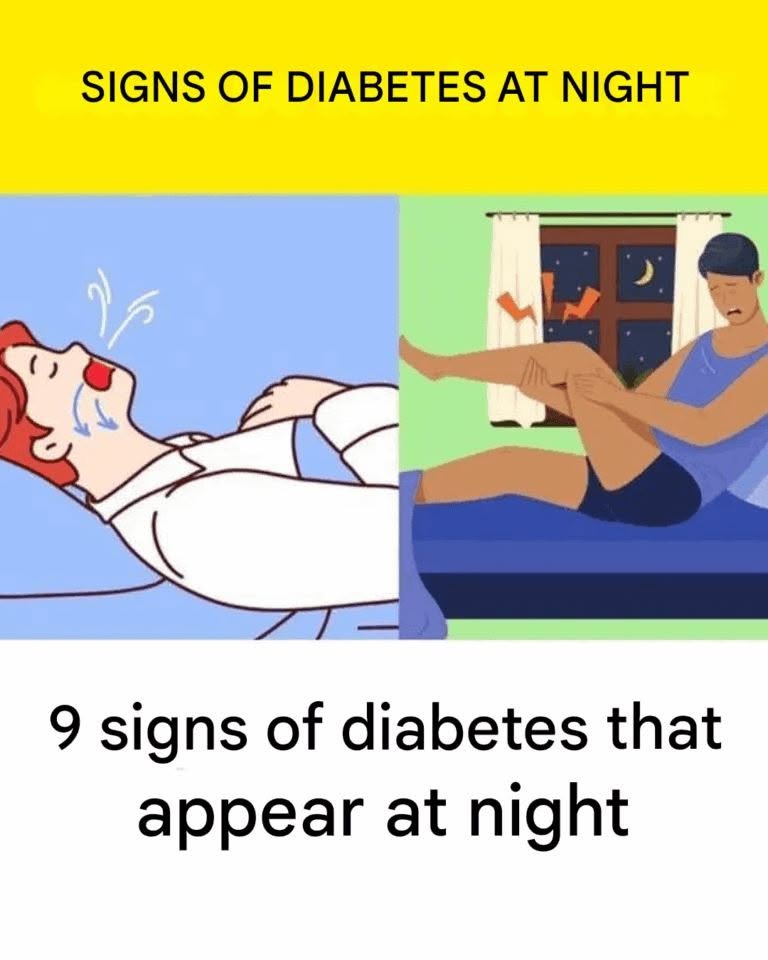
Here’s the detail first: diabetes can produce symptoms that become especially noticeable at night, particularly when blood glucose is high or when glucose falls too low during sleep. But none of these signs alone proves that someone has diabetes. Several have many other possible causes, so persistent or unusual symptoms deserve proper testing.
9 Signs of Diabetes That May Appear at Night
1. Waking Up Frequently to Urinate
One of the classic signs of high blood sugar is frequent urination.
When glucose levels become too high, the kidneys try to remove excess glucose through urine. This pulls additional water into the urine, increasing urine production.
If you’re repeatedly waking up several times each night to urinate—especially if this is a new change—it can be worth discussing with a healthcare professional.
2. Feeling Extremely Thirsty
Frequent urination can cause increased fluid loss, which may lead to unusual thirst.
You might wake up with a very dry mouth or feel compelled to drink repeatedly during the night.
Thirst alone isn’t specific to diabetes, however. Dehydration, salty foods, certain medications, and other conditions can cause it.
3. Night Sweats
Night sweating can occur for many reasons, but in someone with diabetes it can sometimes be associated with low blood glucose (hypoglycemia).
This is particularly relevant for people taking insulin or certain diabetes medications.
If you repeatedly wake up sweating, shaky, hungry, confused, or with a racing heartbeat, discuss the episodes with your healthcare professional and review your glucose readings if you monitor them.
4. Restless or Poor-Quality Sleep
Blood-glucose problems can interfere with sleep indirectly.
Frequent urination, thirst, sweating, discomfort, or fluctuations in blood glucose may repeatedly wake you.
However, insomnia itself doesn’t mean you have diabetes. Stress, caffeine, sleep disorders, medications, and many other factors can cause poor sleep.
5. Leg Cramps or Unusual Muscle Discomfort
Some people with diabetes develop nerve or circulation problems that can cause sensations in the legs or feet.
These may include:
- Burning
- Tingling
- Numbness
- Aching
- Pins-and-needles sensations
Leg cramps aren’t a specific sign of diabetes, though, and can also result from dehydration, exercise, medications, or other conditions.
6. Tingling or Burning Feet
Diabetic peripheral neuropathy can develop after prolonged exposure to elevated blood glucose.
Symptoms may be particularly noticeable when you’re lying quietly in bed because there are fewer distractions.
You might notice burning, tingling, numbness, or a “pins and needles” feeling in the feet.
If these symptoms persist, don’t ignore them. Early evaluation can help identify the cause and reduce the risk of complications.
7. Increased Hunger
Some people with untreated diabetes experience increased hunger, even after eating.
When glucose cannot effectively enter cells, the body may behave as though it isn’t receiving enough usable energy.
Persistent increased hunger combined with thirst, frequent urination, fatigue, or unexplained weight loss deserves medical evaluation.
8. Headache, Shakiness, or Confusion During the Night
For people taking glucose-lowering medication, blood sugar can sometimes fall too low during sleep.
Possible symptoms include:
- Shaking
- Sweating
- Fast heartbeat
- Hunger
- Headache
- Irritability
- Confusion
- Nightmares
Severe hypoglycemia can cause seizures or loss of consciousness and requires emergency treatment.
If nighttime episodes occur repeatedly, medication and meal timing may need to be reviewed by a healthcare professional.
9. Unexplained Weight Loss
This isn’t exclusively a nighttime symptom, but it can become noticeable over a period of weeks.
When diabetes is significantly uncontrolled, the body may begin breaking down fat and muscle for energy, resulting in unintentional weight loss.
Unexplained weight loss combined with excessive thirst and urination is an especially good reason to seek medical evaluation promptly.
What About Waking Up at the Same Time Every Night?
You may see claims that waking at 2 a.m. or 3 a.m. specifically means your blood sugar is high.
That’s not a reliable medical rule.
Nighttime awakenings can result from sleep apnea, stress, alcohol, medications, urinary problems, environmental factors, menopause, and many other causes.
The overall symptom pattern matters much more than a particular clock time.
How Do You Know If It’s Actually Diabetes?
Symptoms aren’t enough to diagnose diabetes.
A healthcare professional can use blood tests such as:
- A1C
- Fasting blood glucose
- Random blood glucose when appropriate
- Oral glucose tolerance testing in selected situations
Testing is particularly important if you have multiple symptoms or risk factors for diabetes.
When to Seek Urgent Care
Very high blood glucose can occasionally progress to a serious emergency.
Seek urgent medical attention for symptoms such as severe vomiting, significant dehydration, difficulty breathing, severe weakness, confusion, or loss of consciousness, especially in someone known to have diabetes.
Final Takeaway
Nighttime symptoms that can occur with diabetes include excessive urination and thirst, sweating or shakiness from low blood sugar, nighttime discomfort from neuropathy, and sleep disruption.
But these symptoms aren’t diagnostic by themselves.
If you’re repeatedly waking at night because you’re thirsty, urinating frequently, sweating, shaking, or experiencing unusual tingling or burning in your feet, getting your blood glucose checked is much more useful than trying to diagnose yourself from symptoms alone.