🦶 9 Foot Symptoms You Should Never Ignore: What They Could Mean
Your feet can sometimes reveal changes in your circulation, nerves, skin, joints, and overall health. Most foot problems are not serious, but persistent or unexplained changes deserve attention.
Importantly, a foot symptom alone does not diagnose a particular disease. The same symptom can have several different causes.
1. Persistent swelling in your feet or ankles
Swelling can occur after standing for a long time, during hot weather, or after a salty meal. But persistent or recurring swelling may also be associated with vein problems, medications, or conditions affecting the heart, kidneys, or liver.
If swelling suddenly appears in one leg, particularly with pain, warmth, or redness, seek prompt medical attention.
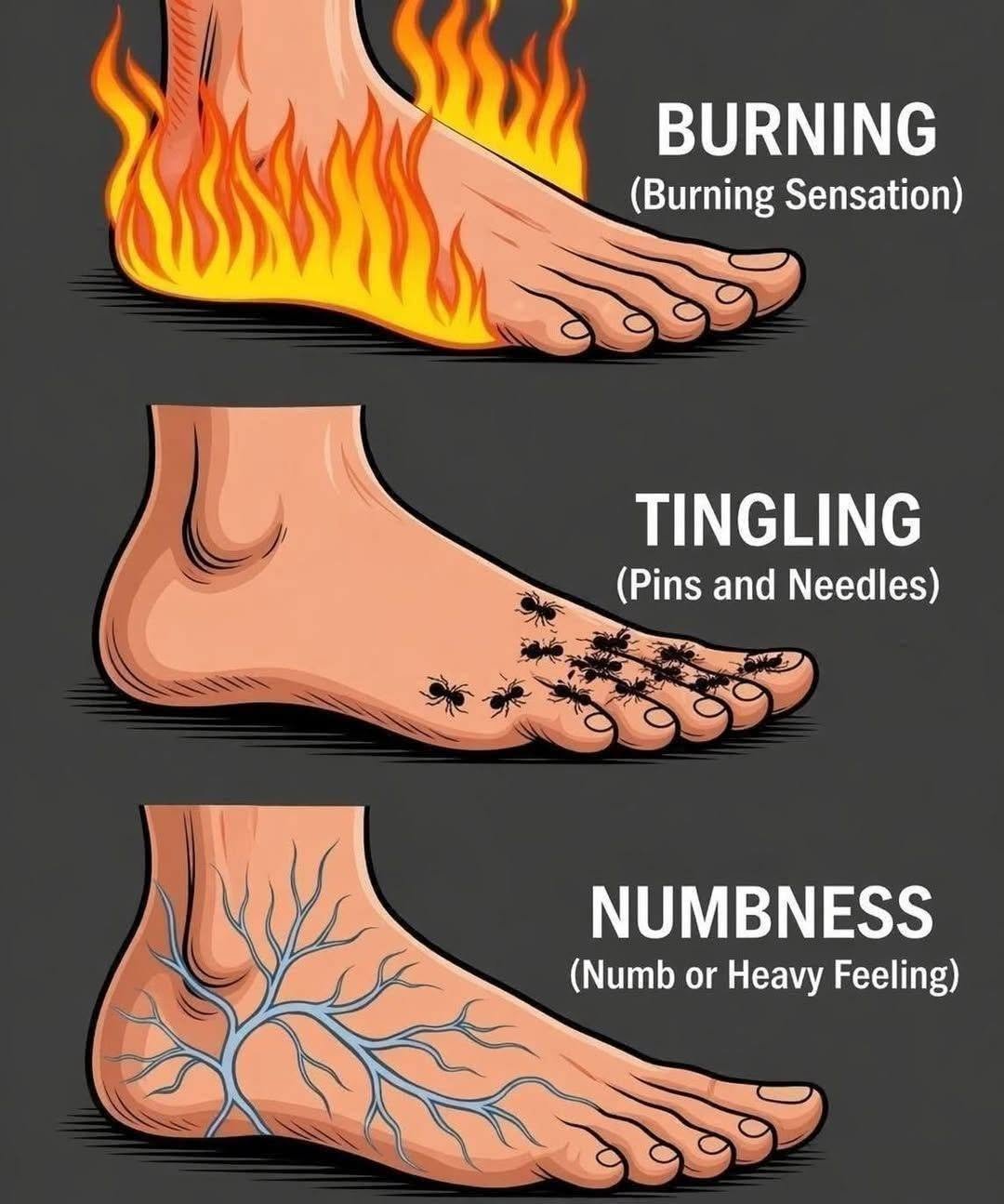
2. Numbness or tingling
Persistent “pins and needles,” burning, or reduced sensation can indicate a problem involving the nerves. Diabetes is one possible cause, but vitamin deficiencies, nerve compression, certain medications, and other conditions can also cause these sensations.
Reduced sensation is especially important because you may not notice cuts, burns, or blisters.
3. A wound that won’t heal
A small cut or blister should generally begin improving. A sore that remains open, repeatedly returns, or becomes increasingly red, swollen, painful, or produces discharge should be evaluated.
People with diabetes or poor circulation should be particularly careful with foot wounds.
4. Unusual changes in skin color
Persistent pale, blue, purple, or unusually dark skin can sometimes indicate circulation problems or other conditions.
A sudden color change accompanied by severe pain, coldness, or numbness requires urgent medical attention.
5. Feet that remain unusually cold
Cold feet are common in cold weather. However, if one or both feet remain unusually cold despite being in a warm environment—especially with pain, numbness, or color changes—it may be worth having your circulation evaluated.
6. Burning or severe unexplained pain 🔥
Repeated burning, stabbing, or electric-shock-like pain can occur with nerve problems. Persistent foot pain can also result from arthritis, injuries, infections, or problems with footwear.
Don’t simply keep masking unexplained pain with painkillers without finding out what’s causing it.
7. Sudden changes in your toenails
Thick, brittle, yellowish, or crumbly nails can occur with fungal infections or repeated trauma from shoes.
A new dark or unusual streak under a toenail, particularly one that changes or doesn’t grow out with the nail, should be examined by a healthcare professional.
8. Significant changes in the shape of your feet or toes
A developing bunion, increasingly curled toes, or another structural change can affect how you walk and may cause pain or pressure sores.
Properly fitted footwear and early evaluation can help prevent some problems from becoming more difficult to manage.
9. Persistent itching, scaling, or cracking
Dry skin and fungal infections are common causes of itchy or peeling feet. Keeping feet clean and dry and using appropriate treatment can often help.
However, persistent cracking, redness, swelling, drainage, or a spreading rash should be assessed, particularly if you have diabetes or a weakened immune system.
❤️ How to Protect Your Feet
A few simple habits can make a big difference:
- Check your feet regularly for cuts, blisters, discoloration, and swelling.
- Keep your feet clean and dry.
- Moisturize dry skin, but avoid putting moisturizer between the toes.
- Wear comfortable, properly fitting shoes.
- Change socks regularly.
- Avoid walking barefoot where you could step on sharp or hot objects.
- If you have diabetes, follow your healthcare professional’s recommendations for regular foot examinations.
🚨 When to Seek Urgent Care
Don’t wait if a foot or leg becomes suddenly swollen, extremely painful, cold, pale, blue, or numb. A rapidly spreading infection, a serious wound, or swelling accompanied by chest pain or difficulty breathing also requires urgent medical attention.
🦶 The Bottom Line
Your feet don’t provide a simple “health diagnosis,” but persistent changes are worth paying attention to. Early evaluation is particularly important if you have diabetes, circulation problems, or reduced sensation.
A symptom doesn’t necessarily mean something serious is happening—but finding the cause is much safer than ignoring it.