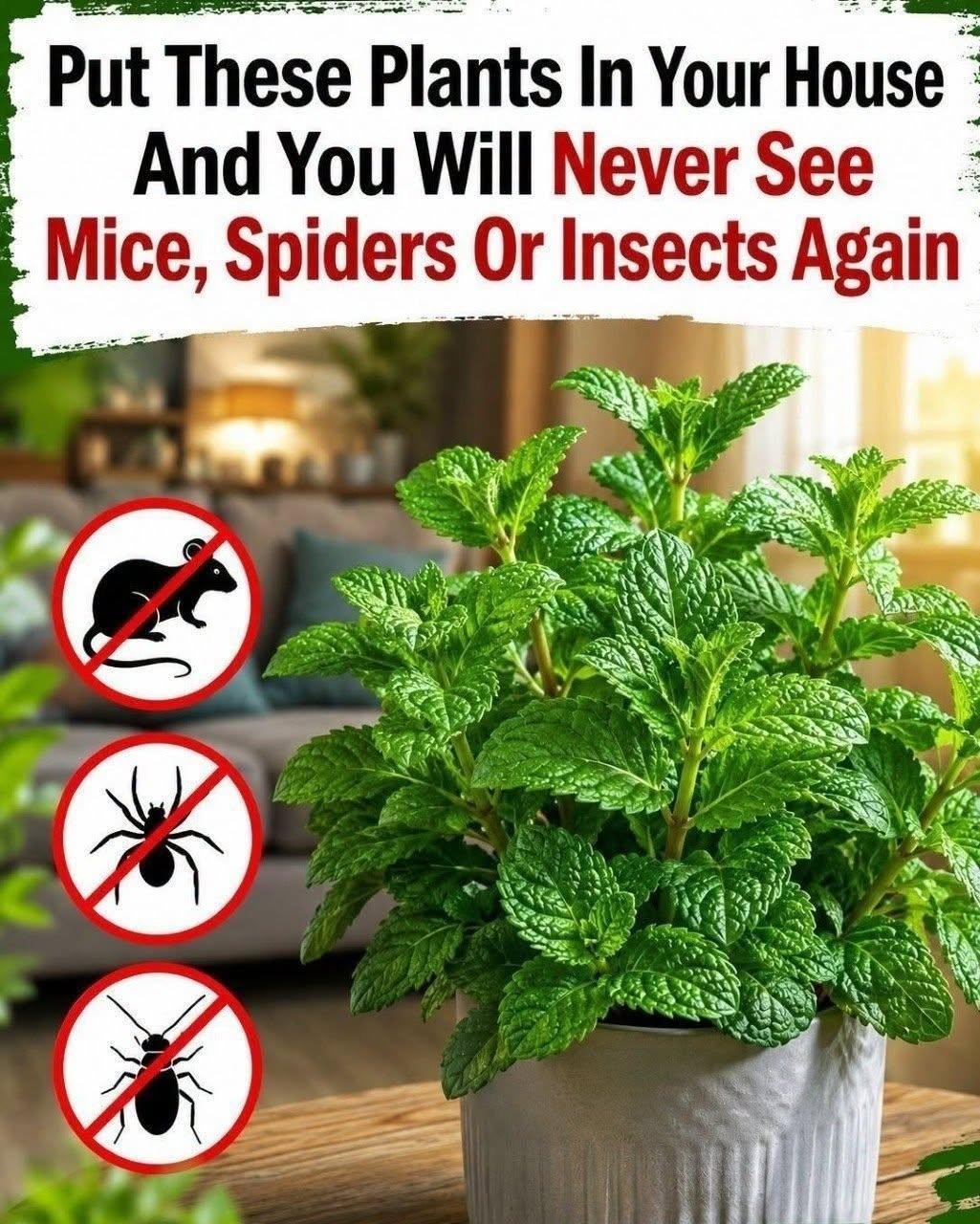
🌿 8 Plants That May Help Repel Mice, Spiders & Other Insects
If you want a more natural way to make your home and garden less attractive to certain pests, some strongly scented plants can be useful additions.
However, it’s important to set realistic expectations: plants alone usually won’t eliminate an established mouse or insect infestation. Their scents may discourage some pests in particular areas, while proper sanitation, sealing entry points, screens, and targeted pest control are much more reliable.
1. 🌿 Peppermint
Peppermint has a strong menthol scent that many people find pleasant but some insects dislike.
You can grow peppermint in containers around patios, windows, or other areas where you want aromatic plants.
Tip: Peppermint spreads aggressively when planted directly in the ground, so containers help discourage some flying insects around outdoor areas, although the effect is not strong enough to serve as a complete can make it easier to control.
2. 🌱 Rosemary
Rosemary is an aromatic herb that can be grown outdoors in sunny conditions.
Its strong fragrance comes from naturally occurring essential oils. Plant it near outdoor seating areas or pathways, and you can also use the fresh herb for cooking.
Don’t rely on rosemary alone to prevent pests from entering a home.
3. 🌿 Lavender
Lavender produces a strong fragrance and is popular around gardens, patios, and walkways.
It can attract pollinators such as bees while adding color and fragrance to your outdoor space.
For best growth, lavender generally prefers sunny conditions and well-drained soil.
4. 🌱 Basil
Basil is another fragrant herb that can be grown in pots or garden beds.
Its aroma may help discourage some flying insects around outdoor areas, although the effect is not strong enough to serve as a complete pest-control strategy.
The biggest advantage is that you get a useful culinary herb at the same time.
5. 🌿 Mint
Different types of mint have strong aromas that can make them useful as part of a pest-conscious garden.
Like peppermint, however, mint can spread rapidly.
Growing it in containers is usually the easiest way to keep it from taking over your garden.
6. 🌼 Marigolds
Marigolds are popular companion plants because of their strong scent and their potential to influence certain garden pests.
They are easy to grow and provide bright yellow, orange, or reddish flowers.
Keep in mind that claims that marigolds repel all mosquitoes and insects are exaggerated. Their effectiveness varies considerably by pest and growing conditions.
7. 🌿 Catnip
Catnip contains nepetalactone, a compound that has demonstrated insect-repelling properties in scientific studies.
It can therefore be an interesting addition to a garden if you’re trying to discourage certain insects.
There’s one major catch: cats often love catnip, so don’t plant it where neighborhood cats will cause problems.
8. 🌿 Lemongrass
Lemongrass has a citrusy aroma and is commonly grown in warm climates.
It’s sometimes confused with citronella grass, which is used commercially for mosquito-repellent products. Simply growing lemongrass in your garden, however, shouldn’t be expected to create a mosquito-free zone.
Its greatest benefits are its pleasant fragrance and culinary uses.
🐭 What About Mice?
This is where many online claims become misleading.
You may hear that peppermint, lavender, or other plants will“drive mice out of your house.” There’s limited evidence that simply growing these plants around a property will reliably control an established mouse population.
For mice, the most effective strategy is usually exclusion.
Seal potential entry points
Mice can enter through surprisingly small openings.
Check around:
- Doors and windows
- Pipes and utility lines
- Foundation gaps
- Vents
- Roof and attic openings
- Garage doors
Seal appropriate openings with durable materials and repair damaged screens.
Remove food sources
Store food in sealed containers and clean crumbs and spills promptly.
Don’t leave pet food sitting out overnight if mice are a problem.
Reduce hiding places
Keep clutter, cardboard, and potential nesting material away from areas where mice could hide.
🕷️ What About Spiders?
Spiders generally enter homes because there’s food available—especially insects—and because they can find sheltered places to build webs.
Rather than relying entirely on a plant, reduce the conditions that attract them:
- Repair window and door screens.
- Seal cracks around the home.
- Reduce excessive outdoor lighting near entrances.
- Keep vegetation from directly touching the building.
- Remove webs regularly.
- Address other insect infestations that provide a food source.
🌱 How to Use Plants Most Effectively
Think of these plants as one small part of an overall pest-management strategy.
A garden containing fragrant herbs can make your outdoor space more pleasant while potentially discouraging certain pests. But if you already have mice, cockroaches, bedbugs, termites, or a significant insect infestation, plants aren’t a substitute for proper treatment.
⚠️ One Important Safety Reminder
Some essential oils and concentrated plant extracts can be irritating or toxic to pets, particularly cats and dogs, depending on the substance and exposure.
Don’t assume that because a plant is natural, concentrated extracts are automatically safe to spray around your home.
🌿 The Bottom Line
Plants such as peppermint, rosemary, lavender, basil, mint, marigolds, catnip, and lemongrass can be attractive and aromatic additions to your garden, and some contain compounds with pest-repelling properties.
But there is no plant that reliably creates a “pest-proof” home.
For lasting results, combine plants with cleanliness, proper food storage, sealing entry points, reducing standing water, and appropriate pest-control measures.