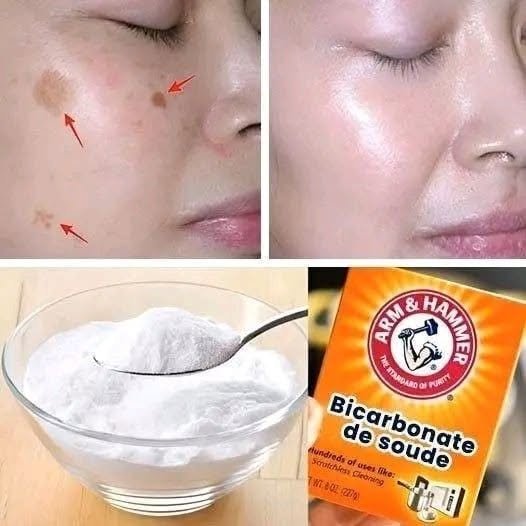
4 Safer Ways to Fade Age Spots for Younger, More Even-Looking Skin
Age spots—also called solar lentigines—are common areas of darker pigmentation that develop after years of sun exposure. They often appear on the face, hands, shoulders, chest, and other areas that receive frequent sunlight.
Because they’re harmless in most cases, many people simply want to make them less noticeable. This has led to countless home remedies, including the use of baking soda.
But there’s an important distinction between an internet beauty tip and a treatment supported by dermatology.
Baking soda isn’t a proven way to erase age spots. Its alkaline nature can disrupt the skin barrier and cause dryness, burning, redness, or irritation, particularly when applied repeatedly or rubbed against the skin. Irritation can also make pigmentation look worse in some people.
If your goal is smoother, more even-looking skin, there are safer approaches that focus on preventing additional pigmentation and gradually fading existing dark spots.
1. Make Sunscreen Your Everyday Essential
If you’re trying to fade age spots, sunscreen is one of the most important steps you can take.
Ultraviolet exposure stimulates melanin production and can make existing pigmentation darker. Continued sun exposure can also contribute to the development of additional spots.
Choose a broad-spectrum sunscreen with SPF 30 or higher and apply it generously to exposed skin.
Don’t forget commonly overlooked areas such as:
- The backs of your hands
- Ears
- Neck
- Chest
- Forehead
- Around the hairline
If you’re spending extended time outdoors, reapply sunscreen according to the product’s instructions, especially after sweating or swimming.
Physical protection can help too. A wide-brimmed hat, sunglasses, protective clothing, and seeking shade during intense sunlight can reduce UV exposure.
Why sunscreen matters when treating pigmentation
Even an effective dark-spot treatment can be undermined by repeated sun exposure.
Think of sunscreen as protecting the progress you’re trying to make.
If pigmentation is your concern, consistent sun protection should be part of your routine whether you’re using a treatment product or not.
2. Consider Vitamin C for a Brighter Appearance
Vitamin C is a popular skincare ingredient because of its antioxidant properties and its potential to help improve the appearance of uneven pigmentation.
A well-formulated topical vitamin C product may help skin look brighter and more even over time.
Look for a product from a reputable skincare company and follow its directions carefully.
If you have sensitive skin, start slowly rather than immediately applying a strong formula every day.
How to introduce vitamin C
After cleansing your skin, apply your vitamin C product according to its instructions.
Follow with moisturizer and sunscreen during the daytime.
Give the routine time to work. Pigmentation generally doesn’t disappear overnight, and consistency is more useful than applying large amounts of a product.
If burning, significant redness, swelling, or persistent irritation develops, stop using the product.
3. Try Proven Dark-Spot Ingredients
If age spots are your main concern, there are skincare ingredients with substantially more evidence behind them than baking soda.
Depending on your skin and the type of pigmentation involved, dermatologists may recommend ingredients such as:
- Retinoids
- Azelaic acid
- Vitamin C
- Hydroquinone in appropriate circumstances
- Other pigment-targeting treatments
The right choice depends on your skin type, the location and appearance of the spots, other products you’re using, and whether the pigmentation has actually been identified as a harmless age spot.
Retinoids
Retinoids encourage skin-cell turnover and can improve several signs of photoaging, including uneven texture and pigmentation.
They can also cause dryness and irritation, especially when first introduced.
If you’re new to retinoids, start cautiously and follow professional or product guidance.
Retinoids also make consistent sun protection particularly important.
Azelaic acid
Azelaic acid is another ingredient commonly used for uneven pigmentation and certain inflammatory skin conditions.
It can be useful for people who want a pigment-focused ingredient that may also be suitable for acne-prone skin.
As with any active ingredient, introduce it gradually and stop if you develop significant irritation.
4. See a Dermatologist for Faster or More Targeted Treatment
If a particular age spot bothers you, professional treatment may offer faster and more predictable results than home remedies.
A dermatologist can determine whether the spot actually appears to be a benign solar lentigo and discuss appropriate treatment options.
Depending on the situation, treatments may include:
- Cryotherapy
- Laser or light-based treatments
- Chemical peels
- Prescription topical medications
These treatments aren’t appropriate for every person or every type of pigmentation, so professional assessment matters.
Why diagnosis is important
Not every dark spot is an age spot.
Some skin cancers and other skin conditions can resemble ordinary pigmentation.
That’s why you shouldn’t attempt to aggressively treat an unexplained or changing dark spot at home.
What About Baking Soda?
Baking soda is inexpensive and readily available, which probably explains why it’s frequently recommended in homemade skincare recipes.
However, inexpensive doesn’t necessarily mean appropriate for facial skin.
Baking soda has a much higher pH than healthy skin. Applying it directly can interfere with the skin’s normal barrier and potentially cause irritation.
Scrubbing baking soda against the skin can be particularly problematic because mechanical irritation may worsen redness and sensitivity.
For that reason, using baking soda as a DIY age-spot eraser isn’t a method I’d recommend.
Avoid combining baking soda with other harsh ingredients
Some homemade recipes combine baking soda with lemon juice, vinegar, hydrogen peroxide, or other substances.
This can increase the potential for irritation or chemical injury.
Lemon juice in particular isn’t a safe substitute for a properly formulated pigmentation treatment.
Your skin doesn’t need to be aggressively stripped in order to become more even-looking.
How Long Does It Take to Fade Age Spots?
Patience is important.
Pigmentation develops over time, and improvement usually takes time as well.
Depending on the treatment and the cause of the discoloration, noticeable improvement may take weeks to months.
Don’t respond to slow progress by applying a stronger product more frequently.
Over-treatment can damage the skin barrier and trigger inflammation, potentially making discoloration more noticeable.
A simple routine used consistently is generally preferable to an aggressive routine that leaves your skin irritated.
A Simple Morning Routine
If uneven pigmentation is your main concern, a straightforward morning routine might look like this:
- Gentle cleanser
- Vitamin C or another suitable treatment, if tolerated
- Moisturizer
- Broad-spectrum SPF 30 or higher
You don’t need a dozen products.
The goal is to protect your skin from further sun damage while using evidence-based ingredients consistently.
A Simple Evening Routine
At night, keep things equally simple:
- Gentle cleanser
- A suitable treatment ingredient, such as a retinoid or azelaic acid if appropriate
- Moisturizer
Don’t introduce several powerful active ingredients at the same time.
If you start multiple products simultaneously and your skin becomes irritated, it can be difficult to determine which product caused the problem.
Introduce one new active at a time and give your skin an opportunity to adjust.
When You Should Have a Dark Spot Checked
Never assume that every dark spot is simply an age spot.
Make an appointment with a dermatologist or other qualified healthcare professional if a spot:
- Changes in size
- Changes in shape
- Develops irregular borders
- Has multiple unusual colors
- Becomes persistently itchy
- Bleeds
- Develops a persistent sore or crust
- Looks noticeably different from your other spots
- Changes rapidly
A changing lesion deserves professional evaluation rather than a DIY treatment.
The Bottom Line
There is no reliable evidence that rubbing baking soda on your skin will erase age spots, and doing so may cause irritation.
If you’re looking for younger, more even-looking skin, focus on what actually helps: consistent sun protection, gentle skincare, appropriate pigment-targeting ingredients, and professional treatment when necessary.
Age spots are usually a consequence of accumulated sun exposure rather than something you can scrub away.
The safest approach isn’t to attack the skin more aggressively.
It’s to protect it, treat it patiently, and have unusual or changing spots checked by a professional.
And if you already tried baking soda and your skin is red, burning, or irritated, stop using it and switch to a gentle moisturizer while the irritation settles. Seek medical advice if the reaction is severe or doesn’t improve.