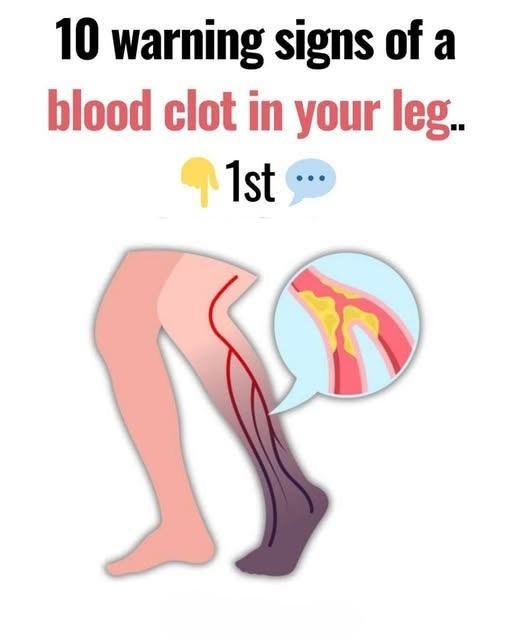
10 Warning Signs of a Blood Clot in the Leg You Should Know
A blood clot in a deep vein of the leg is called deep vein thrombosis (DVT). It can become dangerous if part of the clot breaks loose and travels to the lungs, causing a pulmonary embolism (PE).
The tricky part is that DVT doesn’t always cause obvious symptoms. Some people have only one symptom, while others have none at all.
Knowing the possible warning signs can help you recognize when medical attention is needed.
1. Swelling in One Leg
One of the most common signs of DVT is swelling affecting one leg, often beginning in the calf or ankle.
You may notice that one leg looks visibly larger than the other or that your shoe or sock suddenly feels tighter.
Swelling caused by a clot doesn’t always appear dramatically. It may gradually increase over several hours or days.
Swelling in both legs is less characteristic of DVT and can have other causes, such as certain heart, kidney, or circulation problems.
2. Pain or Tenderness in the Calf
A clot can cause pain or tenderness in the affected leg, particularly in the calf.
Some people describe it as:
- An aching sensation
- Cramping
- Soreness
- Pressure
- Tenderness when standing or walking
It can sometimes resemble a pulled muscle.
That’s why the symptom shouldn’t be judged in isolation. New calf pain accompanied by swelling, warmth, or discoloration deserves medical assessment.
3. Unexplained Warmth
The skin over the affected area may feel warmer than the surrounding skin.
This happens because inflammation can develop around the clot.
However, warmth isn’t specific to DVT. Skin infections, injuries, and other inflammatory conditions can produce similar symptoms.
If warmth appears suddenly alongside swelling and pain, don’t ignore it.
4. Red or Discolored Skin
The affected leg may develop redness or a darker or unusual color.
The discoloration can occur in the calf, thigh, or another area affected by the clot.
Again, redness alone doesn’t prove that a clot is present.
A skin infection can cause redness, warmth, swelling, and pain as well.
5. A Feeling of Heaviness
Some people with DVT describe the affected leg as unusually heavy or full.
It may feel different from the other leg, particularly after standing or walking.
This symptom is nonspecific, but when it appears together with new swelling or discomfort, it shouldn’t simply be dismissed.
6. Swelling or Pain That Appears Without an Obvious Injury
If you develop significant leg pain or swelling without falling, exercising unusually hard, or otherwise injuring the leg, pay attention.
A muscle strain usually has an identifiable trigger.
DVT can occur without an obvious injury, particularly when other risk factors are present.
That doesn’t mean unexplained leg pain automatically indicates a clot—but it is one reason to get unusual symptoms evaluated.
7. Tightness Around the Calf or Thigh
Some people notice that the affected leg feels unusually tight or stretched.
The sensation may become more noticeable when standing.
Because muscle injuries can produce similar feelings, you can’t reliably distinguish a DVT from a pulled muscle based on sensation alone.
A healthcare professional may need to perform an examination and, when appropriate, an ultrasound.
8. Enlarged or More Noticeable Veins
A clot can interfere with normal blood flow through a deep vein.
In some cases, veins near the skin may become more visible or prominent because blood is being redirected through other pathways.
But visible veins by themselves are not a reliable sign of DVT.
Varicose veins, body composition, exercise, heat, and genetics can all make veins more prominent.
The concern is greater when a sudden change occurs together with swelling, pain, or discoloration.
9. Pain That Becomes Worse When Walking or Standing
DVT-related discomfort can become more noticeable when you’re upright.
You might notice aching or pressure in the calf after walking or standing.
However, pain from arthritis, muscle injuries, nerve problems, and other conditions can behave similarly.
The combination of new one-sided swelling plus unexplained leg pain is more concerning than pain alone.
10. Sometimes There Are No Symptoms at All
This is an important warning.
Some DVTs produce few or no obvious symptoms.
Therefore, you cannot rule out a blood clot simply because your leg doesn’t look dramatically swollen.
People at increased risk should be particularly alert to changes in their legs and should follow medical advice regarding prevention and evaluation.
Who Is More Likely to Develop a DVT?
Risk increases in situations where blood flow is reduced, the blood is more likely to clot, or a vein has been injured.
Risk factors include:
- Recent major surgery
- Prolonged bed rest
- Long periods of immobility
- Long-distance travel
- Previous DVT or pulmonary embolism
- Certain cancers
- Pregnancy and the postpartum period
- Some hormone-containing medications
- Certain inherited clotting disorders
- Increasing age
- Obesity
- Serious illness or hospitalization
Having a risk factor doesn’t mean you’ll develop a clot.
It simply means unusual symptoms deserve appropriate attention.
What Should You Do If You Suspect a Blood Clot?
Don’t try to diagnose a DVT at home.
A healthcare professional may use your symptoms and risk factors to determine whether testing is necessary. An ultrasound of the leg is commonly used to look for a clot.
Don’t massage a painful, swollen leg in an attempt to “break up” a suspected clot.
And don’t start aspirin or another blood thinner on your own unless a healthcare professional has advised you to do so.
Watch for Signs of a Pulmonary Embolism
This is the emergency situation you don’t want to miss.
If a blood clot travels to the lungs, it can cause a pulmonary embolism.
Seek emergency medical attention immediately if you develop:
- Sudden shortness of breath
- Chest pain, particularly pain that worsens when breathing
- Coughing up blood
- A very rapid heartbeat
- Severe dizziness or fainting
- Sudden unexplained difficulty breathing
A pulmonary embolism can be life-threatening.
Don’t wait for leg symptoms to become severe before seeking emergency care if these symptoms occur.
Don’t Rely on the “Calf Squeeze” Test
You may have heard of squeezing the calf or bending the foot upward to see whether it hurts.
These home tests are not reliable ways to diagnose DVT.
A person can have a clot without experiencing pain during such a maneuver, and many other conditions can cause calf discomfort.
Proper diagnosis requires medical assessment and, when indicated, imaging or laboratory testing.
The Bottom Line
Possible signs of a blood clot in the leg include:
- Swelling in one leg
- Calf pain or tenderness
- Unusual warmth
- Red or discolored skin
- A feeling of heaviness
- Unexplained swelling or pain
- Tightness in the calf or thigh
- Newly prominent veins
- Pain that becomes more noticeable when standing or walking
- No obvious symptoms at all
The most important takeaway is that DVT cannot be diagnosed reliably from symptoms alone.
If you develop new, unexplained swelling and pain in one leg—especially after surgery, prolonged immobility, travel, or another period of increased clot risk—contact a healthcare professional promptly.
And if you develop sudden shortness of breath, chest pain, coughing up blood, severe dizziness, or fainting, seek emergency medical care immediately.
A blood clot is treatable, but recognizing a potentially dangerous situation early matters.
