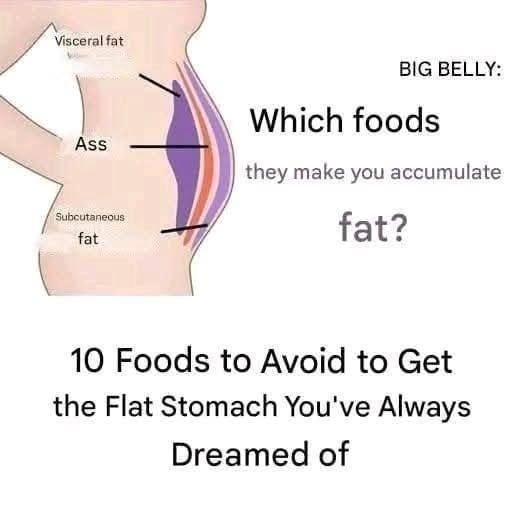
10 Foods to Avoid for a Flatter Stomach and Better Digestion
A flat stomach is often presented as if there is a secret list of foods you simply need to eliminate. The reality is more complicated.
Your abdominal appearance depends on body-fat levels, genetics, muscle mass, posture, digestion, and temporary bloating. No individual food can specifically burn belly fat, and avoiding certain foods won’t guarantee a perfectly flat stomach.
However, some foods and drinks can make you feel more bloated, add a lot of calories, or make it harder to maintain a healthy weight. If your goal is a slimmer waist and a more comfortable stomach, these are worth limiting.
1. Sugary Soft Drinks
Soda and other sugar-sweetened beverages can deliver a surprising amount of sugar without making you feel particularly full.
Because they’re liquids, it’s easy to consume a large number of calories quickly.
Carbonated drinks can also temporarily increase bloating in some people because of the gas.
You don’t necessarily need to eliminate carbonation completely. Plain sparkling water is very different from a large sugary soda.
For everyday hydration, water is usually the simplest choice.
2. Highly Processed Snack Foods
Chips, packaged cookies, crackers, and similar snacks can be easy to overeat.
They’re often high in calories while providing relatively little protein or fiber per serving.
Eating them occasionally isn’t a problem for most people. The concern is when they become a regular part of the diet and replace more nutritious foods.
If you’re hungry between meals, options such as fruit, yogurt, nuts, or another protein-rich snack may be more satisfying.
3. Processed Meats
Sausages, bacon, hot dogs, and other processed meats can be high in sodium and saturated fat.
A high-sodium meal may cause temporary water retention, which can make you feel puffier or heavier the next day.
That isn’t the same as gaining body fat overnight.
For a healthier everyday pattern, choose minimally processed protein sources more often, such as fish, eggs, beans, lentils, poultry, or other suitable options.
4. Fried Foods
Fried chicken, French fries, fried snacks, and other deep-fried foods can be very calorie-dense.
They’re also often eaten in large portions.
Regularly consuming large amounts can make maintaining a calorie balance more difficult if you’re trying to lose body fat.
You don’t have to fear every fried food, but baking, grilling, roasting, or air-frying can be useful alternatives.
5. Large Amounts of Refined Bread and Pastries
White bread, sweet rolls, doughnuts, cakes, and pastries can provide plenty of calories without much fiber or protein.
Pastries can be particularly easy to overconsume because they combine refined carbohydrates, added sugar, and fat.
You don’t have to eliminate carbohydrates to reduce abdominal fat.
Instead, consider choosing higher-fiber carbohydrate sources more often, such as oats, whole grains, potatoes, beans, fruits, and vegetables.
6. Very Salty Foods
Salt doesn’t directly create belly fat.
But consuming a lot of sodium can cause the body to retain additional water temporarily.
That can make your abdomen or face look puffier and cause your weight on the scale to rise for a short period.
Restaurant meals, instant noodles, packaged soups, chips, processed meats, and many prepared foods can contain substantial amounts of sodium.
Reducing heavily salted foods can therefore help some people feel less bloated.
7. Large Amounts of Alcohol
Alcohol can contribute significant calories, and alcoholic drinks are sometimes accompanied by high-calorie snacks or large meals.
Regular heavy drinking can also interfere with overall health and make maintaining a healthy weight more difficult.
If you drink, moderation matters.
And if you don’t drink alcohol, there is no health reason to start simply because you think a particular type of alcohol will help with weight loss.
8. Foods That Trigger Your Personal Bloating
This category is highly individual.
Some people become bloated after eating beans, lentils, onions, garlic, certain fruits, or particular dairy products.
That doesn’t mean those foods are unhealthy.
In fact, many of them are extremely nutritious.
If a particular food consistently causes gas or abdominal discomfort, pay attention to the pattern.
You might tolerate a smaller portion, a different preparation method, or a different food entirely.
Don’t eliminate large categories of nutritious foods unnecessarily.
9. Sugar-Free Products With Certain Sweeteners
Some “sugar-free” candies, chewing gums, protein bars, and desserts contain sugar alcohols such as sorbitol, mannitol, or xylitol.
For some people, larger amounts can cause gas, bloating, or diarrhea.
If you notice digestive problems after eating a particular sugar-free product, check its ingredient list.
You may discover that the problem isn’t the absence of sugar—it’s the specific sweetener.
10. Ultra-Processed Fast Food Meals
Burgers, pizza, fries, fried chicken, and similar meals can combine several factors that make weight management difficult: high calories, refined carbohydrates, large portions, added fats, and substantial sodium.
Again, eating these foods occasionally doesn’t automatically prevent you from having a healthy diet.
The problem is when they’re the foundation of your everyday meals.
Try building more meals around vegetables, whole grains, legumes, lean proteins, fruits, and minimally processed foods.
A Flat Stomach Isn’t Just About Avoiding Food
This is where many “flat belly” diets go wrong.
If your goal is to reduce body fat around your abdomen, simply removing one food won’t accomplish it.
Your overall energy intake, physical activity, sleep, genetics, age, and hormonal factors all matter.
And if your goal is simply to reduce bloating, the strategy can be completely different.
Bloating may be related to constipation, food intolerance, swallowing air, carbonated drinks, certain carbohydrates, or other digestive issues.
Knowing which problem you’re actually trying to solve is important.
What Should You Eat Instead?
Rather than focusing entirely on restriction, build meals around foods that keep you satisfied.
A simple plate might contain:
- A source of protein such as eggs, fish, poultry, yogurt, beans, or lentils
- Plenty of vegetables
- A high-fiber carbohydrate such as oats, potatoes, brown rice, or whole grains
- A moderate amount of healthy fat
- Water or another low-calorie beverage
Protein and fiber can help you feel full, making it easier to control overall food intake.
Don’t Fall for “Belly Fat Burning” Foods
No food can selectively melt fat from your abdomen.
You may see claims about lemon water, apple cider vinegar, ginger, special teas, or “detox” drinks that supposedly target belly fat.
These claims are usually exaggerated.
Some of these foods can be part of a healthy diet, but they don’t override the fundamentals of energy balance and physical activity.
Exercise Matters Too
If you’re trying to change your waistline, nutrition is only part of the equation.
Regular walking, aerobic activity, and resistance training can all contribute to better body composition and overall health.
Strength training is particularly useful because maintaining muscle becomes increasingly important as we age.
And you don’t need hundreds of abdominal exercises to lose belly fat.
You cannot reliably choose exactly where your body loses fat first.
The Bottom Line
If you want a flatter-looking stomach, don’t think of these foods as forbidden.
Instead, consider limiting:
- Sugary soft drinks
- Highly processed snacks
- Processed meats
- Fried foods
- Refined breads and pastries
- Very salty foods
- Excessive alcohol
- Foods that personally trigger bloating
- Large amounts of sugar-free products containing certain sweeteners
- Frequent ultra-processed fast-food meals
The goal isn’t to eat as little as possible.
It’s to create an eating pattern that provides enough protein, fiber, nutrients, and satisfaction while keeping highly processed, calorie-dense foods in moderation.
And remember: a completely flat stomach isn’t a realistic or necessary measure of health. Some abdominal softness and natural variation are normal.
Aim for a healthy, strong, comfortable body—not perfection in the mirror.