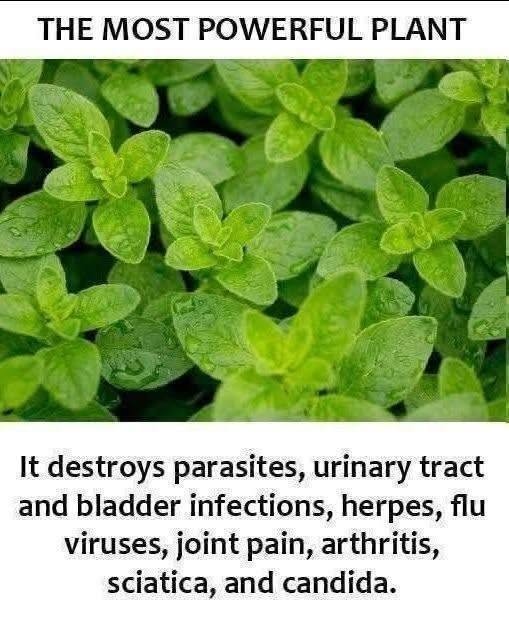
🌿 “The Most Powerful Plant” — Can One Plant Really Treat All These Conditions?
Claims that one plant can destroy parasites, cure urinary and bladder infections, eliminate herpes and flu viruses, relieve arthritis and sciatica, and eradicate candida are misleading.
There is no single plant proven to treat all of these conditions. Different problems have completely different causes and require different treatments.
🦠 1. Parasites
Parasitic infections vary enormously. Pinworms, tapeworms, Giardia, and other parasites require different approaches.
Some herbs have demonstrated antiparasitic activity in laboratory research, but that doesn’t mean they can safely or reliably eliminate an infection in humans.
If you suspect a parasite, proper diagnosis is much safer than relying on an herbal remedy.
🚽 2. Urinary Tract and Bladder Infections
A urinary tract infection (UTI) is commonly caused by bacteria.
Symptoms can include:
- Burning when urinating
- Frequent urination
- Urgent need to urinate
- Lower abdominal discomfort
- Cloudy or strong-smelling urine
Some untreated UTIs can progress to a kidney infection.
🚨 Don’t rely on a plant to treat a suspected UTI
If you develop fever, chills, back or side pain, vomiting, or feel seriously unwell, seek medical care promptly.
🦠 3. Herpes
Herpes is caused by herpes simplex viruses.
There is currently no plant that has been proven to eliminate herpes from the body.
Prescription antiviral medicines can help shorten or control outbreaks and reduce transmission risk in appropriate circumstances.
Be especially cautious about applying concentrated herbs or essential compounds that show antiviral effects in laboratory experiments, but laboratory activity isn’t the same as proving that a plant can cure influenza in people oils directly to genital or oral lesions—they can cause significant irritation.
🤧 4. Flu Viruses
Influenza is a viral respiratory infection.
Some plants contain compounds that show antiviral effects in laboratory experiments, but laboratory activity isn’t the same as proving that a plant can cure influenza in people.
For people at increased risk of complications, medical advice is particularly important because antiviral treatment may be appropriate.
🦴 5. Arthritis and Joint Pain
Arthritis isn’t one disease. Osteoarthritis, rheumatoid arthritis, gout, and other conditions have different causes and treatments.
Some plant-derived compounds may have anti-inflammatory properties, but that doesn’t mean an herbal preparation can reverse arthritis or replace appropriate medical treatment.
Persistent joint swelling, severe pain, or unexplained stiffness should be evaluated.
🦵 6. Sciatica
Sciatica generally occurs when a nerve in the lower back becomes irritated or compressed.
Typical symptoms include pain traveling from the lower back or buttock into the leg, sometimes accompanied by numbness or weakness.
A plant cannot reliably “remove” a compressed nerve.
🚨 Seek urgent medical attention if you develop:
- New severe weakness in a leg
- Numbness around the groin or buttocks
- Loss of bladder or bowel control
These can indicate a serious spinal problem.
🍄 7. Candida
Candida is a type of yeast that normally lives on and in the body.
Candida infections can occur in different places, including the mouth, vagina, and bloodstream, and treatment depends on the location and severity.
Claims that a particular herb will “flush all candida from your body” are misleading because Candida can be part of the body’s normal microbial community.
🌿 Why Do These “Miracle Plant” Claims Spread?
A plant may contain compounds with antimicrobial, antiviral, or anti-inflammatory effects. Researchers can sometimes demonstrate these effects in test tubes or animal studies.
But there is a major difference between:
“This plant contains a compound that affects a microorganism in laboratory experiments”
and
“Eating this plant cures infections and chronic diseases in humans.”
The second claim requires good-quality clinical evidence.
⚠️ Natural Doesn’t Always Mean Safe
Concentrated herbal products can interact with medications or cause toxicity.
Extra caution is warranted if you’re:
- Pregnant or breastfeeding
- Taking prescription medicines
- Living with liver or kidney disease
- Preparing an herbal extract or essential oil
- Giving an herbal product to a child
⭐ Bottom Line
There isn’t a scientifically established “most powerful plant” that simultaneously destroys parasites, UTIs, herpes, flu, arthritis, sciatica, and Candida.
Plants can certainly contain biologically active compounds and some have legitimate medical uses, but a plant’s traditional use or laboratory activity doesn’t prove that it can cure a disease in humans.
If you tell me the name of the plant mentioned in the original claim, I can explain what it actually does, what evidence exists, and whether there are any safety concerns.