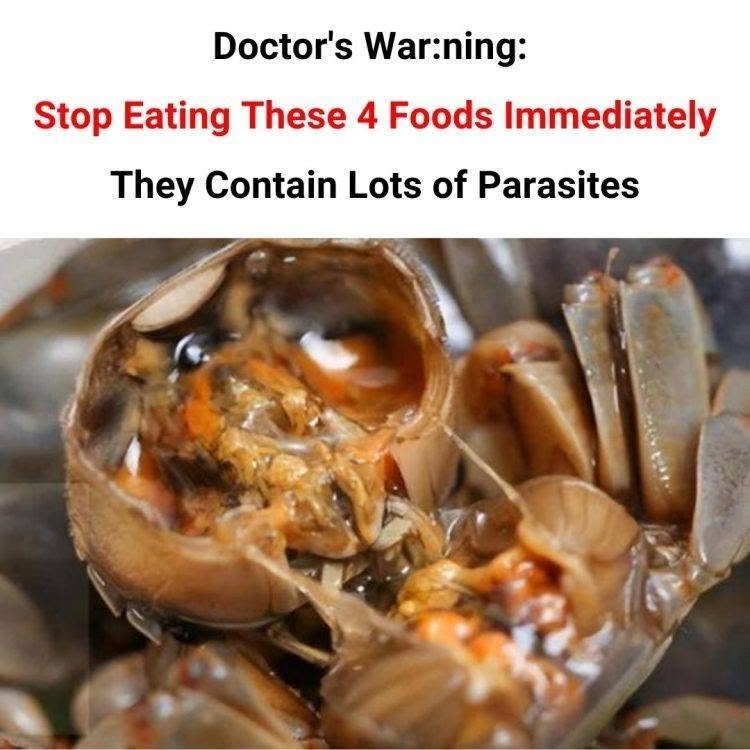
“Doctors Warn: Limit Eating These 4 Foods Immediately, They Contain a Lot of Parasites” — Is It True?
This claim is misleading as written. There are foods that can carry parasites, but reputable health authorities do not advise people to suddenly stop eating four ordinary foods because they “contain a lot of parasites.” The actual risk depends heavily on whether food is raw or undercooked, contaminated, or improperly washed/handled. CDC+1
A version of this claim is currently circulating online, including an article using very similar wording. Thebustednews
1. Raw or Undercooked Meat
This is a legitimate parasite concern.
Certain meats can carry parasites if they are eaten raw or insufficiently cooked. For example, Trichinella can cause trichinellosis after people eat infected raw or undercooked meat. Wild game such as wild boar and bear can be particularly relevant sources. CDC+1
The important distinction: properly cooking meat greatly reduces this risk. The CDC recommends using a food thermometer and cooking meat to appropriate safe temperatures. CDC
2. Raw or Undercooked Fish and Squid
Raw or inadequately cooked seafood can contain parasites.
One example is Anisakis, a parasitic worm that can cause anisakiasis when people eat infected raw or undercooked fish or squid. CDC
That doesn’t mean you need to eliminate fish from your diet. Proper cooking—or appropriate parasite-control freezing procedures for certain seafood—can reduce the risk substantially. CDC
3. Unwashed Fruits and Vegetables
Fresh produce can become contaminated with parasites and other disease-causing organisms through contaminated soil, water, handling, or other routes.
The CDC recommends washing fruits and vegetables thoroughly under running water before eating, cutting, or cooking them. For some parasitic infections, cooking provides additional protection, because washing alone isn’t guaranteed to remove every parasite. CDC
So the message shouldn’t be “don’t eat vegetables.”
It’s “wash and handle produce properly.”
4. Raw or Undercooked Sprouts
Raw sprouts—including some bean and alfalfa sprouts—are considered higher-risk foods because their growing conditions can allow harmful microorganisms to multiply.
The CDC lists raw or undercooked sprouts among foods associated with foodborne illness and recommends cooking them until steaming hot for a safer option. CDC
Again, this doesn’t mean sprouts are inherently “full of parasites.” The broader food-safety concern includes bacteria and other pathogens, not just parasites.
What the Viral Claim Gets Wrong
The phrase “they contain a lot of parasites” makes it sound as though these foods naturally contain large numbers of worms or parasites.
That’s not an accurate way to describe foodborne parasite risk.
A more accurate statement would be:
Some foods can become contaminated with parasites or other pathogens, particularly when they are raw, undercooked, unwashed, or improperly handled.
The CDC’s general food-safety advice is straightforward: Clean, Separate, Cook, and Chill. CDC
Should You Stop Eating These Foods?
No—not simply because you saw this headline.
Instead:
- Cook meat thoroughly.
- Cook fish and seafood properly.
- Wash fresh fruits and vegetables under running water.
- Avoid eating raw or undercooked meat when the source or preparation is questionable.
- Be particularly careful with raw foods if you’re pregnant, older, very young, or immunocompromised because foodborne infections can be more serious in these groups. CDC+1
Bottom Line
The viral headline has a grain of truth wrapped in sensational wording.
Parasites really can be transmitted through certain foods, particularly raw/undercooked meat and seafood and contaminated produce. But there’s no good evidence behind the blanket claim that four everyday foods are simply “packed with parasites” and should be immediately eliminated from your diet.
Food safety and proper preparation matter much more than avoiding entire food categories.