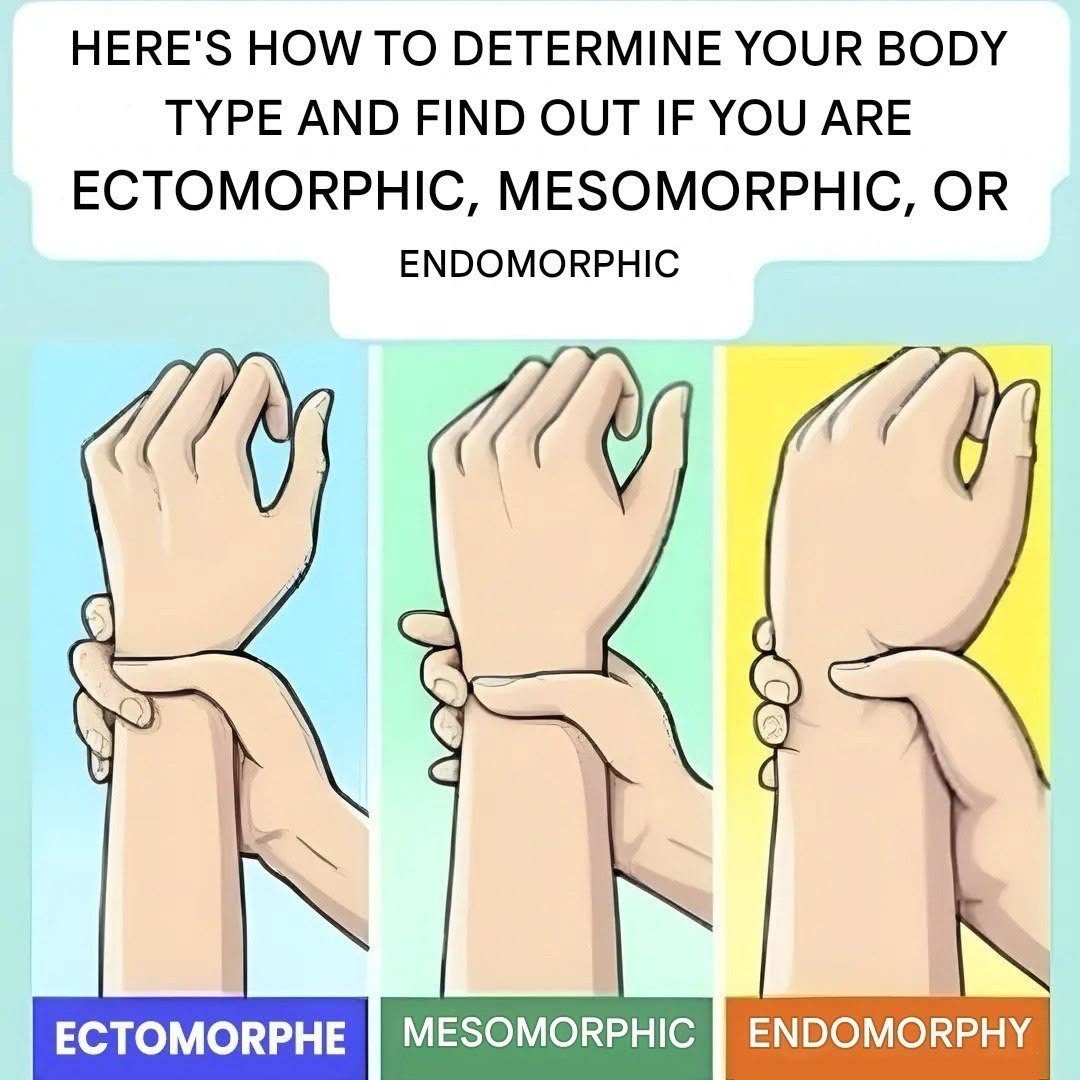
Are You an Ectomorph, Mesomorph, or Endomorph? Discover Your Body Type and How to Make the Most of It
Have you ever wondered why some people seem to stay naturally slim, while others build muscle quickly or gain weight more easily?
You may have heard people describe themselves as an ectomorph, mesomorph, or endomorph. These three categories come from the traditional somatotype system, which groups people according to broad physical characteristics such as body shape, muscle development, and tendency to carry body fat.
The idea is appealing because it seems to offer a simple explanation for why everyone’s body looks and responds differently.
However, there’s an important distinction to understand: your body type doesn’t determine your destiny.
Your genetics, age, sex, hormones, nutrition, physical activity, sleep, stress, training history, and overall lifestyle all influence your body composition. Most people also don’t fit neatly into a single category.
Instead of thinking of these types as strict boxes, you can use them as a fun way to describe general physical tendencies while focusing on habits that actually help you reach your goals.
What Are the Three Body Types?
The traditional somatotype system describes three general categories:
- Ectomorph: generally leaner with a lighter frame
- Mesomorph: generally more muscular or athletic-looking
- Endomorph: generally softer or rounder with a greater tendency to store body fat
Many people are somewhere in between.
For example, someone might have a naturally narrow frame but build muscle relatively easily. Another person might have broad shoulders and a muscular upper body while also gaining body fat easily.
That’s why you shouldn’t worry too much about finding the “perfect” category.
The more useful question is:
What does your body respond well to, and what habits help you make progress?
Ectomorph
Ectomorphs are traditionally described as people with a naturally lean, narrow, or lightly built appearance.
They may have relatively long limbs, narrower shoulders or hips, and less visible body fat.
People who identify with this category often say that they have difficulty gaining weight or muscle.
However, being naturally thin doesn’t necessarily mean that someone has a permanently “fast metabolism.” Body weight is influenced by many factors, including food intake, daily movement, muscle mass, genetics, and appetite.
Common Characteristics
An ectomorph-style body type is traditionally associated with:
- A relatively slim frame
- Narrower shoulders or hips
- Long or slender limbs
- Lower visible body fat
- Difficulty gaining weight for some individuals
- A lighter appearance even without extensive exercise
Again, these are broad descriptions rather than medical or scientific measurements.
If You Want to Build Muscle
If you naturally struggle to gain weight, your biggest challenge may be consistently eating enough calories and protein to support muscle growth.
Focus on resistance training rather than trying to burn as many calories as possible.
Compound movements such as squats, presses, rows, deadlifts, and pull-ups can help you train multiple muscle groups efficiently.
Progressive overload is particularly important.
Instead of doing the exact same workout every week, gradually increase the weight, repetitions, sets, or training difficulty as your strength improves.
Nutrition matters too.
Include protein-rich foods such as:
- Eggs
- Chicken
- Fish
- Greek yogurt
- Cottage cheese
- Milk
- Beans
- Lentils
- Tofu
- Lean meat
If gaining weight is difficult, calorie-dense foods such as nuts, nut butter, avocado, olive oil, oats, rice, and whole-grain foods can make it easier to increase your energy intake without having to eat enormous portions.
Don’t Forget Recovery
More training isn’t always better.
Muscle grows and adapts during recovery, so give your muscles adequate rest between challenging workouts.
Prioritize sleep, regular meals, hydration, and manageable training volume.
Mesomorph
Mesomorphs are traditionally described as naturally athletic or muscular.
They may have broader shoulders, a relatively developed musculature, and an appearance that responds well to resistance training.
Some people in this category seem to build muscle relatively easily.
But once again, there is no guarantee that someone classified as a mesomorph will automatically have a fast metabolism or remain lean without paying attention to nutrition and activity.
Common Characteristics
The traditional mesomorph description includes:
- A naturally athletic appearance
- Moderate-to-high muscle development
- Broader shoulders
- A relatively balanced body shape
- Potentially good response to resistance training
These characteristics can vary dramatically between individuals.
If You Want to Build Muscle
Resistance training should be the foundation.
A balanced program can include movements that train:
- Chest
- Back
- Shoulders
- Arms
- Legs
- Glutes
- Core
Focus on good technique and gradually increase training demands.
You don’t need to spend hours in the gym every day.
A consistent program performed several times per week can be highly effective.
Nutrition should support your goal.
If you’re trying to gain muscle, consume enough protein and calories to support growth.
If you’re trying to maintain or reduce body fat, you may need to adjust your calorie intake while keeping protein sufficiently high.
If You Want to Stay Lean
Don’t assume that having a naturally athletic build means you can eat unlimited amounts of food.
Your energy needs still depend on your body size, activity level, and lifestyle.
A combination of resistance training, cardiovascular activity, balanced nutrition, and adequate sleep can help you maintain a healthy body composition.
Endomorph
Endomorphs are traditionally described as having a softer, rounder, or broader body shape and a tendency to gain body fat relatively easily.
People who identify with this category may find weight management more challenging than someone who naturally maintains a lower body weight.
But again, this doesn’t mean that an endomorph is destined to be overweight.
Body composition can change substantially with consistent nutrition and physical activity.
Common Characteristics
The traditional description includes:
- A rounder or softer appearance
- Greater tendency to store body fat
- A wider frame
- Potentially easier weight gain
- Difficulty losing weight for some individuals
These descriptions are generalizations rather than fixed biological rules.
If You Want to Lose Body Fat
The most important factor is sustainable energy balance.
You don’t need to eliminate carbohydrates, completely avoid fat, or follow an extreme diet.
Instead, focus on meals built around nutritious foods and appropriate portions.
A balanced plate can include:
- A protein source
- Plenty of vegetables
- Fruit
- Whole grains or other carbohydrate sources
- Healthy fats
Protein can be particularly helpful because it supports muscle maintenance and can contribute to feelings of fullness.
Good options include eggs, poultry, fish, lean meat, Greek yogurt, cottage cheese, beans, lentils, and tofu.
Exercise for an Endomorph-Style Body
A combination of resistance training and cardiovascular activity can be useful.
Strength training helps maintain and build muscle, while walking, cycling, swimming, jogging, or other enjoyable activities can increase overall energy expenditure and cardiovascular fitness.
You don’t need to punish yourself with endless cardio.
The best exercise program is usually the one you can perform consistently.
You May Be a Combination
This is something many people overlook.
Most people don’t perfectly fit one category.
You might have characteristics associated with two or even all three.
For example, you might have:
- A naturally slim upper body
- Broad shoulders
- Strong legs
- A tendency to gain fat around your waist
Where would that put you?
Trying to force yourself into one category isn’t particularly useful.
Instead, think about your individual characteristics.
How easily do you gain muscle?
How easily do you gain body fat?
What types of exercise do you enjoy?
How does your appetite behave?
How does your body respond to changes in food intake and activity?
Those questions are much more useful than a three-letter label.
Your Body Type Doesn’t Determine Your Metabolism
One of the biggest misconceptions surrounding the ectomorph, mesomorph, and endomorph system is that each body type has a specific metabolism.
For example, people sometimes say:
“Ectomorphs have fast metabolisms.”
“Endomorphs have slow metabolisms.”
These statements are oversimplifications.
Metabolic rate is influenced by numerous factors, including body size, muscle mass, age, sex, genetics, physical activity, and food intake.
Two people with similar body shapes can have very different energy requirements.
That’s why calorie and training recommendations should be individualized rather than based solely on a body-type label.
How to Make the Most of Your Body
Regardless of your body type, several fundamentals remain important.
1. Eat Enough Protein
Protein is important for maintaining and building muscle.
Include a quality protein source in your meals and choose foods that fit your dietary preferences.
You don’t need to rely exclusively on supplements.
Whole foods can provide plenty of protein.
2. Strength Train
Resistance training is useful whether your goal is muscle gain, fat loss, or simply becoming stronger.
It can help preserve muscle while losing weight and support muscle growth when you’re eating enough calories.
3. Stay Active
Exercise isn’t limited to gym workouts.
Walking, cycling, sports, dancing, hiking, swimming, and other activities all count.
Increasing your everyday movement can have a meaningful impact on overall health.
4. Prioritize Sleep
Sleep is often overlooked when people focus on fitness.
Adequate sleep supports recovery, performance, mood, and many processes involved in regulating appetite and energy.
Try to maintain a consistent sleep schedule and create an environment that allows you to rest well.
5. Be Consistent
Your body isn’t going to transform overnight.
Whether you’re trying to gain muscle, lose fat, or improve your fitness, meaningful results generally come from repeating good habits for months rather than following an extreme routine for a few days.
Consistency beats perfection.
A Simple Body-Type-Friendly Approach
Rather than following completely different diets for ectomorphs, mesomorphs, and endomorphs, use your goal as the starting point.
If your goal is muscle gain
Focus on:
- Progressive resistance training
- Adequate protein
- Sufficient calories
- Carbohydrates to support training
- Healthy fats
- Consistent sleep
- Recovery between workouts
If your goal is fat loss
Focus on:
- A sustainable calorie deficit
- Adequate protein
- Resistance training
- Plenty of vegetables and fruit
- High-fiber foods
- Regular physical activity
- Adequate sleep
If your goal is maintaining your weight
Focus on:
- Balanced meals
- Regular exercise
- Adequate protein
- Plenty of minimally processed foods
- A sustainable calorie intake
- Good sleep and recovery
A Better Way to Think About Body Types
The ectomorph, mesomorph, and endomorph categories can be entertaining and may give you a general vocabulary for discussing body shape.
But don’t let a label limit what you believe your body can accomplish.
Someone who considers themselves an ectomorph can build significant muscle.
Someone who considers themselves an endomorph can become lean and athletic.
Someone who considers themselves a mesomorph can still struggle with weight management.
Your body responds to your habits, your environment, your genetics, and your individual circumstances.
There is no single “perfect” body type.
Final Takeaway
So, are you an ectomorph, mesomorph, or endomorph?
You may recognize yourself in one of these traditional categories—or you may be a combination of several.
That’s completely normal.
Instead of using your body type to decide what you’re capable of, use it simply as a starting point for understanding your natural tendencies.
Your real progress will come from the fundamentals: balanced nutrition, adequate protein, regular movement, resistance training, sufficient recovery, and consistency.
Rather than asking, “Which body type am I?” the more useful question is:
“What habits help my body become stronger, healthier, and more capable?”
That’s a question everyone can benefit from answering.