If You Always Sleep on Your Right Side, Here’s What You Should Know
Sleeping on your right side is a normal and, for many people, perfectly comfortable sleeping position. There is no universal rule that sleeping on the right side is unhealthy. In fact, side sleeping can be beneficial for some people, particularly those who snore or have certain breathing problems.
However, if you always sleep on the same side, there are a few things worth knowing about your sleep quality, shoulders, neck, skin, and overall comfort.
1. Your Shoulder May Take Most of the Pressure
When you sleep on your right side night after night, your right shoulder carries much of the pressure from your body weight.
If your mattress is too firm or your pillow doesn’t support you properly, you may wake with:
- Shoulder soreness
- Arm numbness or tingling
- Neck stiffness
- Upper-back discomfort
- Pain when raising your arm
This doesn’t mean you must stop sleeping on your right side.
Instead, make sure your pillow keeps your head and neck reasonably aligned with your spine. Your mattress should also provide enough pressure relief around the shoulder and hip.
2. Your Neck Position Matters More Than the Side You Choose
One of the biggest mistakes side sleepers make is using a pillow that is either too high or too low.
Your head should remain relatively aligned with your spine rather than bending sharply toward the mattress.
If your pillow is too low, your head can tilt downward. If it’s too high, your neck can tilt upward.
Either situation can contribute to morning stiffness.
A pillow designed for side sleeping can help, but the correct height depends on your body shape, shoulder width, mattress firmness, and personal comfort.
3. Consider Putting a Pillow Between Your Knees
A simple trick that can make side sleeping more comfortable is placing a pillow between your knees.
This can help keep your hips and pelvis in a more comfortable position and reduce twisting through your lower back.
You don’t need an expensive specialty pillow.
A normal pillow can work if it keeps your knees from collapsing together.
If you wake with hip or lower-back discomfort, experimenting with this position may be worthwhile.
4. Sleeping on Your Right Side May Actually Help Some People
Side sleeping can be useful for people who snore or have obstructive sleep apnea because sleeping on the side may reduce airway collapse compared with sleeping flat on the back for some individuals.
That doesn’t mean right-side sleeping treats sleep apnea.
If you have loud habitual snoring, witnessed pauses in breathing, gasping during sleep, or significant daytime sleepiness, you should discuss these symptoms with a healthcare professional.
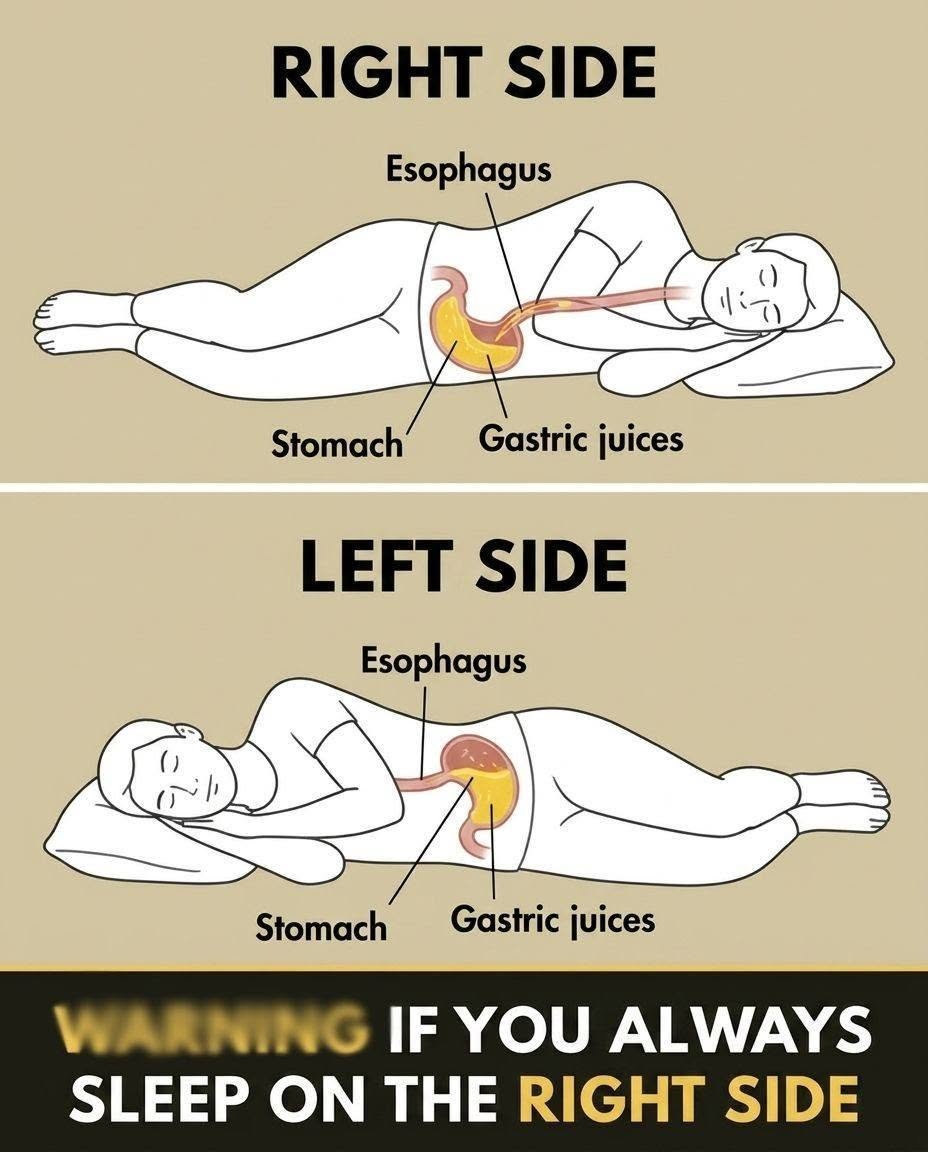
5. What About Digestion and Acid Reflux?
This is where the left-versus-right side distinction becomes interesting.
For people with nighttime acid reflux, sleeping on the left side is generally considered more favorable than sleeping on the right side.
Research has found that right-side positioning can worsen or prolong acid exposure in some people with gastroesophageal reflux.
So if you consistently wake with:
- Heartburn
- Sour or bitter fluid in your mouth
- Regurgitation
- Burning behind the breastbone
- Nighttime coughing or throat irritation
your sleeping position may be worth reconsidering.
You can try sleeping on your left side and avoiding meals close to bedtime.
If reflux happens frequently, however, don’t rely on position alone. Persistent reflux deserves appropriate medical evaluation.
6. Don’t Believe That Right-Side Sleeping “Damages” Your Heart
You may see claims online that sleeping on your right side puts dangerous pressure on the heart.
For most healthy people, there is no reason to believe that routinely sleeping on the right side damages the heart.
Your heart is protected inside your chest, and people naturally change positions during sleep.
People with particular heart or lung conditions may receive individualized positioning advice from their healthcare team, but that is different from saying that right-side sleeping is inherently dangerous.
7. Your Face May Be Pressed Against the Pillow
If you always sleep on the same side, the skin on that side of your face spends hours pressed against the pillow.
Over time, repeated compression and folding can contribute to temporary sleep lines.
These aren’t the same as permanent wrinkles caused by aging and ultraviolet exposure, but repeated mechanical stress may contribute to the appearance of facial lines over the long term.
You don’t need to force yourself to become a back sleeper.
Instead, consider using a clean, smooth pillowcase and changing it regularly.
And remember that sun protection has a much stronger role in preventing premature facial aging than obsessing over which side you sleep on.
8. Keep Your Pillowcase Clean
Your pillowcase collects skin oils, sweat, hair products, skincare products, and other debris.
If you’re prone to acne or sensitive skin, regularly changing and washing your pillowcase can be a sensible part of your routine.
This isn’t unique to right-side sleepers.
It’s simply good sleep hygiene.
9. You Don’t Have to Stay on One Side All Night
It’s completely normal to change positions while sleeping.
You may begin on your right side and wake up on your back or left side without realizing you’ve moved.
You don’t need to consciously force yourself to remain in one position throughout the night.
If your body naturally changes position and you aren’t experiencing pain or other problems, there’s usually no reason to worry.
Who May Want to Experiment With a Different Position?
If you always sleep on your right side and experience particular symptoms, changing position may be worth trying.
If you have nighttime reflux
Try your left side, particularly if right-side sleeping seems to make symptoms worse.
If your right shoulder hurts
Try the opposite side temporarily, or adjust your pillow and mattress support.
If your neck hurts in the morning
Check your pillow height and alignment before blaming your sleeping side.
If you snore heavily
Side sleeping may be preferable to sleeping flat on your back for some people, but persistent snoring should be evaluated if accompanied by other symptoms.
When Right-Side Sleeping Isn’t the Real Problem
It’s easy to blame your sleeping position when you wake up sore.
But morning pain can have many causes, including:
- An unsuitable pillow
- An overly firm or soft mattress
- An old mattress
- Poor daytime posture
- Muscle strain
- Arthritis
- An existing shoulder problem
- Nerve irritation
Changing from right-side sleeping to left-side sleeping won’t necessarily solve an underlying medical problem.
If pain persists despite adjusting your sleep setup, have it evaluated.
A Comfortable Right-Side Sleeping Setup
If you like sleeping on your right side and feel comfortable, there’s no need to abandon the position simply because of something you saw online.
Try this setup:
Head: Use a pillow high enough to keep your neck aligned.
Arms: Avoid sleeping with your arm trapped underneath most people, right-side sleeping is simply a normal sleep preference. The most important considerations are whether you’re comfortable, whether your neck your head for prolonged periods if that causes numbness or shoulder discomfort.
Waist and hips: Keep your spine reasonably straight rather than curling tightly into an uncomfortable position.
Knees: Place a pillow between your knees if it improves hip or lower-back comfort.
Mattress: Choose enough firmness and cushioning to support your body without creating excessive pressure at the shoulder and hip.
Face: Use a clean, comfortable pillowcase and maintain your normal skincare and sun-protection routine.
When Should You Talk to a Doctor?
Your sleeping position itself usually isn’t a reason to seek medical attention.
But symptoms occurring during sleep may deserve evaluation.
Talk with a healthcare professional if you regularly experience:
- Chest pain
- Significant shortness of breath
- Repeated nighttime choking or gasping
- Severe or persistent heartburn
- Unexplained numbness or weakness
- Persistent shoulder or neck pain
- Severe daytime sleepiness
- Loud habitual snoring
Seek urgent medical attention for new or severe chest pain, severe difficulty breathing, sudden weakness, or other potentially serious symptoms, regardless of your sleeping position.
Final Takeaway
If you always sleep on your right side, you don’t automatically need to change.
For most people, right-side sleeping is simply a normal sleep preference. The most important considerations are whether you’re comfortable, whether your neck and spine are well supported, and whether the position seems to worsen a particular problem.
One important exception is acid reflux: people who experience nighttime reflux may find that sleeping on the left side reduces symptoms compared with the right.
So don’t be frightened by claims that sleeping on your right side is secretly damaging your heart or organs.
Your comfort and symptoms matter more than an arbitrary rule about which side you should sleep on.