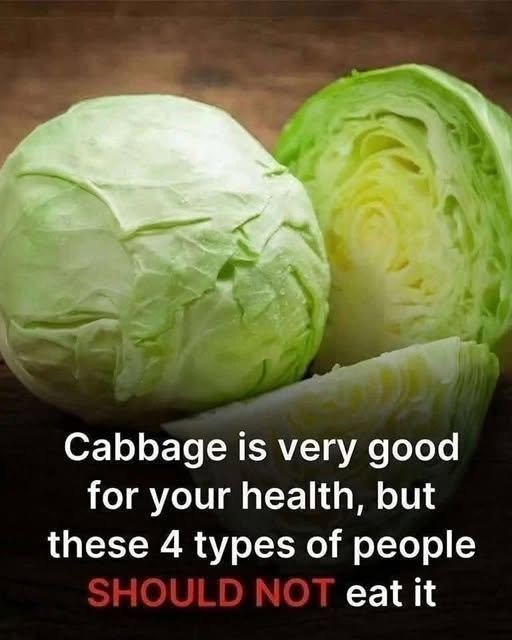
4 Types of People Who Should Be Careful With Eating Cabbage
Cabbage is a nutritious vegetable and is generally safe for most people. It provides fiber, vitamin C, vitamin K, and other beneficial plant compounds. But that doesn’t mean everyone should eat unlimited amounts of it.
For certain people, cabbage can worsen digestive symptoms, interact with specific health considerations, or require special preparation. In most cases, the issue is not that cabbage is dangerous, but that the amount and form matter.
Here are four groups who should be particularly careful.
1. People With IBS or Very Sensitive Digestion
Cabbage contains fermentable carbohydrates that can cause digestive symptoms in some people, particularly those with irritable bowel syndrome (IBS) or a sensitive digestive system.
Eating a large portion may lead to:
- Gas
- Bloating
- Abdominal discomfort
- Cramping
- Changes in bowel movements
This happens partly because certain carbohydrates and fibers are fermented by bacteria in the large intestine, producing gas.
That doesn’t necessarily mean you have to eliminate cabbage permanently.
Instead, try a smaller portion and see how your body responds. Cooking cabbage may also make it easier for some people to tolerate than eating a large amount raw.
If cabbage consistently causes significant symptoms, a healthcare professional or registered dietitian can help determine whether it is part of a broader food intolerance pattern.
2. People Taking Warfarin or Other Vitamin-K-Sensitive Anticoagulation
Cabbage contains vitamin K, a nutrient that plays an important role in blood clotting.
If you’re taking warfarin, suddenly making a major change in how much vitamin-K-rich food you eat can affect how your anticoagulation is managed.
That does not mean people taking warfarin must completely avoid cabbage.
The important principle is consistency.
If cabbage and other vitamin-K-containing vegetables are already a regular part of your diet, don’t suddenly eliminate them or dramatically increase your intake without discussing it with your healthcare professional.
Your anticoagulation team can monitor your treatment and adjust medication when necessary.
Do not stop warfarin or change its dose yourself.
3. People With Certain Thyroid Conditions Who Consume Very Large Amounts of Raw Cruciferous Vegetables
Cabbage belongs to the cruciferous vegetable family, along with broccoli, cauliflower, Brussels sprouts, kale, and several other vegetables.
These vegetables contain naturally occurring compounds sometimes called goitrogens, which can interfere with thyroid hormone production under certain circumstances.
But here’s the important part: normal amounts of cabbage are generally not a reason for healthy people to avoid it.
The concern is primarily about very large quantities, particularly when consumed raw, and about people with particular thyroid problems or inadequate iodine intake.
Cooking reduces the activity of many of these compounds.
If you have thyroid disease, you generally don’t need to remove cabbage from your diet automatically. Instead, discuss your individual diet with your healthcare professional, particularly if you’re consuming unusually large quantities of raw cruciferous vegetables.
4. People Who Have Trouble With Gas, Bloating, or Certain Digestive Disorders
Even without IBS, some people simply find cabbage difficult to digest.
Its fiber and fermentable carbohydrates can increase intestinal gas.
This can be especially uncomfortable for someone who already experiences:
- Frequent bloating
- Excessive gas
- Abdominal distension
- Digestive discomfort after high-fiber meals
Again, this isn’t necessarily a reason to completely avoid cabbage.
Start with a small serving, eat it slowly, and consider cooked cabbage rather than a large raw serving. Your individual tolerance matters.
If bloating is persistent or severe, however, don’t assume cabbage is the only cause. Ongoing digestive symptoms can have many explanations and may warrant medical evaluation.
What About People With Kidney Problems?
This is worth clarifying because cabbage is sometimes placed on lists of foods that everyone with kidney disease supposedly needs to avoid.
That’s too simplistic.
People with kidney disease may need to manage nutrients such as potassium, phosphorus, sodium, or protein depending on their stage of disease and laboratory results. Cabbage can fit into many kidney-friendly diets, but the appropriate amount depends on the individual’s dietary plan.
If you have chronic kidney disease, follow the recommendations provided by your doctor or renal dietitian rather than automatically eliminating cabbage.
Can Cabbage Cause Gas?
Yes.
This is probably the most common reason people feel that cabbage “doesn’t agree with them.”
When gut bacteria ferment certain carbohydrates and fibers, gas is produced. Some people are much more sensitive to this process than others.
You can sometimes improve tolerance by:
- Eating smaller portions
- Cooking the cabbage
- Increasing fiber gradually
- Eating slowly
- Drinking adequate fluids
- Keeping track of foods that trigger symptoms
If cabbage causes severe pain every time you eat it, don’t repeatedly force yourself to consume it.
Raw Cabbage vs. Cooked Cabbage
The way you prepare cabbage can make a difference.
Raw cabbage tends to have a firmer texture and may be more difficult for some people to tolerate in large quantities.
Cooked cabbage becomes softer and may be easier to digest for some individuals.
Cooking also reduces some of the naturally occurring goitrogenic compounds found in cruciferous vegetables.
That doesn’t mean raw cabbage is unhealthy. Raw vegetables can be nutritious and perfectly appropriate for many people.
It’s primarily a question of individual tolerance and overall diet.
Don’t Confuse Cabbage With a Medication
Another common misconception is that cabbage has a special ability to “detox” the body or cure medical conditions.
Cabbage is a healthy food, but it isn’t a replacement for prescribed treatment.
Eating cabbage won’t cleanse your liver or kidneys of unspecified “toxins,” and it shouldn’t be used instead of medical treatment for thyroid disease, digestive disorders, or blood-clotting problems.
Its real benefits are much more straightforward: fiber, vitamins, minerals, and beneficial plant compounds as part of a balanced diet.
When Should You Stop Eating It and Seek Medical Advice?
If you experience mild gas or bloating after eating cabbage, you can usually simply reduce the portion and observe whether symptoms improve.
But seek medical attention for symptoms such as:
- Severe or persistent abdominal pain
- Repeated vomiting
- Blood in the stool
- Unexplained weight loss
- Persistent diarrhea
- Difficulty swallowing
- Severe abdominal swelling
- Signs of an allergic reaction
A food intolerance can cause discomfort, but serious symptoms should not automatically be blamed on a particular vegetable.
The Bottom Line
Cabbage is not a food that most people need to avoid.
The four groups who may need to be particularly careful are:
- People with IBS or sensitive digestion, because cabbage can cause gas and bloating.
- People taking warfarin, because cabbage contains vitamin K and large dietary changes can affect anticoagulation management.
- People with certain thyroid conditions who consume very large amounts of raw cruciferous vegetables, particularly when iodine intake is inadequate.
- People who are particularly prone to gas and bloating, because cabbage’s fiber and fermentable carbohydrates can worsen those symptoms. have a chronic medical condition, don’t eliminate nutritious foods based on a viral health claim. Ask your doctor or dietitian whether
For most people, the answer isn’t “never eat cabbage.” It’s eat an appropriate portion, prepare it in a way you tolerate, and consider your individual medical circumstances.
If you’re taking medication or have a chronic medical condition, don’t eliminate nutritious foods based on a viral health claim. Ask your doctor or dietitian whether cabbage actually needs to be restricted in your particular situation.