🌰 What Happens When You Eat Walnuts Every Day?
Eating walnuts every day can be a simple way to add healthy fats, plant protein, fiber, vitamins, minerals, and antioxidants to your diet.
Walnuts aren’t a miracle food, and eating them won’t automatically prevent disease or make you healthier overnight. But when they replace less nutritious snacks or foods high in saturated fat, they can be a valuable part of an overall healthy eating pattern.
Here’s what may happen when you make walnuts a regular part of your diet.
❤️ 1. Your Heart May Benefit
Walnuts are particularly rich in polyunsaturated fats, including the plant omega-3 fatty acid alpha-linolenic acid (ALA).
Research on nuts and cardiovascular health has generally found that regularly eating nuts is associated with better heart-health outcomes. Walnuts are especially interesting because of their ALA content.
They can be a good replacement for snacks containing:
- Processed meats
- Pastries
- Chips
- Foods high in saturated fat
- Highly refined carbohydrates
The benefit comes not simply from adding walnuts to an already excessive-calorie diet, but from using them as part of an overall nutritious eating pattern.
🧠 2. You Get Nutrients Important for Brain Health
Walnuts contain several nutrients involved in normal nervous-system function, including healthy fats, magnesium, copper, and antioxidants.
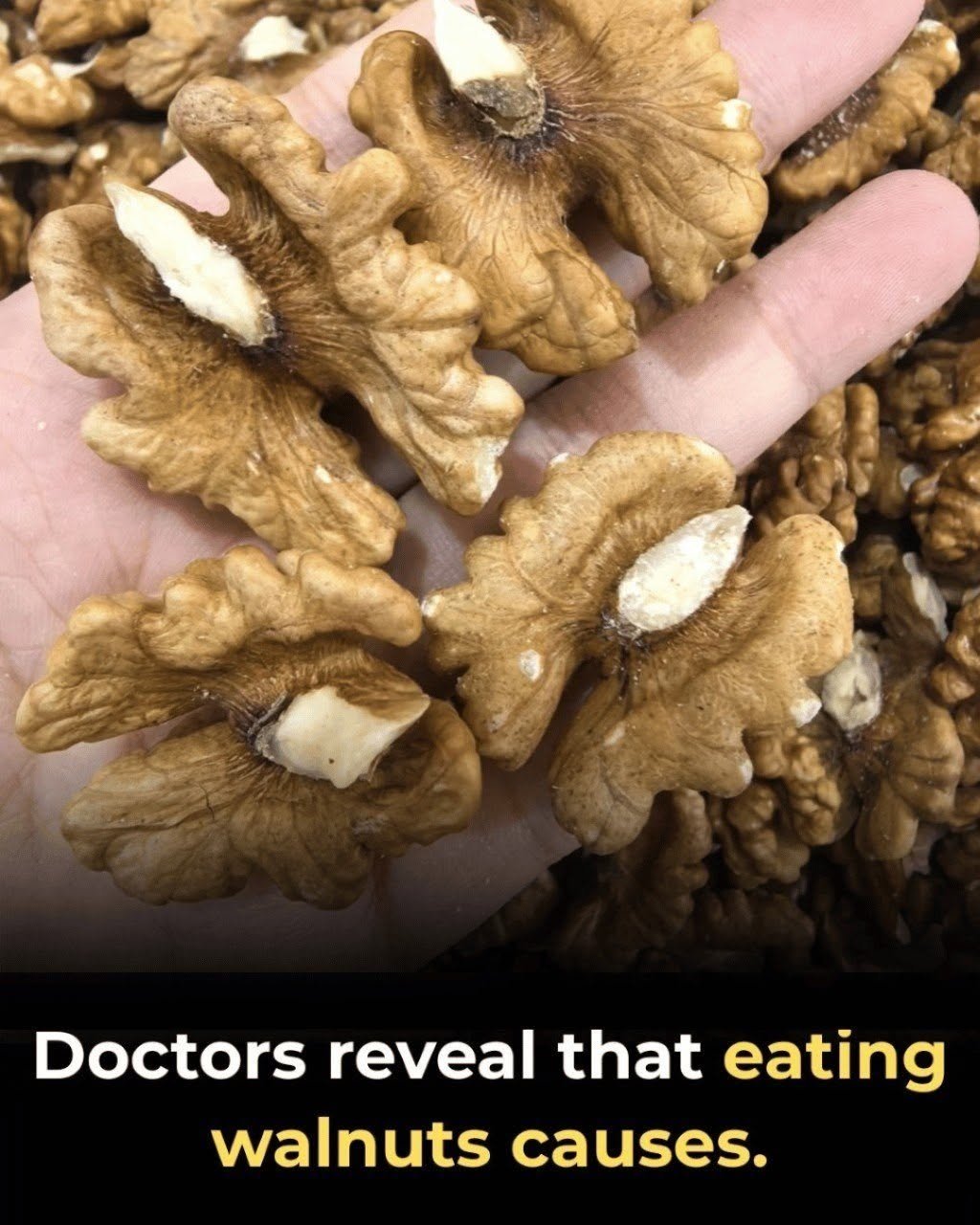
You’ve probably seen claims that walnuts are a “brain food” because they resemble a brain.
The shape is interesting, but the appearance of a food doesn’t prove that it improves the organ it resembles.
There is some promising research on walnuts and cognitive health, but it’s not accurate to say that eating walnuts every day will prevent dementia or dramatically increase intelligence.
🩸 3. They May Help Your Cholesterol Profile
Replacing foods high in saturated fat with nuts can improve blood lipid profiles.
Walnuts can contribute to this because they’re rich in unsaturated fats and contain fiber and other bioactive compounds.
If you have high cholesterol, though, don’t treat walnuts as a substitute for prescribed treatment or dietary advice from your healthcare professional.
Think of them as one useful component of a heart-healthy diet.
🌿 4. Your Diet Gets More Fiber
Walnuts provide dietary fiber.
Fiber supports normal digestive function and can contribute to:
- Regular bowel movements
- Greater fullness after eating
- A healthier overall dietary pattern
However, walnuts aren’t among the highest-fiber foods. Combining them with vegetables, fruit, beans, lentils, and whole grains gives you much more fiber overall.
⚖️ 5. They Can Help You Feel Full
Walnuts are calorie-dense because they contain a substantial amount of fat.
That might sound like a disadvantage, but their combination of fat, protein, and fiber can make them satisfying.
A small portion can help curb hunger between meals.
The key is portion size.
A large bowl of walnuts can contain a surprising number of calories, even though the food itself is nutritious.
🩸 6. They May Fit Well Into a Diabetes-Friendly Diet
Walnuts are relatively low in carbohydrates and contain healthy fats, fiber, and protein.
Including them alongside a balanced meal or snack can be preferable to carbohydrate-heavy processed snacks.
But walnuts do not cure diabetes or eliminate the need for appropriate treatment.
People with diabetes should consider the entire meal and their individual nutrition plan.
🔥 7. Your Body Gets Antioxidant Compounds
Walnuts contain various plant compounds with antioxidant and anti-inflammatory properties.
These compounds are one reason nuts are considered nutritionally valuable.
But be skeptical of claims that walnuts “detox your body,” “flush toxins,” or cure inflammation.
Your body already has organs—including the liver and kidneys—that perform waste-processing functions.
A healthy diet supports these systems; no single food acts as a magical detoxifier.
🥜 How Many Walnuts Should You Eat?
A practical serving is around 1 ounce (28 grams), roughly a small handful.
That’s about:
7 whole shelled walnuts, although the exact number varies because walnut halves differ in size.
You don’t necessarily need to eat them every day.
If you enjoy walnuts and they fit comfortably into your diet, a small handful can be a convenient snack.
🍎 Easy Ways to Eat Them
Try adding walnuts to:
- Oatmeal
- Plain yogurt
- Fruit
- Salads
- Whole-grain cereal
- Vegetable dishes
- Homemade energy bites
- Smoothies
- Whole-grain toast
You can also simply eat a small handful as a snack.
For the healthiest everyday option, choose plain, unsalted walnuts rather than varieties heavily coated with sugar, salt, or candy-like flavorings.
⚠️ Can Eating Walnuts Every Day Cause Problems?
For most people who aren’t allergic, moderate amounts are well tolerated.
However, there are a few things to remember.
Nut allergy
Walnuts can cause severe allergic reactions in people with tree-nut allergies.
Symptoms can include:
- Hives
- Swelling
- Vomiting
- Wheezing
- Difficulty breathing
- Dizziness or fainting
Anyone with symptoms of a severe allergic reaction needs emergency medical attention.
Digestive discomfort
Eating a large quantity can cause:
- Bloating
- Gas
- Abdominal discomfort
If you’re not accustomed to much dietary fiber, increase your intake gradually.
Calories
Walnuts are nutritious but calorie-dense.
Eating several large handfuls every day on top of your usual diet can substantially increase calorie intake.
A better strategy is to use them instead of less nutritious snacks.
🧂 Choose the Right Kind
If you’re eating walnuts regularly, plain or lightly processed varieties are usually the easiest choice.
Look for:
Best everyday option:
Plain, unsalted walnuts.
Also reasonable:
Dry-roasted walnuts without excessive added salt or sugar.
Occasional treat:
Honey-roasted, candied, or heavily salted walnuts.
The more sugar, salt, and added fats that are introduced, the less the nutritional profile resembles the simple whole nut.
🧠 What You Shouldn’t Expect
Eating walnuts every day won’t:
- Instantly make you smarter
- Melt belly fat
- “Clean” your arteries
- Cure diabetes
- Cure high blood pressure
- Prevent every heart problem
- Reverse dementia
- Detox your body
Healthy eating is about patterns, not magical individual foods.
Walnuts can be one excellent component of that pattern.
🌰 A Simple Daily Combination
For a satisfying snack, try:
A small handful of walnuts + a piece of fruit + plain yogurt.
You get healthy fats, protein, fiber, and carbohydrates in a much more balanced combination than you would from many packaged snack foods.
Or sprinkle chopped walnuts over oatmeal in the morning.
❤️ The Bottom Line
If you tolerate them well, eating a small handful of walnuts regularly can be a nutritious habit.
You get:
- Healthy unsaturated fats
- Plant-based omega-3 ALA
- Protein
- Fiber
- Magnesium and other minerals
- Antioxidant plant compounds
The biggest benefit comes when walnuts replace less nutritious foods, rather than simply adding a large amount of extra calories to your diet.
So you don’t need to eat a giant bowl of walnuts every morning.
A modest handful, as part of an overall balanced diet, is plenty.