⚠️ Left-Side Body Pain: What It Could Mean and When to Pay Attention
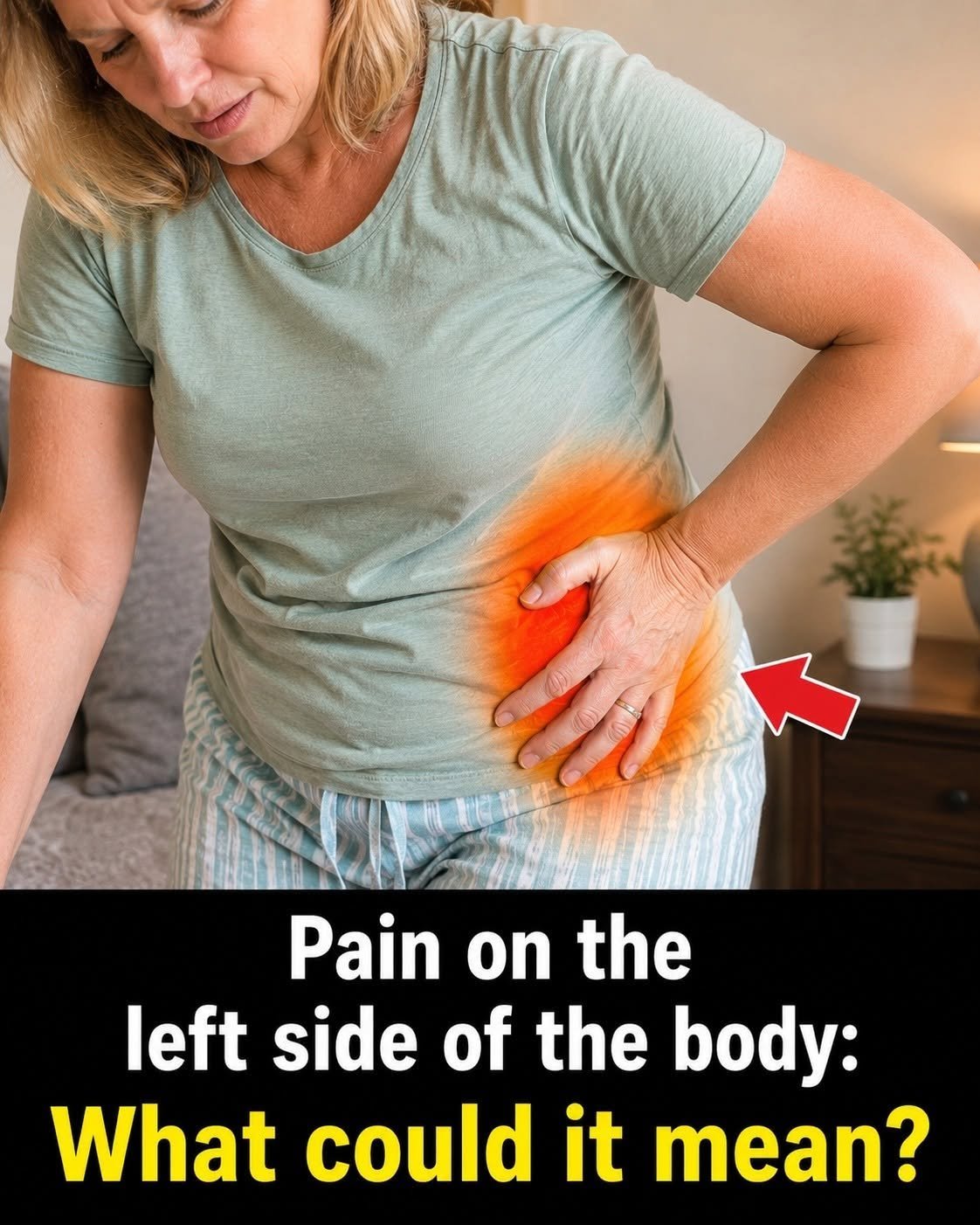
Pain on the left side of the body can come from many different structures—muscles, ribs, nerves, the digestive system, kidneys, lungs, or the heart. Sometimes it is something minor, such as a pulled muscle. Other times, particularly when pain is sudden or accompanied by other symptoms, it can signal a medical emergency.
The location, type, severity, duration, and accompanying symptoms matter much more than simply being on the left side.
🚨 First: When Left-Sided Pain Is an Emergency
Don’t try to diagnose the cause at home if left-sided pain is accompanied by symptoms such as:
- Pressure, squeezing, heaviness, or pain in the chest
- Pain spreading to the arm, shoulder, back, neck, or jaw
- Shortness of breath
- Cold sweating
- Nausea or vomiting
- Fainting or severe weakness
- Sudden confusion
- Sudden weakness or numbness on one side
- New trouble speaking
- Sudden severe dizziness
- Coughing up blood
- Severe or rapidly worsening pain
These symptoms can occur with heart attack, stroke, pulmonary embolism, or other serious conditions.
If these symptoms are happening now, seek emergency medical care immediately rather than waiting to see whether the pain goes away.
❤️ 1. Left-Sided Chest Pain
Chest pain is one of the most important forms of left-sided pain to take seriously.
A heart attack doesn’t necessarily feel like a dramatic stabbing pain.
It can feel like:
- Pressure
- Tightness
- Crushing or squeezing
- Burning
- Heaviness
- Unusual discomfort
The sensation may spread into the left or right arm, shoulder, back, neck, jaw, or upper abdomen.
Some people—particularly women, older adults, and people with diabetes—may have less typical symptoms, such as unusual fatigue, nausea, shortness of breath, or discomfort without severe chest pain.
Don’t assume it’s heartburn.
Acid reflux and indigestion can cause chest discomfort too, but you shouldn’t attempt to distinguish a potentially serious heart problem from indigestion based solely on how it feels.
When chest pain is new, severe, persistent, or accompanied by concerning symptoms, get urgent medical attention.
💪 2. Muscle or Rib Pain
A much less dangerous possibility is a muscle strain.
This becomes more likely when the pain:
- Started after lifting something
- Followed exercise or unusual physical activity
- Gets worse with certain movements
- Hurts when you press on the area
- Changes when you twist or stretch
- Improves with rest
The muscles between and around the ribs can also become irritated.
For example, repeatedly coughing can strain chest-wall muscles and produce significant soreness.
Even when pain seems muscular, however, don’t automatically dismiss new chest pain—particularly if you have cardiovascular risk factors or other symptoms.
🫁 3. Lung-Related Causes
Pain on the left side of the chest or upper back can sometimes involve the lungs or the lining around them.
Inflammation of the pleura, for example, can cause sharp pain that becomes worse when breathing deeply or coughing.
Other symptoms may include:
- Cough
- Fever
- Shortness of breath
- Rapid breathing
More serious conditions, such as a pulmonary embolism, can cause sudden chest pain and shortness of breath and require emergency treatment.
🫘 4. Left Flank or Back Pain: Your Kidney Could Be Involved
The kidneys sit toward the back of the upper abdomen, beneath the lower ribs.
Pain from the left kidney may be felt in the flank or side of the back.
Kidney stones can cause severe pain that may come in waves and can radiate toward the lower abdomen or groin.
You might also experience:
- Nausea or vomiting
- Blood in the urine
- Painful urination
- Frequent urination
A kidney infection may cause flank or back pain along with fever, chills, or urinary symptoms.
Severe flank pain, especially with fever, vomiting, blood in the urine, or difficulty urinating, deserves prompt medical evaluation.
🥣 5. Upper-Left Abdominal Pain
Several organs and structures are located in the upper-left abdomen.
These include the:
- Stomach
- Spleen
- Pancreas
- Part of the large intestine
Digestive problems can cause pain in this region.
Gas, indigestion, constipation, gastritis, or other gastrointestinal conditions may produce discomfort.
But severe or persistent upper-abdominal pain should not automatically be blamed on gas.
The spleen is another consideration
The spleen is located under the left rib cage.
A damaged or enlarged spleen can cause pain in the upper-left abdomen and sometimes the left shoulder.
If you’ve recently experienced an injury to the abdomen or left side—especially with severe pain, dizziness, fainting, or weakness—seek emergency medical attention.
🚽 6. Lower-Left Abdominal Pain
Pain in the lower-left abdomen can come from the intestines.
One common cause, particularly in adults, is diverticular disease or diverticulitis.
Possible symptoms include:
- Persistent lower-left abdominal pain
- Fever
- Nausea
- Changes in bowel habits
- Tenderness
Constipation and trapped gas can also cause lower abdominal discomfort.
If the pain is severe, persistent, or accompanied by fever, vomiting, blood in the stool, or significant abdominal tenderness, medical assessment is appropriate.
🧠 7. Nerve Pain
Sometimes the problem isn’t an organ at all.
Irritated or compressed nerves can produce pain described as:
- Burning
- Electric
- Shooting
- Tingling
- Pins and needles
- Numbness
A pinched nerve in the neck or back can cause pain that travels down an arm or leg.
This type of pain may change with posture or movement.
🔥 8. Shingles Can Start With Pain Before the Rash
Shingles is caused by reactivation of the chickenpox virus.
It can begin with burning, tingling, itching, or significant sensitivity on one side of the body before the characteristic rash appears.
The rash typically follows a narrow band corresponding to a nerve.
If you develop unexplained burning or sensitive pain on one side followed by a blistering rash, contact a healthcare professional promptly. Treatment is most effective when started early.
🦴 9. Hip, Back, or Joint Problems
Left-sided pain can originate in the:
- Hip
- Lower back
- Sacroiliac joint
- Spine
- Muscles around the pelvis
Pain may travel into the buttock or leg.
Arthritis, muscle strain, spinal problems, and nerve compression are among the possible causes.
If back pain is accompanied by new loss of bladder or bowel control, numbness around the groin, or significant weakness in both legs, seek emergency medical attention.
👩 10. Causes Specific to Women
For women, lower-left abdominal or pelvic pain can sometimes originate from reproductive organs.
Possible causes include:
- Ovulation
- Menstrual cramps
- Ovarian cysts
- Endometriosis
- Pelvic infection
Sudden severe pelvic pain, particularly with nausea or vomiting, can occur with ovarian torsion or a ruptured cyst and requires urgent evaluation.
If pregnancy is possible, one-sided abdominal or pelvic pain with vaginal bleeding, dizziness, fainting, or shoulder pain can be an emergency because of the possibility of an ectopic pregnancy.
🧭 What Does the Type of Pain Tell You?
The character of the pain can provide clues, although it cannot establish a diagnosis by itself.
Sharp pain
May occur with muscle injury, nerve irritation, pleurisy, or other conditions.
Dull or aching pain
Can occur with muscles, joints, digestive problems, or various internal organs.
Burning pain
Can occur with nerve irritation, reflux, or shingles.
Cramping pain
Often occurs with intestinal or reproductive-system problems.
Pressure or squeezing
Particularly important when it occurs in the chest, because it can be associated with a heart attack.
Pain that travels
Pain spreading from the chest into the arm, jaw, back, or shoulder can be concerning for a cardiovascular problem.
⏰ When Should You See a Doctor?
Arrange a medical evaluation if left-sided pain:
- Keeps returning
- Doesn’t improve
- Is gradually getting worse
- Interferes with normal activities
- Is unexplained
- Is accompanied by fever
- Is associated with unexplained weight loss
- Comes with persistent vomiting
- Is accompanied by blood in urine or stool
- Develops after an injury
- Occurs with new neurological symptoms
The urgency depends on the symptoms and their severity.
🩺 What Might a Doctor Do?
The evaluation depends on where the pain is and what other symptoms you have.
A clinician may:
- Ask when the pain began
- Determine whether it is constant or intermittent
- Ask whether movement or breathing changes it
- Check your heart and lungs
- Examine your abdomen and back
- Check your neurological function
- Measure vital signs
- Order blood or urine tests
- Perform an ECG if heart-related pain is possible
- Request imaging such as an X-ray, ultrasound, or CT when appropriate
There isn’t one test that explains every type of left-sided pain.
🚫 Don’t Diagnose the Cause Solely From the Location
This is especially important.
“Pain on the left side means your heart.”
Not necessarily.
“It’s probably gas.”
Not necessarily.
“It hurts when I move, so it can’t be serious.”
Not always.
Location provides a clue, but the complete pattern matters.
A muscle strain and a serious internal condition can sometimes produce pain in similar areas.
❤️ The Bottom Line
Left-sided body pain can have dozens of possible causes, ranging from muscle strain and digestive problems to kidney conditions, nerve problems, lung disease, and cardiovascular emergencies.
The most important warning signs are sudden or severe pain, chest pressure, difficulty breathing, fainting, sweating, neurological symptoms, significant bleeding, or rapidly worsening symptoms.
If left-sided pain is happening right now and you have chest pressure, shortness of breath, sweating, fainting, sudden weakness/numbness, or trouble speaking, don’t wait for an online explanation—contact emergency medical services immediately.
For persistent but less urgent pain, arrange an evaluation rather than trying to determine the cause from the location alone.