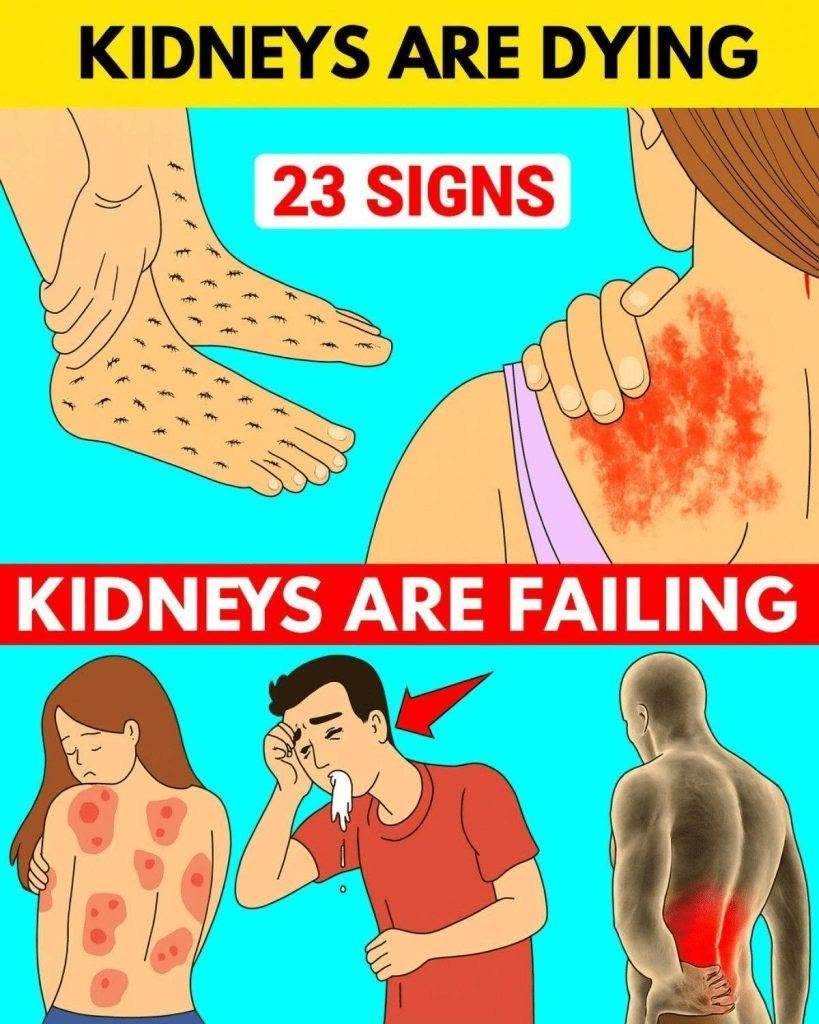
🫘 23 Strange Signs Your Kidneys Might Be in Trouble — Don’t Ignore These Clues
Your kidneys work continuously to filter waste and excess fluid from your blood, help control blood pressure, maintain mineral and electrolyte balance, and support red-blood-cell production. The tricky part is that kidney disease can develop quietly. Many people have few or no symptoms until kidney function has already declined significantly.
That is why unusual changes in your body—especially when several occur together—deserve attention. None of these signs proves that you have kidney disease, but persistent or unexplained symptoms can be a reason to speak with a healthcare professional and consider kidney testing.
1. 🚽 Changes in How Often You Urinate
Needing to urinate much more or much less than usual can sometimes occur with kidney problems.
However, urinary frequency has many other causes, including urinary infections, diabetes, medications, and drinking large amounts of fluid.
2. 🌙 Waking Up Frequently to Urinate
Repeated nighttime urination, called nocturia, can occur when the kidneys lose some ability to concentrate urine.
It can also result from prostate problems, diabetes, heart conditions, sleep disorders, or simply drinking fluids close to bedtime.
Persistent nocturia is worth discussing with your doctor.
3. 🫧 Foamy or Frothy Urine
Occasional bubbles in urine are usually nothing to worry about.
But persistent, unusually foamy urine can sometimes indicate excess protein in the urine, known as proteinuria.
Protein leaking into urine can be an early sign of kidney damage, particularly in people with diabetes or high blood pressure.
A simple urine test can check for albumin and other abnormalities.
4. 🩸 Blood in the Urine
Pink, red, or cola-colored urine can indicate blood in the urinary tract.
Kidney disease is one possible cause, but kidney stones, urinary infections, medications, and other urinary-tract conditions can also cause it.
Visible blood in your urine should be medically evaluated rather than assumed to be a kidney problem.
5. 🦶 Swollen Ankles or Feet
When kidneys aren’t removing excess sodium and fluid effectively, fluid can accumulate in the body.
This may cause swelling, particularly around the:
- Ankles
- Feet
- Lower legs
- Hands
But swelling can also occur with heart disease, liver disease, venous problems, certain medications, and other conditions.
6. 👁️ Puffiness Around the Eyes
Swelling around the eyes—especially in the morning—can sometimes occur when protein is being lost through the kidneys.
This happens because changes in blood protein levels can encourage fluid to move into surrounding tissues.
Persistent facial or eyelid swelling deserves evaluation.
7. 🩺 High Blood Pressure
The relationship between kidneys and blood pressure works in both directions.
High blood pressure can damage the kidneys, while kidney disease can contribute to high blood pressure.
If your blood pressure remains elevated despite treatment, your healthcare professional may want to evaluate kidney function as part of the overall assessment.
8. 😴 Unexplained Fatigue
Advanced kidney disease can cause anemia because damaged kidneys produce less erythropoietin, a hormone involved in red-blood-cell production.
The resulting anemia can contribute to:
- Fatigue
- Weakness
- Reduced exercise tolerance
- Shortness of breath
Fatigue is extremely common and has many possible causes, so it isn’t a kidney-specific symptom.
9. 🧠 Trouble Concentrating
People with more advanced kidney disease may experience difficulty concentrating, sleepiness, or changes in mental clarity.
These symptoms can occur when waste products accumulate in the bloodstream.
Sudden confusion, however, should be treated as a medical problem rather than assumed to be kidney disease.
10. 🤢 Nausea or Poor Appetite
As kidney function becomes severely impaired, waste products can accumulate and contribute to:
- Nausea
- Vomiting
- Loss of appetite
- An unpleasant taste in the mouth
These symptoms can also occur with countless digestive and systemic illnesses.
Persistent unexplained nausea should be evaluated.
11. 👅 A Metallic or Unusual Taste
Some people with advanced kidney disease report an unusual or metallic taste.
Changes in taste can also result from medications, infections, dental problems, and other conditions, so this symptom alone doesn’t diagnose kidney disease.
12. 😮 Ammonia-Like Breath
Severe kidney dysfunction can cause changes in breath odor because waste products accumulate in the bloodstream.
A distinctive ammonia-like or urine-like odor can occur in advanced disease.
This is not a reliable early-warning test, but if it occurs alongside other symptoms, medical evaluation is appropriate.
13. 🧴 Persistent Itchy Skin
Severe or chronic kidney disease can cause pruritus, or persistent itching.
It may occur because of changes involving minerals, waste products, inflammation, and other factors.
Unexplained widespread itching has many other causes, including dry skin, allergies, liver disease, and medications.
14. 🥵 Dry or Unusually Irritated Skin
Changes in skin condition can accompany advanced kidney disease, particularly when mineral and fluid balance become disrupted.
But ordinary dry skin is extremely common and is much more often related to environmental conditions, bathing habits, or dermatological problems.
15. 💪 Muscle Cramps
Kidneys help maintain appropriate levels of minerals and electrolytes.
When kidney function is significantly impaired, disturbances involving calcium, potassium, phosphorus, and other electrolytes can contribute to muscle cramps or weakness.
Cramps can also result from dehydration, exercise, medications, and many other causes.
16. 🦴 Bone or Joint Problems
Healthy kidneys help regulate vitamin D, calcium, and phosphorus.
Advanced chronic kidney disease can disrupt this system and contribute to mineral and bone disorders, potentially causing bone weakness or discomfort.
This generally isn’t an isolated early symptom.
17. 🥶 Feeling Cold More Than Usual
People with kidney disease may develop anemia, which can contribute to feeling unusually cold.
However, being cold frequently can also occur with anemia from other causes, thyroid disorders, low body weight, poor circulation, or environmental factors.
18. 💤 Sleep Problems
Kidney disease is associated with sleep problems, including difficulty sleeping and restless legs.
Sleep disruption can then worsen fatigue and concentration problems.
If you’re consistently exhausted despite getting enough time in bed, discuss the pattern with a healthcare professional.
19. 🦵 Restless or Uncomfortable Legs
An urge to move the legs, crawling sensations, or uncomfortable feelings that become worse when resting can occur more frequently in people with chronic kidney disease can increase the risk of kidney injury in certain people—particularly those with existing kidney disease, dehydration, heart failure, or changes in urination, unexplained fatigue, itching, nausea, high blood pressure, or unexplained changes in your health can.
Restless legs also has many other causes, including iron deficiency.
20. ⚖️ Unexpected Weight Changes
Rapid weight gain may sometimes reflect fluid retention, particularly when accompanied by swelling or shortness of breath.
Unintentional weight loss, on the other hand, can occur with advanced illness and many other medical conditions.
A sudden or unexplained change in weight deserves attention.
21. 🫁 Shortness of Breath
Kidney problems can contribute to shortness of breath through several mechanisms, including:
- Fluid accumulation
- Anemia
- Changes associated with advanced kidney failure
But shortness of breath can also signal heart or lung disease.
New or severe breathing difficulty requires prompt medical evaluation.
22. 🧂 Changes in Your Ability to Handle Salt or Fluids
Some people with impaired kidney function become more sensitive to sodium and fluid intake.
You may notice swelling or rapid weight changes after consuming unusually salty foods or large amounts of fluid.
This is not something to diagnose yourself with, but it can be useful information to tell your doctor.
23. 🧪 Abnormal Kidney Test Results
Perhaps the most important “sign” is one you can’t feel at all.
Kidney disease can exist without obvious symptoms.
Blood tests such as serum creatinine and estimated glomerular filtration rate (eGFR) and urine testing for albumin can help identify kidney problems before symptoms become obvious.
This is particularly important for people with diabetes, high blood pressure, cardiovascular disease, or a family history of kidney disease.
⚠️ Who Should Be Especially Careful?
The risk of chronic kidney disease is higher in people with conditions such as:
- Diabetes
- High blood pressure
- Heart disease
- A family history of kidney disease
- Previous kidney injury
- Certain autoimmune conditions
If you fall into a higher-risk group, ask your healthcare professional whether you should have periodic kidney-function and urine testing.
💊 Be Careful With Painkillers
Frequent use of NSAID painkillers, such as ibuprofen and naproxen, can increase the risk of kidney injury in certain people—particularly those with existing kidney disease, dehydration, heart failure, or certain medication combinations.
Don’t assume that an over-the-counter medication is automatically harmless because it doesn’t require a prescription.
Ask your pharmacist or doctor which pain-relief options are appropriate for you.
🚨 When Should You Seek Urgent Medical Help?
Seek urgent medical attention if you develop symptoms such as:
- Very little or no urine
- Severe shortness of breath
- Chest pain
- Severe weakness or confusion
- Fainting
- Severe swelling that develops rapidly
- Blood in the urine accompanied by severe pain or other concerning symptoms
These symptoms can have many causes and may represent a medical emergency.
🩺 How Are Kidney Problems Actually Checked?
Symptoms alone aren’t enough to determine whether your kidneys are working properly.
A healthcare professional may use:
Blood testing
Creatinine and eGFR help estimate how well your kidneys are filtering blood.
Urine testing
A urine test can look for blood, protein, albumin, and other abnormalities.
Blood pressure measurement
Blood pressure is closely connected with kidney health.
Imaging
Ultrasound or other imaging may be recommended when a structural problem, obstruction, stone, or other condition is suspected.
🌟 The Bottom Line
Kidney disease can be surprisingly quiet. You don’t have to feel pain for your kidneys to be struggling.
Persistent foamy urine, blood in the urine, swelling, changes in urination, unexplained fatigue, itching, nausea, high blood pressure, or unexplained changes in your health can all deserve attention—but none of these symptoms alone proves that you have kidney disease.
The most reliable approach is not to diagnose yourself from a symptom list. If you’re at increased risk or have persistent unexplained symptoms, ask your healthcare professional about kidney-function blood tests and urine testing.
Catching kidney disease early can give you more opportunities to address its underlying cause and protect kidney function.