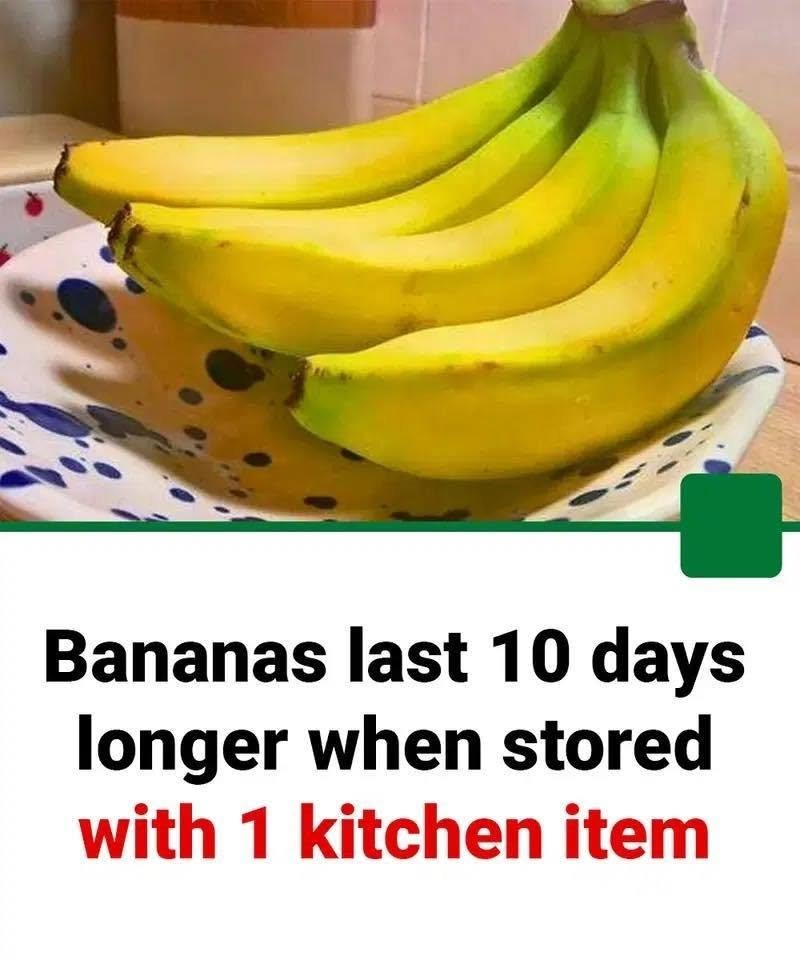
🍌 Bananas Can Last Up to 10 Days Longer With One Simple Kitchen Item —
Instead of Sitting in a Fruit Bowl
Bananas are one of those fruits that seem to change overnight. One day they’re bright yellow and firm; the next, they’re covered in brown spots and becoming soft.
If you regularly find yourself throwing away overripe bananas, the way you store them can make a noticeable difference. Keeping bananas away from other ripening fruit and reducing exposure around the stem can help slow the ripening process.
One simple kitchen item that can help is plastic wrap.
1. 🍌 Wrap the Banana Stems
Bananas naturally produce ethylene, a plant hormone that promotes ripening.
A large amount of ethylene is released around the banana stems. Covering the stems individually with a small piece of plastic wrap can help reduce the movement of ethylene around the fruit.
How to do it
- Separate the bananas from the bunch.
- Tear off a small piece of plastic wrap.
- Wrap it tightly around the stem of each banana.
- Keep the bananas somewhere cool and dry.
- Check them daily as they ripen.
You don’t need to wrap the entire banana. The stem area is the important part.
2. 🧺 Why the Fruit Bowl Can Speed Things Up
A fruit bowl often places bananas next to apples, pears, avocados, peaches, and other fruits that also produce ethylene.
When several ripening fruits are kept together, ethylene exposure can increase and encourage faster ripening.
This doesn’t mean you should never use a fruit bowl. It’s simply better to keep bananas separated from particularly ethylene-sensitive or ethylene-producing fruits if your goal is to extend their shelf life.
3. 🌡️ Keep Bananas Away From Heat
Temperature matters.
Avoid storing bananas:
- Beside the stove
- Above the refrigerator if the area is warm
- In direct sunlight
- Next to a radiator or other heat source
A cool, dry location away from direct sunlight is generally a better choice.
4. 🍌 Separate Them as They Ripen
Keeping a whole bunch together can make it harder to control ripening.
Once bananas are approaching the ripeness you prefer, separating them can make it easier to use individual bananas at different times.
Wrapping the stems individually is another simple way to slow the process.
5. ❄️ What About the Refrigerator?
There’s an important distinction here.
Once bananas have reached the ripeness you want, refrigeration can slow further ripening, although the peel may turn dark or brown.
Don’t be alarmed by the appearance of the skin. A darkened peel doesn’t automatically mean the banana inside has spoiled.
For the best texture, allow refrigerated bananas to come closer to room temperature before eating.
6. 🍌 Don’t Throw Away a Banana Just Because It Has Brown Spots
Brown spots often indicate that a banana is becoming more ripe—not necessarily that it has gone bad.
A ripe banana can be:
- Soft
- Sweet
- Speckled
- Yellow with extensive brown spots
That’s actually the perfect stage for many baking recipes.
However, discard bananas if you see mold, leaking liquid, an unusual fermented or rotten odor, or other clear signs of spoilage.
7. 🥣 Turn Very Ripe Bananas Into Something Delicious
If your bananas are becoming too soft to eat on their own, don’t waste them.
You can use them for:
- Banana bread
- Smoothies
- Pancakes
- Oatmeal
- Muffins
- Frozen banana desserts
Very ripe bananas are naturally sweeter, so they can work particularly well in baking.
⚠️ Does Plastic Wrap Really Make Bananas Last 10 Days Longer?
Be careful with claims that wrapping the stems guarantees an extra 10 days.
The exact shelf life depends on the banana’s ripeness when purchased, temperature, humidity, variety, handling, and storage conditions.
Wrapping the stems may slow ripening, but it isn’t a guaranteed “10-day extension” for every bunch.
The most useful strategy is to combine several habits: keep bananas cool and dry, separate them from other ripening fruit, and wrap the stems if you find that technique works well for you.
🌟 The Bottom Line
If your bananas ripen too quickly, try this simple routine:
Separate the bananas → wrap each stem with a small piece of plastic wrap → keep them away from heat and direct sunlight → separate them from other ripening fruit → refrigerate them once they reach your preferred ripeness.
You may be able to keep them enjoyable for significantly longer than if you simply leave the bunch sitting in a warm fruit bowl.
And remember: brown banana skin doesn’t necessarily mean a spoiled banana—the inside is what matters.