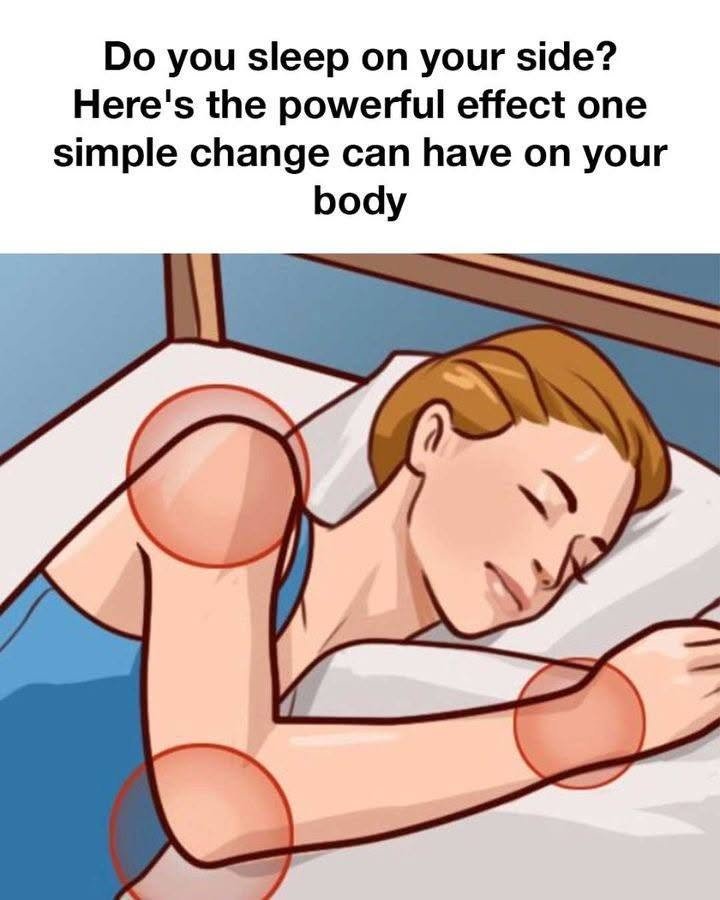
Do You Sleep on Your Side? Here’s the Powerful Effect One Simple Change Can Have on Your Body
If you naturally sleep on your side, you may already be using a sleep position that offers important benefits. But side sleeping isn’t automatically better for everyone. The best position depends on your health, comfort, anatomy, and whether you have problems such as acid reflux, snoring, sleep apnea, or joint pain.
A small adjustment—such as switching sides, adding a pillow between your knees, or improving neck support—can sometimes make a noticeable difference in how you sleep and how you feel in the morning.
1. Side Sleeping May Help Keep Your Airway More Open
One of the biggest potential benefits of side sleeping is its effect on breathing.
When some people sleep flat on their backs, gravity can allow the tongue and other soft tissues in the throat to move backward and narrow the airway.
Sleeping on your side can reduce this effect.
That’s one reason side sleeping is often recommended for people who snore or have positional obstructive sleep apnea.
However, side sleeping isn’t a cure for sleep apnea. If you regularly snore loudly, gasp or choke during sleep, or someone notices that you stop breathing, talk to a healthcare professional.
2. It May Reduce Snoring
If your snoring is worse when you’re lying on your back, turning onto your side may reduce it.
That’s because changing position can improve airflow through the upper airway.
But persistent loud snoring shouldn’t simply be dismissed as an annoyance. It can sometimes be a sign of obstructive sleep apnea, particularly when accompanied by daytime sleepiness or witnessed pauses in breathing.
3. Left-Side Sleeping May Help Some People With Acid Reflux
Here’s where which side you sleep on can matter.
For people with gastroesophageal reflux, sleeping on the left side may reduce nighttime reflux symptoms compared with lying on the right side or back.
The stomach’s position relative to the esophagus helps explain this effect.
If you regularly experience heartburn at night, you could experiment with left-side sleeping and other measures such as avoiding large meals close to bedtime.
Persistent or severe reflux should be evaluated rather than managed indefinitely with sleep-position changes alone.
4. Your Spine Needs Proper Support
Side sleeping can keep your spine relatively well aligned, but only if your body is properly supported.
A pillow that’s too thin or too thick can push your neck sideways.
Ideally, your head should remain reasonably aligned with your spine rather than bending sharply toward the mattress or ceiling.
If you regularly wake with neck pain, experiment with pillow height and firmness.
5. A Pillow Between Your Knees Can Make a Big Difference
This is one of the simplest adjustments side sleepers can make.
Place a pillow between your knees—and, if comfortable, between your lower legs.
This can help keep your:
hips → pelvis → lower back
in a more neutral position.
It may be particularly useful if you experience morning stiffness in your hips or lower back.
6. Your Shoulder Can Take a Lot of Pressure
The downside of side sleeping is that your shoulder and hip can bear significant pressure for hours.
If you have shoulder arthritis, a rotator-cuff problem, bursitis, or another painful shoulder condition, lying directly on that side may worsen symptoms.
Try:
- Sleeping on the opposite side
- Hugging a pillow to support your upper arm
- Using a mattress that provides appropriate pressure relief
- Slightly rotating toward your back if comfortable
Persistent shoulder pain should be assessed rather than attributed automatically to your mattress.
7. Your Hip Can Also Become Uncomfortable
The hip closest to the mattress carries much of your body weight.
If you frequently wake with pain on the outside of your hip, your sleeping position could be contributing.
A pillow between the knees may reduce twisting through the hips, while changing sides can redistribute pressure.
But persistent hip pain can also result from conditions unrelated to sleeping position.
8. Side Sleeping May Be Helpful During Pregnancy
Pregnancy changes what’s comfortable and can affect breathing, circulation, and sleep quality.
As pregnancy progresses, many people naturally find side sleeping more comfortable.
Pregnant people should follow the individualized advice of their obstetric or maternity-care professional, particularly later in pregnancy or if there are complications.
The goal isn’t to become anxious about accidentally changing position during sleep. Sleep comfortably and follow your healthcare team’s recommendations.
9. What About the Heart?
You may encounter claims that sleeping on the left side is either dangerous for the heart or essential for heart health.
Neither statement is a good general rule.
Healthy people don’t need to force themselves into one particular sleeping position to protect their heart.
People with certain cardiovascular conditions may find one position more comfortable than another, especially if lying flat causes breathlessness. In that situation, medical advice is more important than a generic sleep-position rule.
10. Side Sleeping Isn’t Automatically Better
There’s an important distinction between “potentially beneficial” and “universally best.”
Some people sleep beautifully on their sides.
Others develop:
- Shoulder pain
- Hip pain
- Neck stiffness
- Arm numbness
- Jaw discomfort
If you’re sleeping comfortably and waking refreshed, there’s generally no reason to change positions simply because a social-media post says another position is superior.
How to Make Side Sleeping More Comfortable
Try this simple setup:
Choose the right pillow
Your pillow should support your head without pushing your neck dramatically upward or allowing it to fall toward the mattress.
Support your knees
A pillow between your knees can improve comfort and alignment.
Support your upper arm
Hugging a pillow can reduce pressure on the lower shoulder and keep your upper arm in a more comfortable position.
Don’t curl yourself into a tight ball
An extremely curled posture can make some people feel stiff when they wake.
Aim for a comfortable, relatively neutral position.
Change sides when necessary
You don’t have to remain on the same side all night.
Your body naturally changes position during sleep.
What If Your Arm Goes Numb?
Occasional numbness after sleeping on an arm can happen because prolonged pressure temporarily affects nerves or blood flow.
Changing position usually resolves it.
But repeated, persistent, or unexplained numbness deserves medical attention, particularly if it occurs during the daytime or is accompanied by weakness.
Sudden weakness or numbness affecting one side of the body, especially with facial drooping or difficulty speaking, requires emergency medical attention.
When Your Sleep Position May Be Telling You Something
Sometimes people continually change position because they’re uncomfortable breathing when lying flat.
If you find that you must sleep propped up or sitting up because you become short of breath when lying down, don’t simply assume you need a different pillow.
This can sometimes occur with heart or lung conditions and warrants medical evaluation.
Likewise, repeated nighttime gasping, choking, or witnessed breathing pauses should prompt an assessment for sleep apnea.
The “One Simple Change” That Often Helps Most
If you’re already a side sleeper, you don’t necessarily need to switch sides.
Instead, try improving your alignment.
A simple combination of:
appropriate pillow height + pillow between the knees + comfortable mattress support
can reduce pressure and help you wake with less stiffness.
If nighttime reflux is your problem, experimenting with the left side may be particularly worthwhile.
The Bottom Line
Side sleeping can have meaningful benefits, particularly for snoring, positional sleep apnea, and nighttime acid reflux in some people.
But there’s no single sleep position that’s perfect for everyone.
If you sleep on your side, focus on comfort and alignment. Support your neck, consider placing a pillow between your knees, and change sides if one shoulder or hip becomes painful.
And if you’re experiencing loud snoring, nighttime gasping, repeated breathing pauses, persistent reflux, severe pain, or significant daytime sleepiness, don’t rely on a change in sleeping position alone. Those symptoms may deserve a proper medical evaluation.