If You Think You’re Having a Heart Attack at Home, Do This Immediately
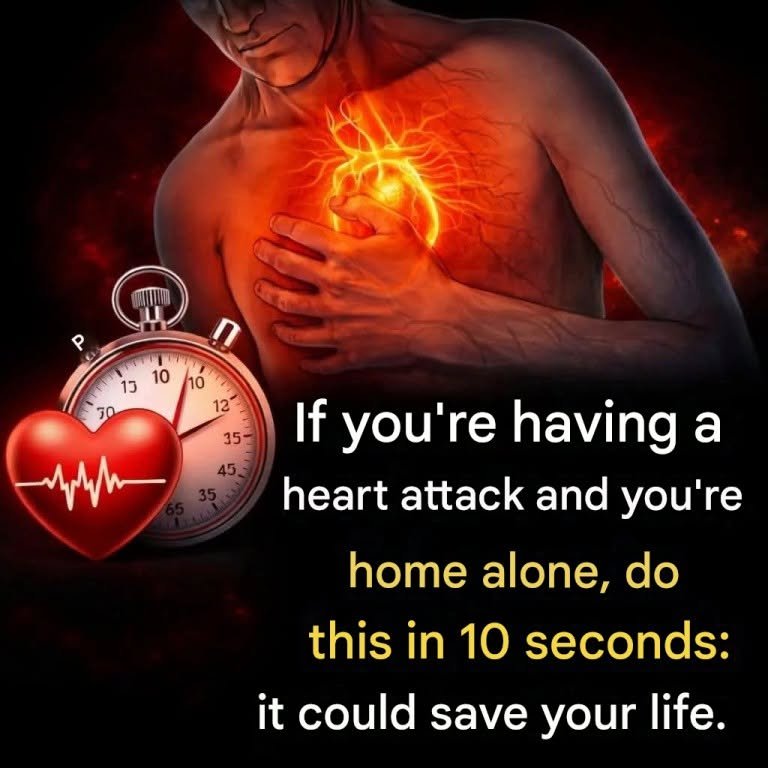
You may have seen posts claiming that “you have 10 seconds to save yourself” during a heart attack by performing a particular trick, coughing forcefully, drinking water, or changing your breathing.
Be careful with these claims. There is no proven 10-second maneuver that can reliably stop a heart attack or save your life. A heart attack is caused by reduced or blocked blood flow to part of the heart muscle and requires urgent medical treatment.
What you do in the first few minutes does matter, but the priority is getting emergency medical help—not trying a viral remedy.
1. Recognize the Warning Signs
A heart attack doesn’t always begin with dramatic, crushing chest pain.
Possible symptoms include:
- Pressure, squeezing, fullness, or pain in the chest
- Pain or discomfort spreading to the arm, shoulder, back, neck, jaw, or upper abdomen
- Shortness of breath
- Cold sweating
- Nausea or vomiting
- Unusual weakness or fatigue
- Lightheadedness or fainting
Some people—particularly older adults and people with diabetes—may have less typical symptoms.
If you think you’re having a heart attack, treat it as an emergency.
2. Your “First 10 Seconds” Should Be About Calling for Help
If you’re alone and experiencing symptoms that could indicate a heart attack:
Stop what you’re doing.
Sit down somewhere safe and avoid walking around or driving yourself to the hospital.
Call your local emergency medical service immediately.
In Pakistan, the appropriate emergency number can depend on your location and service availability. If you are elsewhere, call your local emergency number.
Tell the dispatcher clearly:
“I think I’m having a heart attack.”
Give them your exact location and follow their instructions.
3. Don’t Drive Yourself to the Hospital
It can be tempting to get into your car and drive when symptoms aren’t yet severe.
Don’t.
Emergency medical personnel can begin assessment and treatment while transporting you, and if your condition suddenly worsens, you’re already receiving medical attention.
If emergency medical services are genuinely unavailable, have another person drive you rather than driving yourself.
4. Unlock the Door If You’re Alone
If you’re able to do so safely, unlock your front door and make sure emergency responders can get inside.
Then sit or lie down somewhere accessible.
Keep your phone nearby.
If you become unconscious, responders may be able to reach you more quickly.
5. What About Aspirin?
This is an important distinction.
Aspirin may be recommended for some people with suspected heart attack, but it isn’t appropriate for everyone.
If emergency medical personnel or a healthcare professional tells you to take aspirin, follow their instructions.
Factors such as an aspirin allergy, active bleeding, certain medical conditions, and other medications can affect whether aspirin is appropriate.
Don’t delay calling emergency services while searching for aspirin.
And don’t substitute aspirin for emergency treatment.
6. Don’t Try “Cough CPR”
One viral claim says that if you’re having a heart attack, you can repeatedly cough forcefully to keep yourself alive.
This is often called “cough CPR.”
It is not a recommended self-treatment for a typical heart attack.
Coughing does not reopen a blocked coronary artery.
It can also distract you from the most important action: getting emergency medical help.
There are specialized circumstances in which forceful coughing has been discussed under medical supervision for certain rhythm problems, but that is very different from telling the general public to perform “cough CPR” during a suspected heart attack.
7. Don’t Drink Water or Try to “Flush Out” the Blockage
Another internet myth suggests drinking large amounts of water to clear a blockage.
Water cannot dissolve a blood clot blocking a coronary artery.
Don’t waste valuable time trying drinks, supplements, oils, or other home remedies.
8. Don’t Lie Completely Flat If It Makes Breathing Worse
If you’re short of breath, sitting upright or in a comfortable supported position may make breathing easier.
However, if you feel faint or are at risk of falling, get into a safe position.
The important thing is to remain as calm and still as possible while waiting for help.
What If the Person Becomes Unconscious?
This situation is different.
If someone suddenly collapses and isn’t responding and isn’t breathing normally, assume cardiac arrest may have occurred.
Call emergency services.
Put the phone on speaker if possible.
Begin CPR.
Push hard and fast in the center of the chest.
For an adult, standard hands-only CPR uses chest compressions at approximately 100–120 compressions per minute.
Use an AED if one is available.
An automated external defibrillator can analyze the heart rhythm and tell you whether a shock is advised.
Follow the device’s spoken instructions.
Don’t stop CPR simply because you’re waiting for the ambulance.
Heart Attack vs. Cardiac Arrest
These terms are often confused.
A heart attack occurs when blood flow to part of the heart muscle becomes blocked.
Cardiac arrest occurs when the heart suddenly stops pumping blood effectively.
A heart attack can sometimes lead to cardiac arrest, but they are not the same thing.
Someone having a heart attack is usually conscious and breathing.
Someone in cardiac arrest is typically unresponsive and not breathing normally.
That distinction matters because CPR and an AED are lifesaving interventions for cardiac arrest—not a treatment for a conscious person simply experiencing chest pain.
What You Should Never Do
If you suspect a heart attack, don’t:
- Wait hours to see if it goes away
- Drive yourself if emergency services are available
- Exercise to “get the circulation going”
- Take someone else’s prescription medication
- Take an unknown supplement
- Drink alcohol as a supposed remedy
- Perform “cough CPR”
- Spend time searching for an internet cure
Time is heart muscle.
The longer blood flow remains blocked, the greater the potential damage.
Why Acting Quickly Matters
A blocked coronary artery prevents oxygen from reaching part of the heart muscle.
The longer that blockage persists, the more heart tissue can become injured.
Hospitals can perform tests such as an ECG and blood tests and, when appropriate, restore blood flow using treatments such as medications or procedures including coronary angioplasty and stenting.
These are things a home remedy cannot accomplish.
What If You’re Not Sure It’s a Heart Attack?
Don’t try to diagnose yourself with certainty.
Heartburn, anxiety, muscle strain, lung conditions, and other problems can produce symptoms resembling a heart attack.
But you can’t safely rule out a heart attack based on symptoms alone.
If the symptoms are new, severe, unexplained, or concerning, seek emergency medical evaluation.
It’s much safer to have chest pain evaluated and discover it wasn’t a heart attack than to assume it’s indigestion and delay treatment.
The Bottom Line
There is no scientifically proven “10-second trick” that can stop a heart attack at home.
If you think you’re having a heart attack:
- Stop and sit down somewhere safe.
- Call your local emergency medical service immediately.
- Don’t drive yourself if emergency help is available.
- Follow the emergency dispatcher’s instructions.
- Use aspirin only if emergency personnel or a healthcare professional advises it and it is safe for you.
- If the person becomes unresponsive and isn’t breathing normally, begin CPR and use an AED if available.
The most powerful thing you can do in those first seconds isn’t a secret maneuver—it’s getting professional help as quickly as possible.