If You Always Sleep on Your Right Side, Here’s What You Should Know
Sleeping on your right side is not inherently unhealthy. For most healthy adults, the best sleeping position is the one that allows you to sleep comfortably and wake without significant pain or stiffness.
However, your usual sleeping position can affect reflux, breathing, pressure on the shoulders and hips, and spinal alignment. If you consistently sleep on your right side, a few things are worth knowing.
1. Pay Attention to Acid Reflux
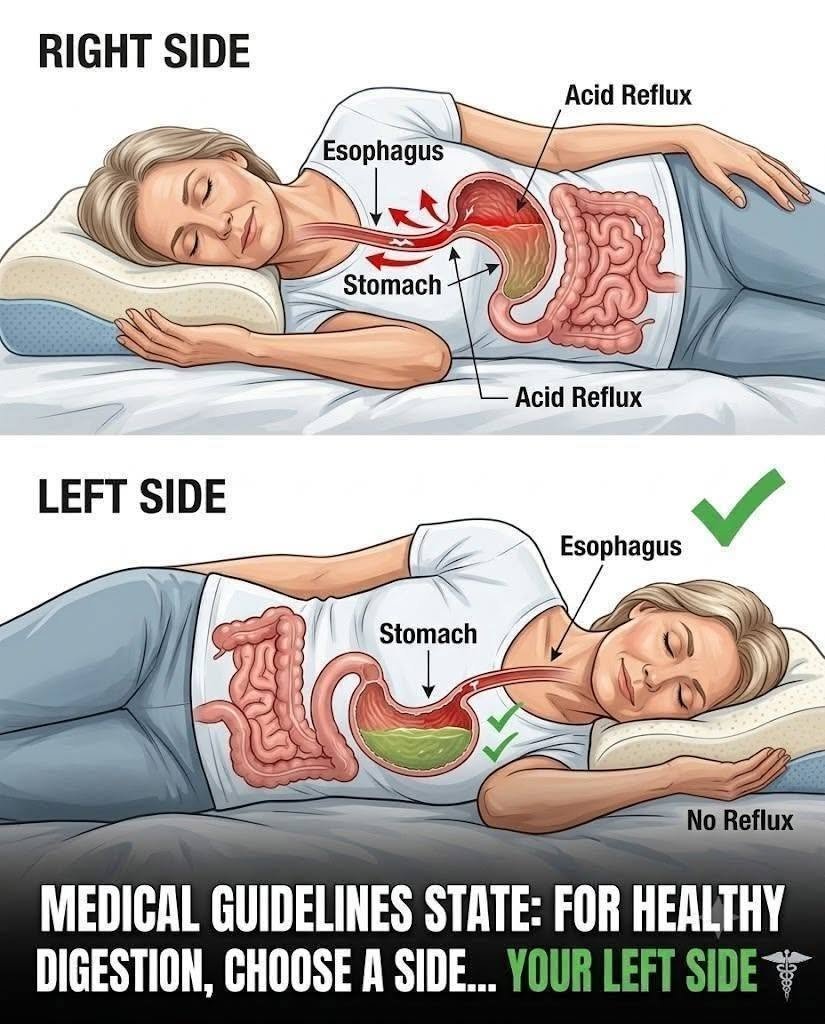
One of the most interesting differences between right- and left-side sleeping involves gastroesophageal reflux.
For people who experience nighttime heartburn or reflux, sleeping on the left side may be preferable. Research has found that left-side positioning can reduce acid exposure and help reflux clear more quickly compared with right-side or back sleeping.
This is partly related to the anatomy and position of the stomach.
If you frequently have nighttime heartburn
You can try:
- Sleeping on your left side
- Avoiding large meals close to bedtime
- Limiting foods that consistently trigger your symptoms
- Elevating the head of the bed if recommended
- Maintaining a healthy weight if appropriate
Persistent or severe reflux should be discussed with a healthcare professional.
2. Make Sure Your Neck Is Properly Supported
Side sleeping can be excellent for spinal alignment—but only if your pillow is the right height.
If your pillow is too low, your head may tilt downward toward the mattress.
If it’s too high, your neck can bend upward.
Either situation may contribute to morning:
- Neck stiffness
- Shoulder discomfort
- Headaches
- Upper-back pain
A pillow that fills the space between your head and mattress while keeping your neck relatively neutral is generally preferable.
3. Don’t Let Your Shoulder Take All the Pressure
When sleeping on your right side, your right shoulder carries much of the pressure.
If you already have shoulder pain, bursitis, arthritis, or a rotator-cuff problem, sleeping directly on that shoulder may aggravate symptoms.
Try shifting slightly toward your back or placing a pillow in front of your chest to support your upper arm.
If shoulder pain repeatedly wakes you or persists during the day, consider having it evaluated.
4. Put a Pillow Between Your Knees
This simple adjustment can make side sleeping considerably more comfortable.
Place a pillow between your knees and, if necessary, lower legs.
It can help keep your:
hips → pelvis → spine
in a more neutral position.
This may reduce twisting through the lower back and can be particularly helpful if you wake with hip or back stiffness.
5. Don’t Worry That Right-Side Sleeping Is “Damaging Your Heart”
You may encounter dramatic claims online saying that sleeping on the right side is dangerous because of the heart.
For most healthy people, there is no reason to believe that routinely sleeping on the right side will damage the heart.
People with certain heart conditions may have individual preferences or symptoms that make one position more comfortable than another, but this should be guided by their healthcare professional rather than by a blanket internet rule.
6. Consider Your Breathing
Sleep position can influence breathing.
For many people with obstructive sleep apnea, sleeping on the side can be better than sleeping flat on the back because back sleeping can allow the tongue and soft tissues to obstruct the airway more easily.
However, side sleeping doesn’t necessarily eliminate sleep apnea.
Possible warning signs include:
- Loud habitual snoring
- Gasping or choking during sleep
- Witnessed pauses in breathing
- Morning headaches
- Excessive daytime sleepiness
- Difficulty concentrating
If these occur regularly, talk with a healthcare professional about possible sleep apnea.
7. Don’t Ignore Morning Pain
If you consistently wake with pain on the right side of your body, don’t automatically blame your sleeping position.
The problem could involve:
- Your mattress
- Pillow height
- Shoulder mechanics
- Hip problems
- Arthritis
- Your sleeping posture
- An underlying medical condition
Try changing your pillow or adding support before assuming you need to completely change your sleeping position.
If pain continues, professional evaluation is appropriate.
What About Pregnancy?
Pregnancy is a special situation.
As pregnancy progresses, many people find side sleeping more comfortable, and healthcare professionals may provide individualized advice about sleep position—particularly later in pregnancy.
If you’re pregnant, follow the guidance of your obstetric or maternity-care professional rather than relying on general internet advice.
Should You Train Yourself to Sleep on Your Left Side?
Not necessarily.
If you’re healthy, sleep comfortably, don’t have significant reflux, and wake feeling well, there may be no medical reason to force yourself to sleep on your left side.
If you suffer from nighttime reflux, however, experimenting with left-side sleeping may be worthwhile.
Ultimately, sleep quality matters enormously. A theoretically “perfect” position isn’t useful if it keeps you awake all night.
A Comfortable Right-Side Sleeping Setup
If right-side sleeping works well for you, consider this arrangement:
- Use a pillow that keeps your neck neutral.
- Keep your shoulders relaxed.
- Place a pillow between your knees.
- Avoid curling your spine excessively.
- Support your upper arm with a pillow if your shoulder feels strained.
- Use a mattress that provides adequate support without creating excessive pressure at the shoulder and hip.
When Should You Talk to a Doctor?
Speak with a healthcare professional if your sleeping position is associated with:
- Persistent chest discomfort
- Significant shortness of breath
- Repeated nighttime choking or gasping
- Severe or persistent heartburn
- New or worsening swelling
- Persistent shoulder, hip, or back pain
- Significant daytime sleepiness despite adequate sleep
Sudden chest pain, severe difficulty breathing, fainting, or other emergency symptoms require urgent medical attention.
Bottom Line
Sleeping on your right side is generally safe for most people. You don’t need to change positions simply because you’ve heard that right-side sleeping is “bad.”
If you have frequent acid reflux, though, trying your left side may improve nighttime symptoms. And regardless of which side you choose, good pillow and body support can make a major difference in comfort.
The best sleeping position is ultimately the one that lets you breathe comfortably, keeps your body supported, minimizes symptoms, and gives you good-quality sleep.