New Method: Could Colonoscopy Become Less Invasive?
A new approach called colon capsule endoscopy is making it possible to examine the colon without inserting a conventional flexible colonoscope. Instead, the patient swallows a small capsule containing cameras, which travels naturally through the digestive tract while capturing images of the intestinal lining. Springer Nature Link+1
How Does the Capsule Work?
The capsule is roughly pill-sized and contains miniature cameras, lighting, batteries, and electronics. As it moves through the digestive tract, it takes images that are transmitted to a recording device. Doctors can then review the images to look for abnormalities such as polyps or other lesions.
Unlike conventional colonoscopy, nothing needs to be inserted through the anus, making the examination substantially less invasive.
Is This a Replacement for Colonoscopy?
Not yet. This is the important distinction behind headlines claiming that “colonoscopy will no longer be invasive.”
A 2026 multicenter study of a newer CC100 capsule system found that the entire colon was visualized in 91.18% of 136 participants. For polyps measuring at least 6 mm, the capsule had a sensitivity of about 86.7% and specificity of 98.6%. Conventional colonoscopy, however, was completed in all participants in that study. PubMed+1
The Biggest Limitation
A capsule can see a suspicious polyp, but it generally cannot do what a conventional colonoscope can do immediately afterward.
During a conventional colonoscopy, a doctor can:
- Remove a polyp
- Take a biopsy
- Treat certain sources of bleeding
- Examine a suspicious area closely
If capsule endoscopy detects something concerning, the patient may still need a conventional colonoscopy for biopsy or removal. A 2026 systematic review of PillCam COLON 2 similarly found that capsule examination could spare some patients from colonoscopy, but it remains primarily a diagnostic alternative. PubMed
What About Artificial Intelligence?
AI is also being investigated to help analyze the enormous number of images produced by capsule endoscopy.
A 2026 meta-analysis of AI-assisted colon capsule endoscopy reported pooled sensitivity and specificity above 93% for colorectal polyp detection, although the researchers emphasized substantial variability between studies and algorithms. ASC Publications
That means AI-assisted capsule examination is promising, but it shouldn’t be interpreted as proof that conventional colonoscopy has become obsolete.
What This Could Mean for Patients
The future may involve choosing between several screening and diagnostic options depending on the individual’s situation:
- Colon capsule endoscopy: swallow a camera capsule; no conventional scope insertion.
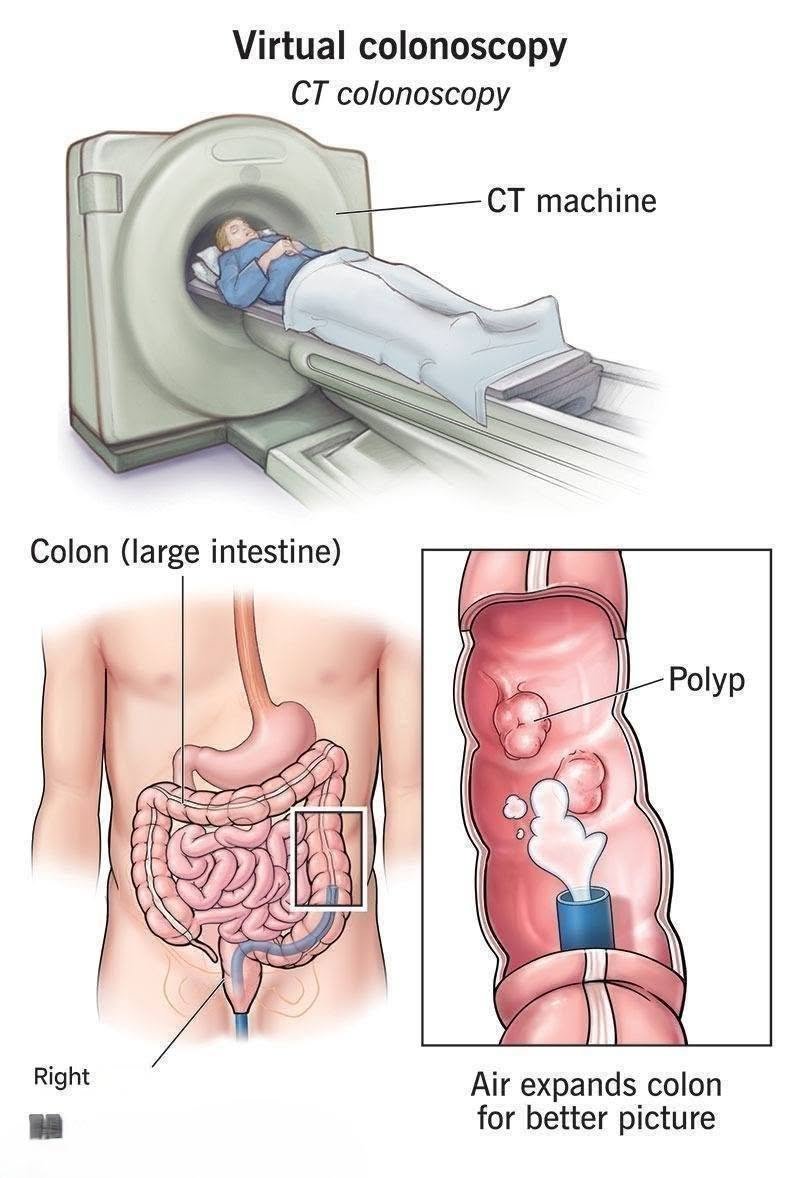
- CT colonography: uses CT imaging to create views of the colon but still generally requires bowel preparation.
- Stool-based screening: looks for signs associated with colorectal cancer without an invasive procedure.
- Conventional colonoscopy: remains the most comprehensive option because abnormalities can be detected and treated during the same examination.
The Bottom Line
The headline “colonoscopy will no longer be an invasive examination” is premature.
What’s actually happening is more interesting: technology is creating credible alternatives to conventional colonoscopy. Capsule endoscopy is becoming increasingly capable of examining the entire colon, and newer systems and AI may improve its accuracy further. But conventional colonoscopy remains important because it can simultaneously detect, biopsy, and remove lesions. Springer Nature Link+1
So the future isn’t necessarily “no more colonoscopies.” It may be fewer invasive colonoscopies, with capsule-based testing used as an alternative for appropriately selected patients.