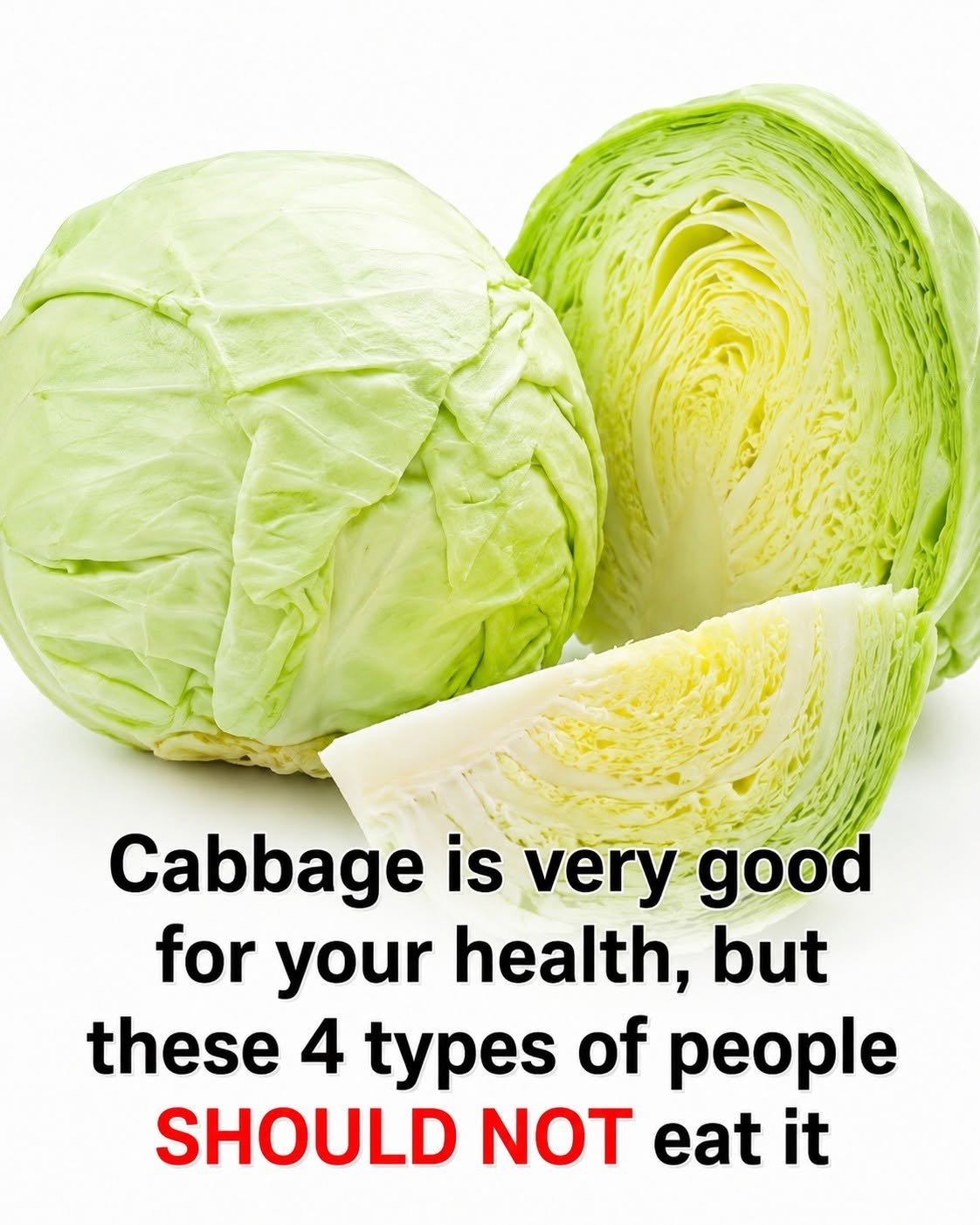
4 TYPES OF PEOPLE WHO MAY NEED TO LIMIT OR BE CAREFUL WITH CABBAGE
Cabbage is a nutritious vegetable that provides fiber, vitamin C, vitamin K, and other beneficial nutrients. For most people, it can be part of a healthy, balanced diet.
However, cabbage isn’t equally comfortable or appropriate for everyone. Certain people may experience digestive symptoms after eating it, while others may need to consider how it fits with a particular medical condition or medication.
This doesn’t mean these people must automatically eliminate cabbage from their diet. In many cases, the issue is portion size, preparation, or individual tolerance.
1. People Who Get Significant Bloating From Cruciferous Vegetables
Cabbage belongs to the cruciferous vegetable family, along with broccoli, cauliflower, Brussels sprouts, and kale.
These vegetables contain carbohydrates and fiber that can be fermented by gut bacteria. During this process, gas can be produced.
Some people are particularly sensitive and may experience bloating, abdominal discomfort, or increased gas after eating cabbage.
If this happens, try a smaller portion and see whether your symptoms improve.
Cooking cabbage thoroughly may also make it easier for some people to tolerate than eating a large amount raw.
Persistent or severe digestive symptoms should not automatically be blamed on cabbage, however. They may have another cause and deserve medical evaluation.
2. People With Irritable Bowel Syndrome Who Are Sensitive to Certain FODMAPs
People with irritable bowel syndrome (IBS) may be more sensitive to foods containing certain fermentable carbohydrates.
Some types and portions of cabbage can contribute to digestive symptoms in susceptible individuals.
That doesn’t mean everyone with IBS needs to avoid cabbage.
Tolerance varies considerably from person to person, and the amount eaten can make a difference.
If cabbage consistently triggers abdominal pain, bloating, diarrhea, or other IBS symptoms, consider discussing your diet with a doctor or registered dietitian.
A structured dietary approach can be more useful than unnecessarily eliminating many foods.
3. People Taking Warfarin Who Need Consistent Vitamin K Intake
Cabbage contains vitamin K, which is important for normal blood clotting.
People taking the anticoagulant warfarin don’t necessarily need to avoid cabbage or other vitamin-K-containing vegetables.
Instead, the important principle is usually consistency.
Suddenly eating much more or much less vitamin K than usual can affect warfarin treatment.
If you take warfarin, don’t make major dietary changes without discussing them with your healthcare professional.
You should continue following the monitoring and medication instructions you’ve been given.
4. People With Certain Thyroid Concerns Who Consume Very Large Amounts
Cabbage and other cruciferous vegetables contain compounds sometimes described as “goitrogens.”
This has led to claims that people with thyroid problems should completely avoid cabbage.
For most people, that advice is far too broad.
Normal amounts of cooked cruciferous vegetables are generally not considered a reason for most people to eliminate them from their diet.
Concern is greater with extremely large quantities, particularly when overall iodine intake is inadequate.
If you have a thyroid disorder or take thyroid medication, follow the dietary advice provided by your healthcare professional rather than eliminating nutritious vegetables based on internet claims.
Raw vs. Cooked Cabbage
How cabbage is prepared can affect how comfortable it is to digest.
Raw cabbage may be more difficult for some people to tolerate because it is relatively bulky and fibrous.
Cooking softens the vegetable and may make it easier to digest for some individuals.
However, cooking doesn’t make every digestive problem disappear.
Your personal response matters.
What About Cabbage and Gas?
Gas after eating cabbage isn’t necessarily a sign that something is wrong.
Gut bacteria naturally ferment certain carbohydrates and fibers, producing gas as part of the digestive process.
If you’re not accustomed to eating much fiber, suddenly increasing your intake can also cause temporary bloating.
Increasing fiber gradually and drinking adequate fluids can help your digestive system adapt.
Cabbage Can Still Be a Healthy Food
It’s important not to let warnings about individual groups create the impression that cabbage is generally dangerous.
Cabbage is nutrient-rich, relatively low in calories, and can be a useful part of a balanced diet.
Different varieties—including green, red, and savoy cabbage—can add variety to meals.
The goal isn’t to fear cabbage.
It’s to understand when your individual circumstances may require moderation or professional dietary advice.
When Should You See a Doctor?
If eating cabbage consistently causes severe abdominal pain, persistent diarrhea, vomiting, unexplained weight loss, blood in the stool, or other significant symptoms, don’t simply remove cabbage and assume the problem is solved.
A healthcare professional can help determine whether another gastrointestinal condition may be responsible.
Likewise, if you’re taking warfarin or managing a thyroid condition, discuss significant dietary changes with your healthcare team.
THE BOTTOM LINE
Most people can safely enjoy cabbage.
The people who may need to be particularly careful include those who experience significant digestive symptoms from it, some people with IBS who are sensitive to fermentable carbohydrates, people taking warfarin who need consistent vitamin K intake, and individuals with specific thyroid or nutritional concerns who consume unusually large quantities.
For most people, there’s no reason to fear cabbage.
If it causes discomfort, adjust the portion or preparation method—and if symptoms are persistent or severe, get professional medical advice rather than relying on an internet food list.