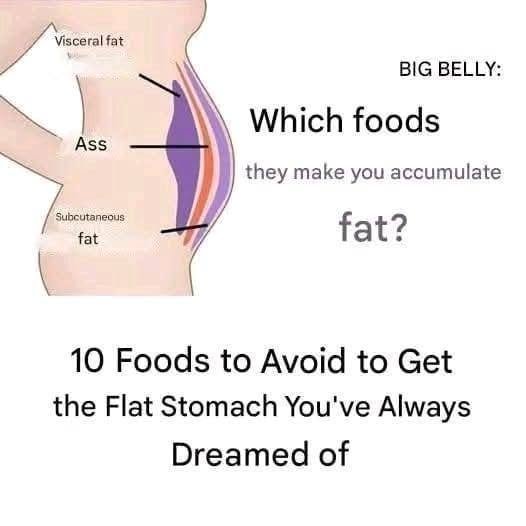
10 FOODS TO LIMIT IF YOU WANT TO REDUCE BLOATING AND SUPPORT A HEALTHIER WAISTLINE
A flatter-looking stomach is a goal many people have, but there is no single food that automatically causes belly fat—and no list of foods that can guarantee a flat stomach.
What you eat can, however, affect bloating, digestion, calorie intake, and overall body weight. If your goal is a leaner waistline, it makes more sense to focus on your overall eating pattern rather than completely banning individual foods.
Here are ten types of foods and drinks that may be worth limiting.
1. Sugary Soft Drinks
Regular soda and other sugar-sweetened beverages can provide substantial amounts of added sugar and calories without making you feel particularly full.
Because they’re liquids, it’s also easy to consume a large amount quickly.
Replacing sugary drinks with water or another low-calorie option can be a simple way to reduce overall calorie intake.
Carbonated drinks can also make some people feel temporarily bloated because of the gas they contain.
2. Highly Processed Snack Foods
Chips, packaged snack cakes, cookies, and similar foods can be easy to overeat.
Many are energy-dense and combine refined carbohydrates, fats, salt, and added sugars in ways that make them highly palatable.
You don’t necessarily need to eliminate them completely.
Eating them less frequently and choosing more filling foods most of the time can make it easier to manage overall calorie intake.
3. Processed Meats
Processed meats such as sausages, bacon, hot dogs, and some deli meats can be high in sodium and saturated fat.
A high-sodium meal can contribute to temporary water retention, which may make you feel or look more bloated.
Regularly eating large amounts of processed meat is also associated with long-term health concerns, so keeping consumption modest is generally a sensible choice.
4. Deep-Fried Foods
Fried foods can be extremely calorie-dense because they absorb cooking oil.
Large portions can therefore make it more difficult to maintain an appropriate calorie balance if you’re trying to lose body fat.
Fried foods may also cause digestive discomfort in some people.
Choosing grilled, baked, roasted, steamed, or air-fried alternatives more often can help reduce the amount of added fat in your meals.
5. Sugary Desserts
Cakes, pastries, ice cream, sweets, and other desserts can contain significant amounts of added sugar and calories.
The issue isn’t that sugar instantly becomes belly fat.
Rather, consistently consuming more calories than your body needs can contribute to weight gain, including an increase in abdominal fat.
Enjoying dessert occasionally can fit into a balanced diet; the key is frequency and portion size.
6. Refined White-Bread Products
White bread, many pastries, and other refined-grain products can be less filling than higher-fiber whole-grain alternatives.
This doesn’t mean that bread automatically causes belly fat.
The bigger consideration is the overall meal and your total calorie and fiber intake.
Replacing some refined grains with whole grains can provide more fiber and may help with fullness.
7. Very Salty Foods
Salt itself doesn’t create body fat, but eating a lot of sodium can cause the body to retain more water.
That can temporarily increase scale weight and make some people feel puffy or bloated.
Restaurant meals, packaged soups, instant noodles, sauces, processed meats, and many convenience foods can contain substantial amounts of sodium.
Reducing highly processed, salty foods can therefore help some people feel less bloated.
8. Alcohol
Alcohol provides calories while offering relatively little nutritional value.
It can also make it easier to overeat, especially when consumed alongside calorie-dense snacks or restaurant food.
Heavy alcohol consumption can interfere with sleep and may make maintaining healthy eating habits more difficult.
If you’re trying to manage your weight or reduce abdominal fat, limiting alcohol can be a useful strategy.
9. Foods That Personally Trigger Bloating
There is no universal “bloating food.”
Some people become bloated after eating certain beans, onions, dairy products, wheat-based foods, sugar alcohols, or other fermentable carbohydrates.
For others, these foods cause no problems at all.
If you repeatedly experience bloating after particular foods, keeping a simple food-and-symptom diary can help you identify patterns.
Avoid unnecessarily eliminating large categories of food without a good reason.
10. Large Portions of Ultra-Processed Foods
The biggest issue isn’t necessarily one ingredient.
Many ultra-processed foods are convenient, highly palatable, and easy to consume in large quantities.
If a substantial portion of your diet comes from these foods, replacing some of them with vegetables, fruits, whole grains, legumes, lean proteins, nuts, and other minimally processed foods can improve overall diet quality.
What Should You Eat Instead?
If your goal is a healthier waistline, think about what you can add, not only what you should remove.
Build meals around vegetables, fruit, protein-rich foods, whole grains, legumes, and appropriate portions of healthy fats.
Protein and fiber can help with fullness, while vegetables and fruit provide nutrients and generally add substantial volume for relatively few calories.
Water should also be your main beverage for most of the day unless you have been advised otherwise by a healthcare professional.
Can You Target Belly Fat?
Unfortunately, you can’t reliably choose where your body loses fat.
Doing hundreds of abdominal exercises won’t selectively burn the fat covering your stomach.
Overall fat loss, when appropriate, occurs throughout the body according to individual biology and genetics.
Strength training can build abdominal and other muscles, while regular aerobic activity can support cardiovascular health and energy expenditure.
Combining physical activity with an appropriate eating pattern is more effective than searching for a single “belly-fat-burning” food.
What About a Bloated Stomach?
Belly fat and bloating are not the same thing.
Bloating is often temporary and can be influenced by digestion, food volume, constipation, hormonal changes, and individual sensitivity to certain foods.
Body fat changes much more slowly.
If your stomach appears larger after a meal and then returns to normal later, that may be related to digestion or bloating rather than an increase in body fat.
Persistent or severe abdominal swelling should be discussed with a healthcare professional.
The Bottom Line
You don’t need to permanently ban ten foods to get a flatter stomach.
Instead, limit sugary drinks, highly processed snacks, excessive fried foods, large amounts of added sugar, highly salty foods, excessive alcohol, and other foods that make it difficult to maintain a balanced diet.
If you want to reduce abdominal fat, focus on sustainable habits: a nutritious diet, appropriate portions, regular physical activity, adequate sleep, and consistency over time.
There is no overnight “flat stomach” food or miracle ingredient—but small, sustainable changes can make a meaningful difference to your overall health and body composition.