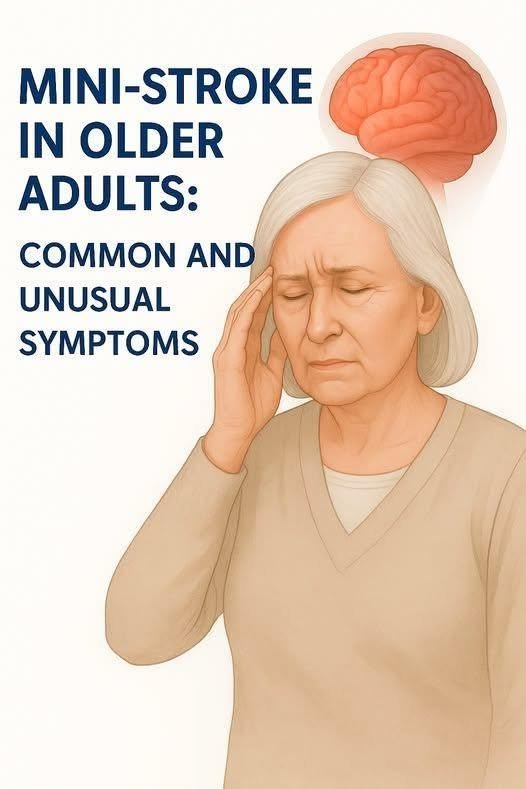
5 CRITICAL HEALTH SIGNALS OF A MINI STROKE IN SENIORS THAT SHOULDN’T BE IGNORED
A mini-stroke, medically known as a transient ischemic attack (TIA), occurs when blood flow to part of the brain is temporarily interrupted. Unlike a major stroke, the symptoms of a TIA may disappear within minutes or hours. However, that does not make it harmless.
A TIA is an important warning that a person may be at increased risk of having a stroke. For seniors, recognizing sudden neurological changes and seeking immediate medical attention can be especially important.
Here are five critical health signals that should never be ignored.
1. Sudden Weakness or Numbness
Sudden weakness, numbness, or loss of sensation can be one of the most important warning signals of a TIA.
The symptoms may affect one side of the body and can involve the face, arm, or leg. They may appear suddenly and can range from mild weakness to a noticeable loss of movement or sensation.
A sudden neurological change is different from the gradual weakness that can occur with aging or physical conditions. When weakness or numbness develops abruptly, it should be treated as an emergency.
Even if the sensation or strength returns to normal, medical assessment is still necessary because temporary symptoms can occur during a TIA.
2. Sudden Difficulty Speaking or Understanding
A TIA can temporarily affect areas of the brain responsible for speech and language.
This can result in sudden difficulty speaking clearly, finding words, understanding language, reading, or communicating normally.
Speech changes can sometimes be subtle, but a sudden change should never be dismissed simply because it improves after a short period.
A temporary language disturbance may indicate that blood flow to an important part of the brain has been interrupted.
If sudden speech or comprehension problems occur, emergency medical care should be sought immediately, even if the person’s communication returns to normal.
3. Sudden Vision Changes
Sudden changes in vision can also be a warning signal of a TIA.
Vision may become blurred, doubled, distorted, or temporarily disappear. The disturbance can involve one eye or both eyes, depending on the area affected by the interruption of blood flow.
Sudden visual symptoms deserve urgent attention because they may indicate a problem involving the blood supply to the brain or the structures responsible for vision.
Vision changes that disappear should not automatically be considered harmless. A temporary neurological symptom can still require urgent evaluation.
4. Sudden Dizziness, Loss of Balance, or Coordination
A sudden disturbance in balance or coordination can occur when areas of the brain responsible for movement and spatial control are affected.
A person may suddenly have difficulty walking, maintaining balance, coordinating movements, or remaining steady.
These symptoms can be particularly concerning in older adults because they may increase the risk of falls and injuries.
Although dizziness can have many causes, sudden dizziness accompanied by other neurological changes requires immediate medical attention.
It is important not to assume that sudden balance problems are simply a normal consequence of aging.
5. Sudden Confusion or Severe Headache
Sudden confusion or a significant change in mental function can sometimes accompany a cerebrovascular event.
A person may suddenly have difficulty thinking clearly, understanding their surroundings, communicating, or responding normally.
A sudden and unusual headache can also occur with some types of stroke or other serious neurological conditions. A particularly severe or abrupt headache requires urgent medical evaluation, especially when accompanied by neurological symptoms.
Because headaches and confusion can have many different causes, these symptoms alone do not prove that a TIA has occurred. However, when they develop suddenly, they should never be ignored.
Why a Mini-Stroke Is a Medical Emergency
The temporary nature of TIA symptoms can create a dangerous false sense of security.
When symptoms disappear, a person may believe that the problem has resolved. In reality, a TIA can serve as a warning of a future stroke.
The exact cause must be evaluated by medical professionals. Assessment may involve neurological examination, medical history, blood tests, brain imaging, and evaluation of blood vessels and heart-related risk factors.
Early evaluation can help doctors identify potential causes and determine appropriate measures to reduce the risk of a subsequent stroke.
Remember the FAST Warning Signs
When a stroke or TIA is suspected, remember FAST:
- F — Face: Sudden facial weakness or drooping.
- A — Arms: Sudden weakness or numbness, particularly on one side.
- S — Speech: Sudden difficulty speaking or understanding.
- T — Time: Treat the situation as an emergency and seek medical help immediately.
Other sudden symptoms, including vision problems, severe dizziness, loss of coordination, confusion, or an unusual severe headache, can also require emergency attention.
Don’t Wait for Symptoms to Disappear
The most important message is simple: temporary symptoms can still be serious.
If a senior suddenly develops possible signs of a TIA or stroke, do not wait to see whether the symptoms disappear. Seek emergency medical care immediately and note the time the symptoms began, if possible.
A mini-stroke may last only a short time, but it should never be treated as a minor health problem. Prompt medical evaluation can help determine what happened and whether steps are needed to reduce the risk of a potentially disabling stroke.