5 Signs of a Mini-Stroke in the Elderly You Should Never Ignore
A mini-stroke, medically known as a transient ischemic attack (TIA), happens when blood flow to part of the brain is temporarily interrupted. The symptoms can resemble a stroke and may disappear after a short time, but a TIA is still a medical emergency because it can be a warning sign of a future, potentially disabling stroke.
1. Sudden Weakness or Numbness
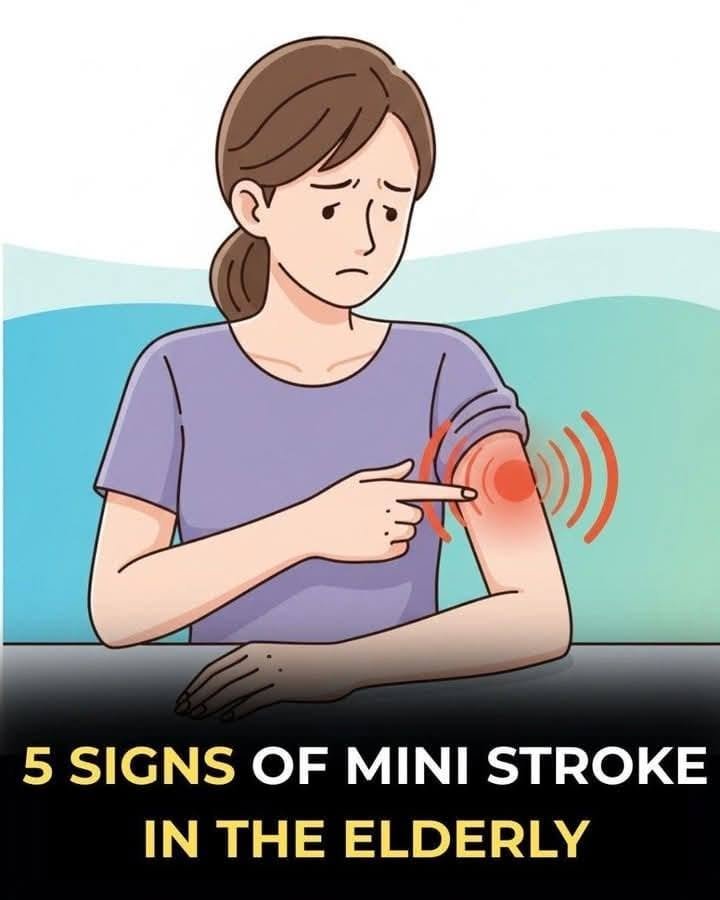
One of the most important warning signs is the sudden development of weakness or numbness, particularly on one side of the body.
This may affect the face, arm, leg, or several areas at the same time. The onset is typically sudden rather than gradually developing.
Because the brain controls movement and sensation throughout the body, an interruption of blood flow can quickly affect these functions.
2. Sudden Trouble Speaking or Understanding
A TIA can suddenly interfere with the brain’s ability to produce or understand language.
Speech may become unclear, difficult, or unusual, and the person may have difficulty understanding what others are saying.
Any sudden change in speech or comprehension should be treated seriously, even if it resolves on its own.
3. Sudden Vision Problems
Temporary changes in vision can occur during a TIA.
A person may suddenly experience blurred vision, double vision, loss of vision in one eye, or difficulty seeing normally.
Sudden vision loss or a major change in vision requires urgent medical attention because it can be associated with interruption of blood flow to the brain or eye.
4. Sudden Dizziness or Loss of Balance
A sudden loss of coordination, severe dizziness, difficulty walking, or problems maintaining balance can sometimes occur during a TIA or stroke.
These symptoms can be especially dangerous in older adults because they increase the risk of falling and injury.
Sudden balance or coordination problems should not simply be dismissed as ordinary aging.
5. Sudden Severe Headache or Confusion
A sudden, unusual headache can sometimes accompany a cerebrovascular event, particularly when it occurs with other neurological symptoms.
Sudden confusion or a noticeable change in mental function can also be a warning sign.
When these symptoms appear abruptly, particularly alongside weakness, speech difficulties, vision problems, or loss of balance, emergency medical assessment is essential.
A TIA Is Still an Emergency
One of the most dangerous misconceptions about a mini-stroke is that it is harmless because the symptoms disappear.
A TIA may resolve completely, but it can indicate an increased risk of a subsequent stroke. Do not wait for symptoms to return or assume the danger has passed.
If someone suddenly develops possible stroke symptoms, seek emergency medical care immediately. Remember FAST:
- F — Face: Is one side of the face drooping?
- A — Arms: Is there sudden weakness or numbness in an arm?
- S — Speech: Is speech suddenly difficult or unusual?
- T — Time: Call emergency medical services immediately.
Even if the symptoms disappear, urgent medical evaluation is still necessary.